
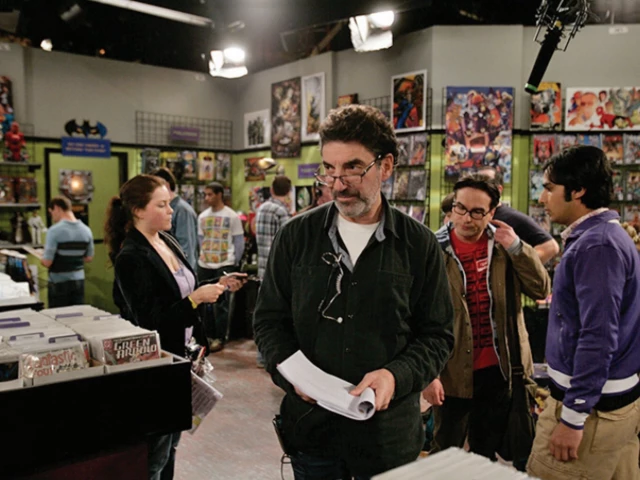
Veteran television producer Chuck Lorre, the creative force behind hit sitcoms including ‘The Big Bang Theory’, ‘Two and a Half Men’ and ‘Young Sheldon’, is revisiting the triumphs, disappointments and lessons of his career in a new memoir, ‘Sitcom’, describing the writing process as a deeply personal journey of reflection.
Lorre initially resisted the idea of writing a memoir, telling a US-based news agency that a close friend eventually persuaded him that his journey was worth documenting. Putting his experiences on paper, he said, offered distance and perspective, allowing him to laugh at his past and understand it better.
The book includes actual sitcom scripts annotated with Lorre’s handwritten notes, giving readers an insight into the creative decisions and emotions behind the making of television comedy. He said he wanted to show the process from the inside rather than discuss his work only in abstract terms.
Reflecting on the challenges facing sitcoms today, Lorre argued that audiences must care about characters before jokes can work. They do not necessarily have to be likeable, he said, pointing to Danny DeVito’s character in ‘Taxi’ and Carroll O’Connor’s Archie Bunker in ‘All in the Family’ as examples of difficult personalities who remained compelling.
Successful sitcoms such as ‘Cheers’ and ‘The Big Bang Theory’, he added, can become surrogate families, bringing viewers together around familiar characters. Building that emotional connection has become harder in an increasingly fragmented television market, where persuading audiences to devote half an hour to a comedy is a growing challenge.
Lorre also recalled how ‘The Big Bang Theory’ survived an unsuccessful initial pilot before being reworked. The chemistry between Johnny Galecki and Jim Parsons offered an opportunity for a second attempt, which ultimately produced a success beyond his expectations. He said failure could either teach writers valuable lessons or leave them cynical and bitter.