The story so far: Geopolitical tensions in West Asia, elevated crude oil prices, rising U.S. Treasury yields and persistent inflation are complicating the global monetary policy outlook. After a period of monetary easing, central banks may have less room to cut interest rates further, with renewed inflationary pressures potentially forcing some to reconsider their policy stance.
What makes the current cycle different from 2022?
The key difference from the previous rate-hiking cycle is the starting point. In 2022, several major central banks began tightening from exceptionally low interest rates. The U.S. Federal Reserve and European Central Bank were emerging from prolonged periods of accommodative policy with benchmark rates at 0% or in the negative territory, while the Bank of Japan maintained a different policy trajectory. India’s benchmark repo rate stood at 4% at the beginning of its tightening cycle.
Today, borrowing costs in many economies are already restrictive, while fresh inflationary pressures threaten to weaken economic growth. Sticky inflation makes the challenge more difficult, as policymakers must contain rising prices without unnecessarily slowing economic activity.
Starting from low rates gave many central banks greater scope to raise borrowing costs. However, higher rates still increased loan repayments and financing costs for households and businesses.
Today, central banks may have less room to tighten without weakening consumption, investment and employment. At the same time, renewed energy-price shocks could prevent them from cutting rates as quickly as they otherwise would.

This creates a difficult trade-off: easing too soon could prolong inflation, while keeping rates high for too long could undermine growth.
What Is the global economic iutlook?
International Monetary Fund (IMF) Managing Director Kristalina Georgieva has said that the global economy has remained resilient despite supply-chain disruptions and higher oil prices. However, the prolonged conflict in West Asia threatens to test that resilience, particularly if energy prices remain elevated.
Tariff uncertainty from Washington, rising public debt and the artificial intelligence (AI) investment boom are adding to economic uncertainty. According to the World Bank, global economic growth is projected to slow to 2.6% in 2026 from 2.9% in 2025. Prolonged energy shocks and tighter financial conditions could pose further downside risks.

What are the main constraints on economies?
Higher crude oil prices remain a major concern, particularly for energy-importing economies such as India. Brent crude was trading at around $105 per barrel on Tuesday (October 13, 2026), compared with levels of $70 per barrel or lower before the U.S.-Iran conflict began in February.
Oil is a critical input for transport, manufacturing and several other industries. Rising energy prices increase production and logistics costs, some of which businesses pass on to consumers.
For India, the impact extends beyond domestic inflation. Higher crude prices increase the import bill, while a weaker rupee makes dollar-denominated oil imports more expensive. Together, these pressures can worsen the current-account balance and push up domestic prices.
What is happening in U.S. Treasury yields?
U.S. Treasury yields have risen since late February amid inflation concerns, higher crude prices and growing government borrowing requirements. The benchmark 10-year Treasury yield climbed to 5.34%, its highest level since 2002, while the 30-year yield rose to 5.69%.
Bond prices and yields move in opposite directions: when existing bond prices fall, their yields rise. Higher Treasury yields can increase borrowing costs for governments and businesses, tightening financial conditions globally.
Rising yields reflect several factors, including expectations of interest rates remaining higher for longer, inflation uncertainty and the additional compensation investors demand to hold long-term government debt. Increased government borrowing can add to these pressures.
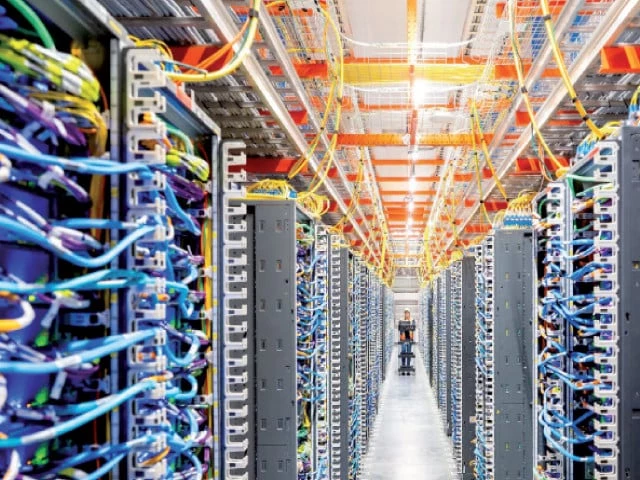
The AI boom is also influencing capital markets. Technology companies are investing heavily in data centres and computing infrastructure, increasing their financing requirements and competing with other borrowers for capital.
Why should India be concerned about U.S. Treasury yields?
U.S. Treasuries serve as important benchmarks for global financial markets. Their yields influence borrowing costs and valuations across countries, including the pricing of corporate bonds, mortgages and emerging-market debt.
When U.S. yields rise, dollar-denominated assets can become more attractive to international investors. Depending on expected returns and risk appetite, capital may move towards U.S markets, putting pressure on emerging-market currencies.
For India, sustained pressure on the rupee could amplify the impact of elevated crude prices. A weaker currency increases the domestic cost of energy imports, potentially raising fuel, transport and production costs. This could make it harder for the Reserve Bank of India (RBI) to ease monetary policy.
How do developed and developing economies differ?
Both developed and developing economies must balance inflation control with growth. However, emerging markets such as India can face additional pressures from imported energy costs, currency depreciation and shifts in international capital flows.
Developed economies also face imported inflation and exchange-rate risks, but emerging markets can be particularly sensitive to a stronger dollar and higher external financing costs.
Ultimately, the difference from the previous hiking cycle is not that these risks are new. It is that persistent inflation, limited room for monetary easing and tighter global financial conditions may now coincide, leaving central banks with fewer easy choices.
Published – October 14, 2026 08:05 am IST