

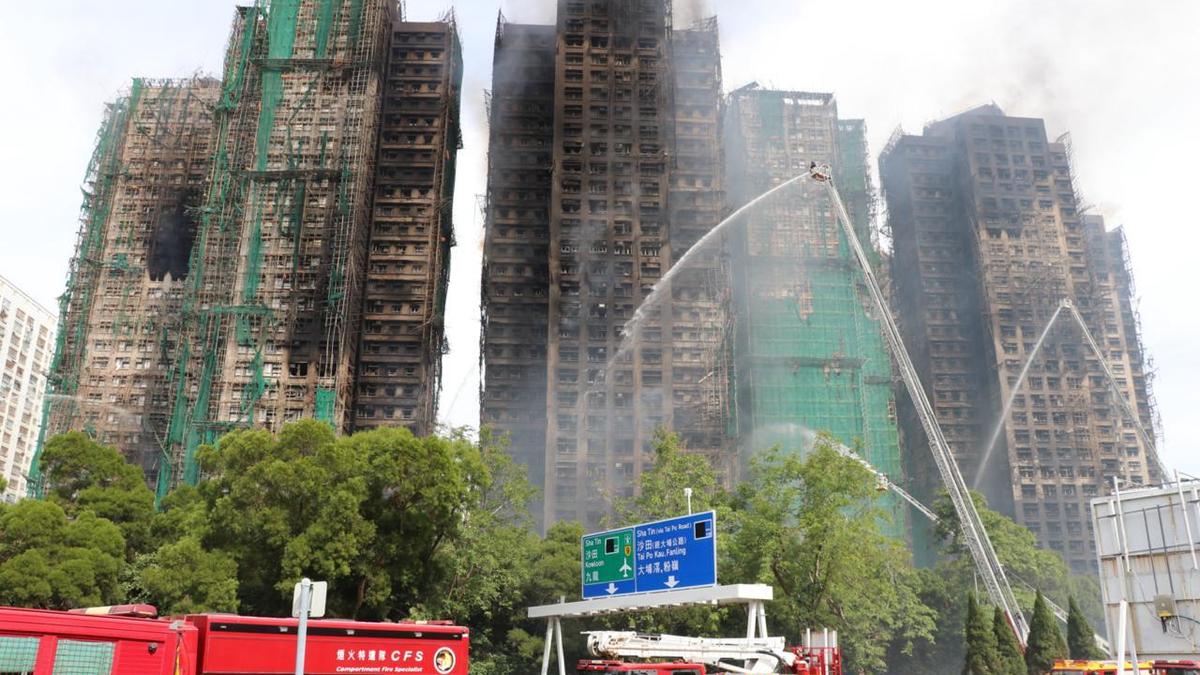
A large fire which broke out at the Wang Fuk Court apartment complex in Tai Po, Hong Kong, on November 26 sent shockwaves through the global real estate community. The fire consumed seven out of eight blocks of an entire complex and killed more than 150 people.
The incident, stemming from inadequate safety planning and extreme congestion, poses a question that resonates powerfully across India’s fast-growing metros: are we normalising unsafe, over-densified living in the name of affordability?
For India’s real estate sector, this is not a hypothetical concern. It is very real in cities where developers face mounting pressure to maximise space, residents often trade safety for location, and regulatory conversations gain momentum only after disasters make headlines. The widening gap between rapid urbanisation and responsible urban safety demands immediate attention, not just as a compliance exercise, but as a fundamental reimagining of our design philosophy.
Systemic vulnerabilities
Incidents like the Hong Kong fire are not isolated anomalies. They reflect systemic vulnerabilities emerging in densely populated urban centres worldwide — vulnerabilities that are increasingly visible in Indian metros. Mumbai, Delhi NCR, Bengaluru and other cities are witnessing unprecedented vertical growth, with Floor Space Index (FSI) consumption pushing buildings higher and closer together. In this race for density, critical safety elements often become negotiable commodities.
The compromises are subtle but consequential however. The inadequate spacing between buildings that restricts natural ventilation and fire brigade access, substandard materials chosen for cost optimisation, ventilation systems designed for regulatory clearance rather than actual air quality, and fire exits that meet minimum standards on paper but prove inadequate in emergencies — each compromise, taken individually, may seem minor. But collectively, they create vulnerable living environments where residents are unknowingly at risk, along with long-term financial and reputational impact for the developer.
Cross-ventilation is non-negotiable. Fresh air and occupant health must be foundational priorities. Cross ventilation isn’t merely about meeting building codes; it is about understanding how air circulation patterns change throughout the year. In Mumbai, for instance, wind direction shifts from southwest to northeast across seasons — pre-monsoon, post-monsoon, and during different weather patterns.
Windows must be strategically positioned to capture these changing wind patterns effectively, ensuring that what works for southwest winds in summer also functions when Northeast winds dominate in winter.
Material quality matters as well. While homebuyers with limited vision may prioritise aesthetic appeal, developers bear the moral responsibility to prioritise health and safety through material selection. The quality of glass and aluminium sections has direct implications for energy efficiency and indoor comfort. Thermal breaks in aluminium sections prevent heat transfer between exterior and interior environments, reducing air conditioning loads and improving thermal comfort. Double-glazed windows with low U-value silver coating (now advancing to triple-layer silver coating) significantly enhance insulation while maintaining natural light.
Air conditioning without hot air pockets can prove harmful. Hot air pockets within buildings create discomfort and impede breathing.
Developers should specify chilled water systems with cold water lines, mandating water-cooled compressor VRVs (Variable Refrigerant Volume systems) that don’t expel hot air into common areas or adjacent spaces. This integrated approach to climate control prevents the creation of uncomfortable micro-climates within the building setup.
Emphasis on fire safety
Fire safety deserves special emphasis, as it represents one of the most critical and most commonly compromised aspects of building safety. Several principles must guide responsible development:
Let’s start with material selection. Aluminum Composite Panels (ACP), particularly those with flammable cores, should be categorically avoided. Similarly, buildings must be spaced adequately, not just to meet minimum setback requirements, but to ensure that fire cannot easily spread between structures and that fire brigade vehicles have adequate access.
A gap in system maintenance must be avoided. A persistent challenge in India is the maintenance gap. Developers often install robust fire safety systems — pumps, wet risers, hydrants, sprinklers, extinguishers — but they fail under society management. This gap demands a systemic solution. Building management committees must understand that fire safety systems, including both pumping mechanisms and wet risers, should remain constantly charged through overhead tank connections.
Safety audits must be made mandatory. The solution lies in mandated annual fire safety audits conducted by certified, independent professionals. Retired fire officers with decades of field experience could be licensed as auditors, creating a robust ecosystem where their expertise continues serving public safety. Government enforcement must be strict; societies failing to submit certified audit reports should face meaningful penalties.
Building design must also account for extreme weather events. When typhoons or cyclones approach, building geometry becomes critical. Structures should be designed to divert wind rather than resist it head-on. By channelling wind around and over buildings, developers and designers reduce pressure on glazing and structural elements substantially. Glass thickness and quality must be specified with extreme weather scenarios in mind.
Small efforts such as strategically placed wind turbines that help direct airflow into buildings for natural ventilation, demonstrate how passive design strategies can enhance both safety and sustainability simultaneously. These approaches reflect a developer’s passion for creating genuinely superior living environments.
Overall, responsible urban development requires a future-ready safety framework encompassing design precision, continuous monitoring, and shared accountability across the building lifecycle.
The Hong Kong tragedy should catalyse permanent change in how we conceive, design, and maintain urban living spaces. We have the knowledge, technology, and resources to build safer cities. What we need now is the collective will to prioritise lasting value over short-term gains.
The writer is chairman of The Wadhwa Group.
Published – December 19, 2025 06:35 pm IST


