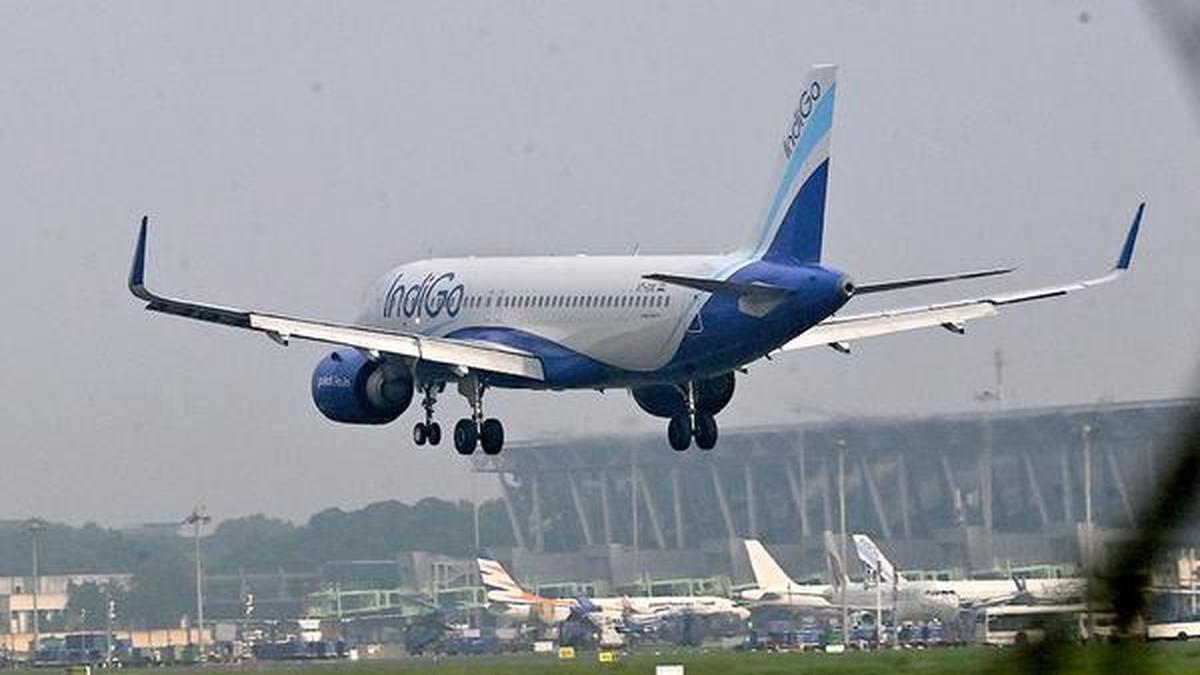
Over the last decade, India’s skies have grown busier than ever. The country has emerged as the world’s third-largest domestic aviation market, driven by rapid economic growth, rising middle-class travel and expanding regional connectivity. However, while the number of airports has surged, the number of airlines has shrunk, making IndiGo virtually synonymous with air travel in India.
According to government data, the number of operational airports increased from 74 in 2014 to 163 in 2025. The government has set an ambitious target of expanding this network to 350–400 airports by 2047. Aviation has also become one of the fastest-growing sectors of the economy, contributing not only through air transport services but also by boosting tourism, trade, logistics and manufacturing.
Yet, the structure of the market has become increasingly concentrated. As per the Directorate General of Civil Aviation (DGCA), IndiGo currently commands a dominant 65% share of the domestic market. The Air India Group — comprising Air India and Air India Express — holds 26%, while Akasa Air has 5%, maintaining its position as the third-largest domestic carrier. SpiceJet accounts for just 2%, with all other airlines together making up the remaining 2%.
Several national and regional carriers have struggled to survive in what is often described as the world’s fastest-growing aviation market. The collapse of Jet Airways earlier and Go First in May 2023 further accelerated consolidation, allowing IndiGo to significantly expand its footprint.
This dominance, however, has come under scrutiny following recent mass cancellations of IndiGo flights that caused widespread disruption to air traffic across the country. Regulators observed that the airline had failed to adequately manage its operational resources, including aircraft availability and pilot crew planning.
In response, authorities decided that IndiGo’s approved winter schedule should be reviewed and curtailed by at least 10%. The existing show-cause notice to the airline is set to be modified, with a fresh notice likely to be issued. The situation will remain under periodic review for any further action deemed necessary.
The issue was also raised in the Rajya Sabha on December 8, where Civil Aviation Minister K. Ram Mohan Naidu said the government would take “very, very strict action” against IndiGo to “set an example” for the industry. Speaking during Question Hour, the Minister said the disruption stemmed from IndiGo’s internal lapses, particularly its failure to manage crew availability and duty rosters.
“We are not taking this situation easily. We are doing an inquiry. We will take very, very strict action not only for this situation but also as an example,” he said.
Mr. Naidu also outlined the implementation of revised Flight Duty Time Limitation (FDTL) norms, introduced following a High Court order in April 2025. Of the 22 guidelines, 15 were implemented from July 1 and the remaining seven from November 1. He stressed that the rules were framed after extensive consultations with all stakeholders, including IndiGo, and must be followed “without any compromise on safety”. The updated FDTL norms represent a significant tightening of crew scheduling regulations. Pilots are now mandated 48 hours of weekly rest, compared to the previous rule of 36 hours, and night landings have been limited to two from six earlier.
Chairman of the IndiGo airline board chairman Vikram Singh Mehta, in his message to air passengers, rejected the allegations that the crisis was engineered and that the airline tried to influence the government over the revised Flight Duty Time Limitation (FDTL) rules.
Flight safety
While airlines argue these measures disrupt roster planning and aircraft utilisation, especially at hubs with heavy night operations, pilot unions maintain that the caps are essential to reduce cumulative fatigue and enhance flight safety.
Financial data highlights the stark contrast within the sector. In a written reply, the Ministry of Civil Aviation said IndiGo was the only major airline to post a profit in FY 2024–25, earning ₹7,253 crore. Air India reported a loss of ₹3,976 crore, Air India Express ₹5,832 crore, Akasa Air ₹1,986 crore and Alliance Air ₹691 crore. SpiceJet also remained in the red with a ₹56-crore loss, while regional carrier Star Air was a rare exception, posting a modest profit of ₹68 crore. Air India is currently undergoing a massive transformation after being taken over by the Tata Group in 2022, while Go First remains grounded after suspending operations in 2023 due to severe financial stress.
Meanwhile, IndiGo continues to plan aggressively for the future. The airline has placed a firm order for 500 Airbus A320 Family aircraft — the largest single aircraft order ever placed by any airline with Airbus. These deliveries, scheduled between 2030 and 2035, will further strengthen IndiGo’s scale and long-term growth prospects.
Amid regulatory action, IndiGo has said operations are stabilising. Demonstrating “continuous operational normalisation” over the past five days, the airline said it is operating over 2,050 flights a day under its revised, scaled-down schedule in line with government directives. All 138 operational destinations remain connected, and on-time performance has returned to normal levels, according to an IndiGo spokesperson.
As India’s aviation sector continues its rapid expansion, the current episode underscores the challenges of balancing growth, safety, competition and accountability in an increasingly consolidated market.
Published – December 14, 2025 01:54 am IST