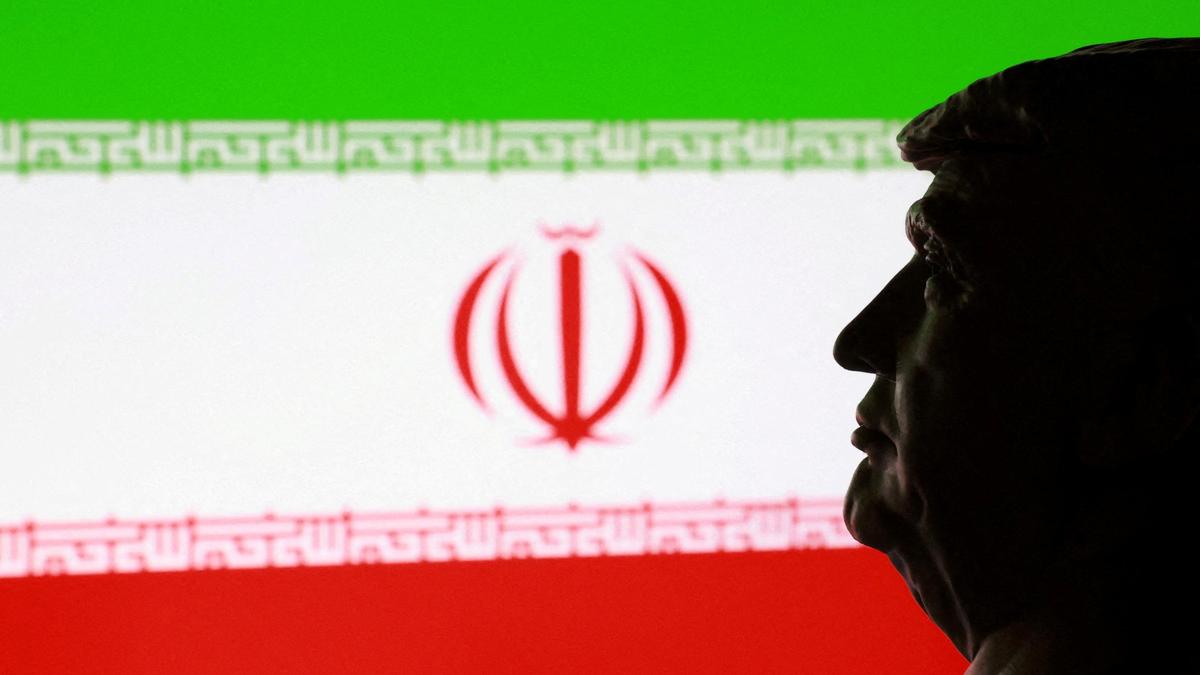
Trump’s actions are in reaction to the Iranian government’s apparent crackdown on protestors in that country. File.
| Photo Credit: Reuters
India’s overall trade scenario is not likely to face much of an impact if it were to stop trading with Iran in response to U.S. President Donald Trump’s new threat of a 25% tariff on any country doing business with Iran, official data shows. However, it could temporarily impact some sectors such as rice, tea, fresh fruits, and essential oils, as per the data.
“Effective immediately, any Country doing business with the Islamic Republic of Iran will pay a Tariff of 25% on any and all business being done with the United States of America,” Mr. Trump posted on Truth Social early morning on January 13. “This Order is final and conclusive.”
Also read | Linked civilisations, a modern strategic partnership
Mr. Trump’s actions are in reaction to the Iranian government’s apparent crackdown on protestors in that country.
India has a history of stopping or reducing trade with Iran in response to U.S. actions. India’s trade with Iran declined significantly after 2019, following the sanctions imposed on that country by the U.S. However, even prior to this, the overall trade levels had remained relatively small, with the two countries largely engaging with each other in a few sectors.
According to trade experts, if India were to stop trading with Iran, while some sectors might feel some short-term pain, Iran’s share is small enough that India will soon be able to find alternatives.
Impact on India’s exports
An analysis by The Hindu of the latest trade data with the Ministry of Commerce and Industry shows that Iran accounted for 0.26% ($764.5 million) of India’s total exports in 2025-26 up to November 2025. This share has been falling pretty consistently since 2019-20, when Iran’s share in India’s exports was 1.1%.
To gauge the sectoral impact, it is important to look at the share of a sector in India’s exports to Iran, and the share of Iran in India’s total exports of that sector. If both values are high, the impact on that sector is likely to be high.

Of India’s exports to Iran, a whopping 61% ($756 million) in 2025-26 so far was basmati rice. If India were to stop exporting to Iran in response to the U.S. tariff threats, this is a sector that could face some pain as basmati rice exports to Iran made up 13.1% of India’s total basmati rice exports this year.
The other sectors that might feel an impact are tea, with Iran making up 5.6% of India’s tea exports, essential oils (5.4%), and fresh fruits (5.3%). Each of these sectors are among the top-5 exports of India to Iran.
Impact on India’s imports
Just as Iran has played a small and declining role in India’s exports, its share in India’s imports has similarly been shrinking.
Iran’s share in India’s total imports stood at a relatively small 2.7% in 2016-17, which shrank sharply after 2019 and is now 0.04% as of November 2025.
Sectorally, the data shows that India’s imports from Iran are currently dominated by two sectors — petroleum products (46.6% share) and fresh fruits (39.8% share).
Of these, the fresh fruits sector might feel some short-term supply issues as Iran accounts for 4% of India’s total fresh fruit imports. However, this impact is likely to be limited in terms of scope and time.
Iran used to be a relatively significant source of crude oil for India, accounting for nearly 7% of India’s total crude oil imports in 2012-13. However, the situation is very different now, with official data showing that India has not imported crude oil from Iran since 2019-20.
Published – January 13, 2026 11:36 am IST