

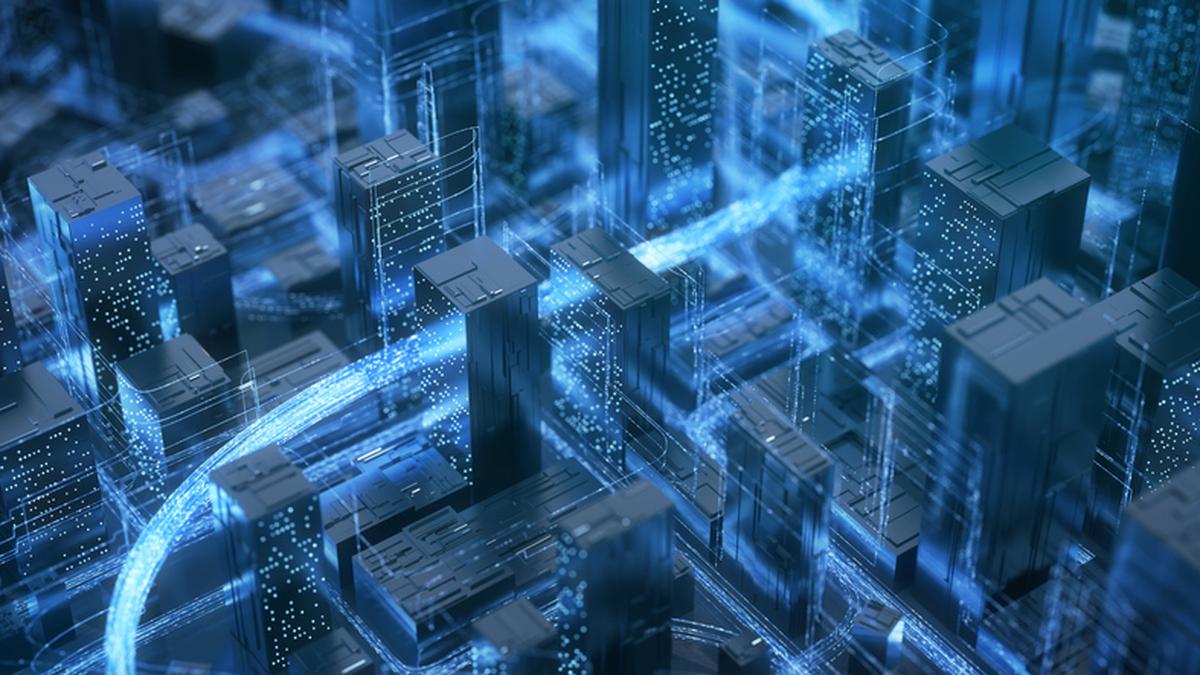
Every modern workspace is now a data fortress in disguise. On an ordinary weekday morning, employees swipe into biometric gates, log into cloud dashboards, and send thousands of data transactions across networks without a second thought — constantly engaging in data-heavy exchanges. Yet behind this seamless flow lies an invisible architecture: sensors, algorithms, firewalls, and security protocols working tirelessly in the background. What was once simply an office is now seen as a live, intelligent ecosystem, one that must defend itself as effectively as it empowers its people.
This evolution didn’t happen by chance. As cyberattacks escalate in complexity, hybrid work deepens digital exposure, and businesses embrace cloud-based operations, the modern workspace has acquired a new identity: a safe data haven. No longer judged only on design, amenities, or location, today’s workspace is evaluated for its ability to protect data, anticipate threats, and inspire employee confidence. Security is no longer a layer; it has become the architecture of custom-built offices.
First filter
In the past three years, organisations have witnessed a dramatic expansion of their risk landscape. India alone faced over 2.04 million cyber security incidents last year, reflecting how deeply exposed businesses have become as digital dependency grows. Employees now connect from different devices, transfer large volumes of proprietary information, and collaborate through cloud tools. Every login, file transfer, or sensor interaction becomes a potential vulnerability.
Simultaneously, threat actors have shifted their tactics. Attacks now target IP-rich proprietary environments, access control systems, video feeds, and IoT devices embedded within smart buildings. Therefore, workspaces have become central to enterprise risk management, not peripheral to it.
This rising complexity has restated where global firms choose to build their capability centres, and India is at the forefront of that shift. The country is rapidly becoming a preferred destination for GCCs because its flexible workspaces are increasingly meeting or exceeding global benchmarks for digital and physical security.
Today’s flexible workspaces across Tier 1 metros offer far more than convenience — they provide highly comprehensive network architecture designed for sensitive workloads, supported by tiered access-control systems, AI-enabled surveillance, and advanced business continuity infrastructure. Integrated digital solutions enable global teams to collaborate seamlessly, while robust compliance frameworks ensure alignment with stringent international data protection norms.
For GCCs managing core engineering, AI model training, financial analytics, payments infrastructure, or cybersecurity operations, India’s secure workspaces delivers the trifecta of performance, protection, and scalability.
Organisations have moved from checklist-based assessments to a more holistic, systems-oriented evaluation of workspaces’ safety. Their decision-making spans two interconnected dimensions that must work in concert. Physical security capabilities encompass perimeter protection, intelligent access systems, biometric gates, emergency response planning, and surveillance powered by analytics. The goal is to ensure controlled access, rapid incident response, and continuity of on-ground safety.
Digital security architecture examines the workspace’s IT backbone: encrypted networks, built-in firewalls, secure server rooms, SD-WAN solutions, endpoint protection, and real-time monitoring. Here, digital security isn’t an add-on—it is embedded into the building’s core design.
The truly future-ready facilities are those where physical and digital environments merge, where a motion sensor, a swipe card, a network login, and an operational dashboard all feed into a single real-time risk intelligence system.
New age of flexible workspaces
Today’s intelligent workspaces are built on technologies that sense, anticipate, and respond. These innovations create continuous learning environments that evolve with emerging threats.
AI-based anomaly detection tools continuously analyse user behaviour, network traffic, and movement patterns. When they detect irregularities such as unusual logins, abnormal data transfers, or unexpected physical access, they trigger instant alerts or isolate suspicious activity.
IoT sensors embedded within the workspace act as digital sentinels, monitoring environmental changes, detecting unauthorised access, tracking occupancy patterns, and interfacing with building systems to maintain a safe, regulated ecosystem. These devices create comprehensive situational awareness across the entire workspace.
Edge computing processes sensitive data at or near the source rather than sending it to distant servers. This drastically reduces latency and ensures millisecond-level threat detection and response, particularly in high-density flexible workspaces.
Digital twins create virtual replicas of the workspace that helps operators simulate potential threats, stress-test systems, and identify vulnerabilities before they can be exploited. It enables predictive maintenance, early-warning alerts, and intelligent decision-making.
For developers, operators, and occupiers alike, safe data havens unlock multi-layered value. They ensure business continuity through uninterrupted, protected operations, while transparent, tech-enabled security layers build strong tenant confidence. Within these risk-free digital ecosystems, productivity naturally rises, leading to long-term retention as both employees and employers trust the environment they work in. Ultimately, such spaces strengthen an organisation’s reputation, positioning it as a secure, future-ready workplace.
As digital dependency deepens, workspaces ought to transform from passive real estate assets into active, intelligent defenders of organisational value, offering security, certainty and resilience. Flexible workspaces that invest in comprehensive security infrastructure enjoy reduced vacancy rates, premium rental yields, and stable tenant relationships that create long-term portfolio value.
In the era of cyber-physical convergence, the future belongs to workspaces that function as safe data havens, fortified, flexible, and fundamentally designed for the challenges of tomorrow.
The writer is president and co-founder of Table Space.


