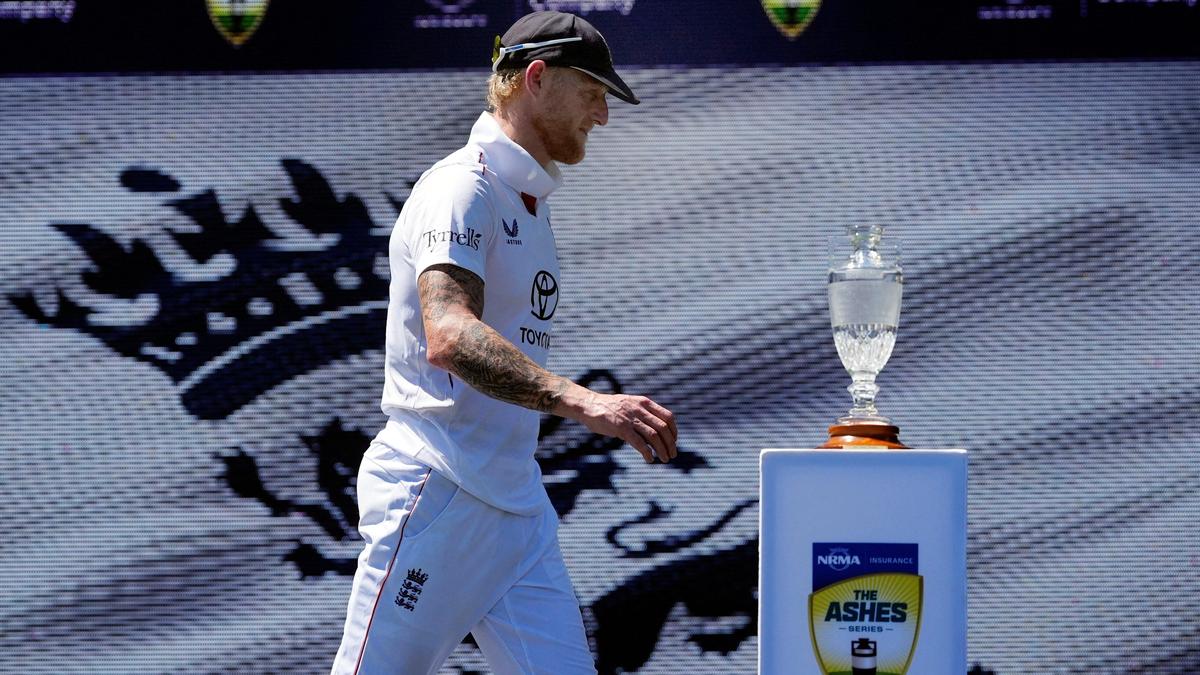
Long before Alex Carey drove Will Jacks through the offside for the boundary that sealed a 4-1 triumph at the Sydney Cricket Ground on Thursday, the Ashes had been won and lost. For all their bluster and bravado, England once again failed to match hype and hoopla with performance, surrendering the little urn to Australia, their fiercest rivals, inside the first three matches spread over 11 days.
It’s been a decade and a half since England won a Test series Down Under, and more than ten years since they last had possession of the bragging rights that the urn brings with it. While it is true that Australia too haven’t won a series in England since 2001, they can at least point to having drawn the last two away series by identical 2-2 scorelines. By contrast, either side of a 3-1 victory in 2010-11, England have been soundly beaten in Australia.
What makes this latest debacle particularly dispiriting from an English perspective is the utter lack of discipline and preparedness in the away ranks. Their lead-up to inarguably the most important showdown from their standpoint was patchy and disjointed bordering on the disrespectful. One isn’t suggesting that England believed all they had to win was to turn up, but by going down so meekly to an Australian attack severely depleted (between them, regular skipper Pat Cummins, pace ace Josh Hazlewood and crack off-spinner Nathan Lyon made a measly three appearances out of a possible 15), Ben Stokes’ men hardly covered themselves in glory.
Gung-ho
Much was made of the arrival in the middle of 2022 of Brendon McCullum, the former New Zealand captain, as the head coach of the Test side. McCullum succeeded Chris Silverwood and interim boss Andrew Strauss at a difficult time for the English; in the preceding 12 months when Joe Root was the captain, they won just once in 17 Tests. Their five-day game was in an inexorable tailspin when the SOS went out to McCullum, then the head coach of Kolkata Knight Riders who had captained his country in 31 Tests and led them to the final of the 2015 50-over World Cup. McCullum came armed with the philosophy of gung-ho positivity which found resonance with new skipper Ben Stokes. Together, the duo tied by a common Kiwi bond – Stokes was born in Christchurch – embarked on the arduous journey of rebuilding, not through conventional methods but by embracing the outrageous, which was perfectly acceptable to the primary stakeholders of English cricket given how far down the Test ladder they had slipped.
England coach Brendon McCullum will have to answer plenty of queries.
| Photo Credit:
REUTERS
A comprehensive series win against New Zealand in a two-match series outside the ambit of the World Test Championship was the perfect start Stokes and McCullum were targeting, and things got even better in July in Birmingham when England and India squared off for the final act of a five-match faceoff held over from 12 months previously. India went into the decider 2-1 ahead but England barred their attacking batting fangs, repeatedly stinging Jasprit Bumrah’s men with an extraordinary chase of 378 in the fourth innings. Bowled out for 284 in the first innings to concede a deficit of 132, England mounted a stirring riposte with the game on the line. Alex Lees and Zak Crawley, the openers, put on 107 in a little under 22 overs, but not even when the hosts lost three for two in 16 deliveries did they fall back on the defensive.
Instead, the Yorkshire pairing of Root and Jonny Bairstow took the fight to the opposition which, for some inexplicable reason, decided that going short on a placid track was the right option. The duo added 269 for the unfinished fourth-wicket stand in 315 deliveries, helping their team to a ridiculously easy seven-wicket victory. England’s rate of scoring with the series in the balance was a scarcely believable 4.93 an over. It was seen as the ultimate vindication of ‘Bazball’, a reference to the no-holds-barred aggressive mantra of batsmanship which was completely at odds with the hitherto staid, traditional, conservative English style.
Fans flock in
Success, driven by the unique brand of entertainment that England had come to drape themselves in, endeared Stokes and McCullum to a fanbase accustomed to coming second best for so long. Suddenly, younger crowds started to swarm Test grounds across the country; there was a sense of excitement and breathless anticipation every time England took the field and it seemed at various stages as if no target was beyond the intrepid, carefree batting group assiduously assembled by the leadership group to fit their attacking needs.
The line between carefree and careless often blurred, but not too many seemed to take notice, or be too bothered about it. Given its very nature, ‘Bazball’ as a methodology would sometimes attract meltdowns. That’s why few appeared terribly displeased when, chasing a monumental 557 for victory in Rajkot against India in February 2024, England slip-slid to 50 for seven and eventually shot out for 122 to go down by 434 runs. It happens, you know, the English tut-tutted.
It has happened far too often now for ‘Bazball’ to not face serious scrutiny, if not downright condemnation, any longer. Stokes and McCullum insist it’s the way to go, never mind the results, but this is competitive sport and the result does matter, more than anything else. Those who originally swore by ‘Bazball’ are now crying foul, pointing to what they believe is massive disrespect to the Test format. Of course, they are emboldened by the fact that ‘Bazball’ hasn’t delivered a coup in a big series to date.

Australia retained the urn in style.
| Photo Credit:
REUTERS
Victory in 22 of the first 35 Tests in the Stokes-McCullum era seems a distant memory now. England have won only four of the next 11. In all, 46 Tests have produced 26 victories and 18 defeats. In the last three and a half years, England have failed to beat Australia and India either at home or away. Notwithstanding India’s fall from grace as a Test force in their backyard, these two teams are considered the toughest opponents in the five-day game. A 1-2 loss in Pakistan in 2024-25 after sitting on a 1-0 lead is another example of the pitfalls of continuing to keep the faith in ‘Bazball’ with utter disregard for the conditions, the game situation and the quality of the opposition bowling.
England have sporadically spoken about being more ‘humble’ – whatever that means – which suggests that even they believe they can be arrogant at various times. What is eulogised as cute and daring in victory is pilloried as reckless and foolhardy when defeat comes calling regularly, as it has for England in recent times. In the last seven months alone, they have lost six of 10 Tests, continuing to stick with misfiring personnel in what is either a show of confidence or the classic example of failing to read the room.
Take Zak Crawley, for example. Touted as an aggressive opening batter who can take attacks apart, he averages 32.45 in 43 Tests in the age of ‘Bazball’. Seventy-nine innings have produced just three centuries and 16 further scores of more than 50. The 27-year-old right-hander was one of six English batters to top 200 runs in the Ashes – only two made more than 275 each – but two half-centuries in 10 innings is simply not acceptable. After much dilly-dallying, England finally let go of Ollie Pope, who had been replaced as vice-captain before the start of this series by Harry Brook.
Pope’s replacement at No. 3, Jacob Bethell, topped the averages for England at 51.25, courtesy a half-century and his maiden first-class ton in successive Tests as he finished with 205 runs. For all his reputation as a fiercely positive run-maker, Crawley scored at 64.08 runs per 100 balls faced; Bethell, the 22-year-old left-hander, hardly hit a shot in anger and never manufactured a stroke, yet his strike-rate was 60.47. More than anyone else, Bethell has made a compelling case for batting his own way, one of the primary requirements for any team to be successful at the highest level.
Test cricket, it needs no reiterating, calls for skills and resilience, yes, but also for common sense and prudence. There cannot be a one-size-fits-all team directive, no matter if the parts have been carefully picked to fit this philosophy. Those so inclined will point to Rishabh Pant’s adventurism and his utter disdain for game situations which have occasionally been so terribly detrimental to his and the team’s cause. Every team can, perhaps must, have a maverick, but imagine a team full of Rishabh Pants. That’s what England sometimes resemble; Root is the steadying influence though in the last three and a half years, even he has been semi-sucked into the ‘Bazball’ school of thought while around him, the rest go hammer and tongs, except when the mood seizes him and Stokes goes ultra, ultra-defensive.
All of England’s opponents have been at the receiving end of humbling blitzkriegs which, it must be said, ramp up the entertainment quotient. They must now be allowing themselves a quiet chuckle at how quickly the most hyped of approaches is gasping for oxygen. Australia, and to a lesser extent India overseas (in the last couple of years), have scored at an excellent rate without falling back on adventurism and brazenness.
They might not be as ‘entertaining’ in red-ball cricket as Stokes’ band, they might not showcase the same derring-do, but perhaps Test cricket isn’t just about entertainment.
It’s also about putting a price on one’s scalp, about attempting to play out a draw against all odds when victory is so far-fetched that it is out of the equation.
Captain Shubman Gill and K.L. Rahul and Washington Sundar and Ravindra Jadeja provided England with a ringside view of what it takes to save a Test match in Manchester in July.
Clearly, England weren’t watching – they were more interested in petulantly trying to deny Jadeja and Washington merited centuries – or if they were, they haven’t taken any lessons on board.
Ultimately, it’s for England to decide what tack they want to adopt. And whether they want to continue to put style before substance. The rest of the cricket world will be watching with interest if they recalibrate or stick to not fixing something that’s clearly broken.