Tencent Holdings is relying on one-time bitter rival ByteDance to promote its most important video game release in years, in a sign of warming relations as well as intensifying competition as China’s gaming industry returns to growth.
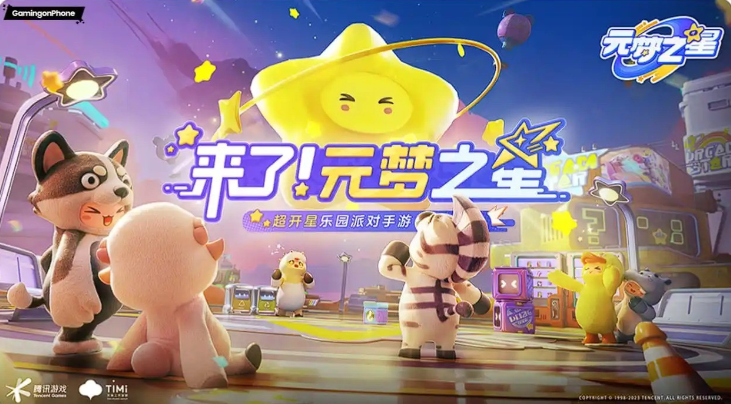
Tencent released on Friday mobile party game “DreamStar” that it hopes to challenge “Eggy Party”, a similar offering from NetEase which has become a surprise hit this year with 100 million monthly active users.
Analysts expect DreamStar to earn up to 6 billion yuan ($842 million) in its first year, while they forecast Eggy Party, which owes much of its success to advertising on ByteDance platforms, to earn 8 billion yuan for NetEase this year.
In a battle to defend its status as China’s biggest gaming firm, Tencent has chosen to promote Dreamstar on ByteDance’s popular advertising platforms despite the two’s rancorous history in barring one another from their platforms.
About 38% of Tencent ads for DreamStar were put on ByteDance’s online ad service Pangolin in the last 30 days, making it the top ad service Tencent has spent on for the game, according to data tracking firm DataEye.
Its decision to rely heavily on Pangolin is remarkable considering that Tencent has its own ad network and various promotion channels within its product ecosystem.
Tencent has put only 12% of DreamStar ads on its own ad network Youlianghui, according to DataEye.
The advertising layout is part of Tencent’s plans for a 1.4 billion yuan investment to build out DreamStar’s ecosystem to ensure its success.
That strategy has also seen Tencent begin to let video game live-streamers to stream on ByteDance platforms.
Zhang Daxian, China’s top live-streamer who became famous through playing Tencent’s “Honor of Kings” game, started his channel on a ByteDance platform earlier this month and previewed DreamStar, a scenario unthinkable to many fans just a year ago.
For years, Tencent and ByteDance were locked in a series of lawsuits against each other. In 2021, ByteDance sued Tencent for restricting users from sharing content from Douyin – TikTok’s sister app in China – on Tencent’s apps, citing anti-monopoly law.
In the same year, Tencent sued ByteDance for featuring footage of Honor of Kings on a ByteDance platform, citing copyright infringement.
The apparent thaw in their relationship comes as ByteDance recently decided to wind down its gaming business to focus on its core platform operations, marking a retreat from its competition with Tencent and NetEase in gaming.
China’s video games market returned to growth this year as domestic revenue rose 13% to 303 billion yuan, putting Beijing’s eight-month industry crackdown two years ago in the rear-view mirror.
($1 = 7.1255 Chinese yuan renminbi)