
Stock markets in both Canada and the U.S. rallied early Wednesday as Wall Street tries to sort the winners from the losers following stunning losses for U.S. President Donald Trump’s party in the midterm elections.
First Solar soared, while companies controlled by Trump ally Elon Musk fell. The parent company of Trump’s social media company plunged.
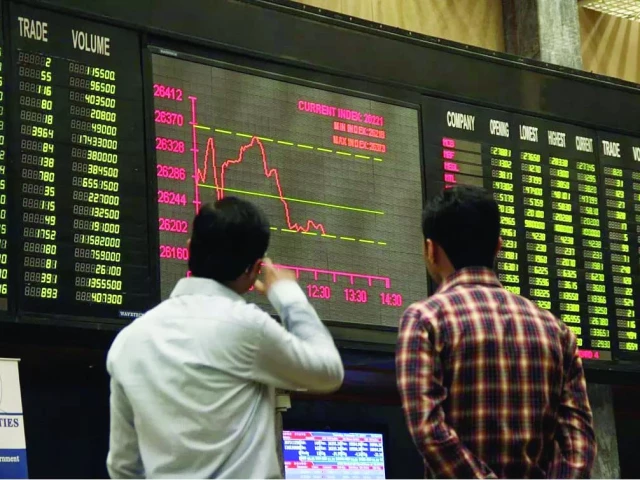
The S&P 500 jumped 1.1 per cent in early trading Wednesday and was potentially on track for its best day in six weeks. The Dow Jones Industrial Average soared 983 points, and the Nasdaq composite rose 1.7 per cent. Treasury yields fell in the bond market.
On Bay Street, the TSX surged at the open of trade, gaining more than 500 points, or about 1.4 per cent as of 9:35 a.m. Eastern time. The Canadian dollar’s U.S. exchange rate also rose about a quarter of a cent to 71.66 cents.
Investors parsed the potential impact on artificial intelligence, the defence and wind energy sectors, as well as Big Oil.
The results usher in a new era of congressional resistance to the agenda aggressively pursued by Trump. One overarching theme was that divided government might not be such a bad thing.
Markets generally prefer that control of Washington be split between Republicans and Democrats. That is seen as offering less risk of sweeping policy changes that could upend the economy.
“The magnitude of the gains for the Democrats in the midterms does not change too much for the near-term policy outlook, given the party still lacks a filibuster-proof majority in the Senate and President Trump has veto power to block legislation,” Stephen Brown of Capital Economics said in an analysis.

Get weekly money news
Get expert insights, Q&A on markets, housing, inflation, and personal finance information delivered to you every Saturday.
Some Asian markets briefly retreated amid concerns that the Democrats might slow the buildout of AI because of safety concerns and local resistance to data centres. Investors have questioned whether a major run-up in stock prices for artificial intelligence companies signals a bubble in the sector.

Defence stocks were largely in retreat on the possibility that the war in Iran will be dialed back.
Much remains impossible to predict, since Trump retains executive authority over key areas such as defence, foreign policy and in some instances trade.
A downbeat forecast could be that “Trump is not now a lame duck, but an angry duck” who might restart tensions over tariffs and NATO allies’ levels of military spending, said Carsten Brzeski, global chief of macro at ING Bank.

An optimistic view, Brzeski said, is that Trump becomes “a tame duck … that he will slow down any disruptive efforts and that he will put more focus on trying to win the Nobel Peace Prize by ending the two big wars without big disruption, and on trade, nothing happens but a few words.”
In Asia, Japan’s Nikkei 225 dipped 1.4 per cent to 62,188.63 while Taiwan’s Taiex lost 0.8 per cent. South Korea’s Kospi index rose 0.6 per cent to 5,683.80, as memory chipmaker SK Hynix edged 0.1 per cent lower, while Samsung Electronics slid 0.7 per cent. Japanese memory chipmaker Kioxia Holdings tumbled 5.4 per cent.
In early European trading, the CAC 40 in Paris rose 1.6 per cent to 8,148.42. Britain’s FTSE 100 was up 1.25 per cent to 10,770.95, and Germany’s DAX climbed 1.5 per cent to 26,249.34.
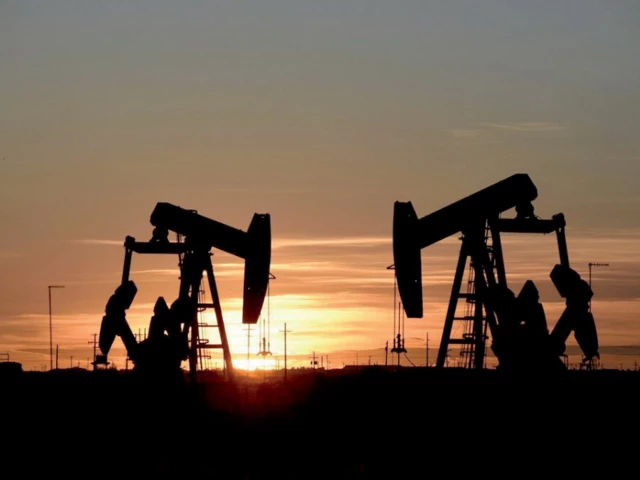
The price of Brent crude, the international standard, fell 1.2 per cent to US$102.35 per barrel, while U.S. benchmark crude oil gave up 0.8 per cent to $95.31 per barrel.
The U.S. dollar fell to 158.30 Japanese yen from 158.69 yen. The euro rose to $1.1255 from $1.1194.
– with a file from Global’s Ariel Rabinovitch
© 2026 The Canadian Press