
Spanish researchers found 14 tail vertebrae and chevron bones from a Diplodocus dating back 150 million years
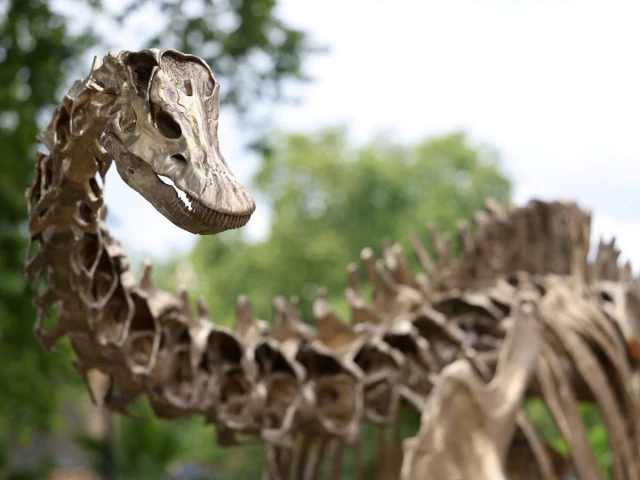
FILE PHOTO: A full-size bronze replica of a Diplodocus dinosaur skeleton is seen at the newly completed Nature Discovery Garden at the Natural History Museum in London, Britain, July 16, 2024. REUTERS
Spanish palaeontologists say they have found the first evidence that Diplodocus, the iconic long-necked dinosaur, once roamed Europe, according to research published on Tuesday in the Journal of Vertebrate Paleontology.
Researchers from the Dinopolis Foundation in Teruel in eastern Spain recovered fossils comprising 14 caudal vertebrae and several chevron bones of one specimen from sediments dating back around 150 million years.
“The anatomical study and evolutionary analyses we conducted have allowed us to identify the El Castellar specimen as belonging to the genus Diplodocus. It is one of the most complete diplodocids discovered to date in Europe and represents the first evidence of this genus outside North America,” lead author Sergio Sanchez Fenollosa wrote.
Alberto Cobos, managing director of the Dinopolis Foundation and a co-author of the study, said the specimen likely measured around 25 metres (82 feet) in length.
It joins a growing list of giant Jurassic sauropods found in the Teruel area.
First identified from fossils found in Wyoming in 1877, the herbivorous Diplodocus, known for its long neck, whip-like tail and four sturdy legs, is among the world’s most recognisable dinosaurs.