
Russia’s Bureau 1440 launched a second batch of Rassvet satellites in July, with numbers undisclosed
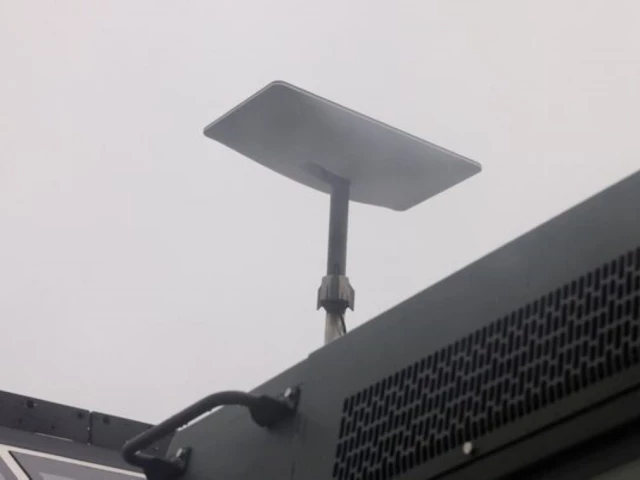
A Starlink satellite internet system is set up on a caravan truck of a tourist, parked in a street in Ronda, Spain February 12, 2024. REUTERS
Russia is taking steps to build an internet network of hundreds of low-Earth-orbit satellites to establish an alternative to US-based SpaceX’s Starlink system.
Russia’s Rassvet system is scheduled to begin service in 2027.
Russian aerospace firm Bureau 1440 launched a second batch of satellites for the Rassvet system in July. The firm deployed an undisclosed number of satellites into orbit during the latest launch, reportedly separating them from the launch vehicle and transferring them to the flight control center’s management.
The firm launched the 16 satellites from its first production batch into orbit at the end of March.
Bureau 1440 had tested satellite communications technologies, inter-satellite connectivity and ground systems via experimental missions in 2023 and 2024.
The firm is expected to launch a total of 292 satellites, including spares, by 2030, while it previously said the system’s capacity could be expanded to 924 satellites if traffic demand increases.
Rassvet is one of the key projects to reduce Moscow’s foreign dependence on communications and satellite infrastructure.
The project is expected to receive 103 billion rubles ($1.2 billion) from the federal budget and around 329 billion rubles (nearly $4 billion) from the firm’s own resources through 2030.
Moscow allocated around $45.6 million from a reserve fund in 2025 for the development of the first 16 satellites. The project’s total funding is expected to reach around $5.2 billion.
Bureau 1440’s goal is to provide low-latency, high-speed broadband internet service with low-Earth-orbit satellites, serving individual users, mobile operators, transport firms, industrial facilities and customers in regions with limited communications infrastructure.
The system aims to provide user terminals with internet speeds of up to one gigabit per second and latency of up to 70 milliseconds.
Rassvet’s satellites leverage 5G NTN communications architecture, enabling interoperability between terrestrial mobile networks and satellite systems, as well as inter-satellite laser communications terminals.
The firm previously tested a laser link at a speed of 10 gigabits per second between two satellites more than 1,000 kilometers (621.3 miles) apart. The laser communications system can transmit data via other satellites in orbit rather than transmitting directly from each satellite to a ground station.
Read More: New NASA telescope to probe dark energy, dark matter and exoplanets
The firm’s satellites also feature plasma propulsion systems and advanced power systems to adjust their positions in orbit and maintain control throughout the mission.
Rassvet is expected to be especially useful in areas where constructing fiber-optic infrastructure is difficult or expensive, such as Siberia, Russia’s Far East and the Arctic.
Other Russian telecommunications firms are also working with Bureau 1440 to integrate satellite connections into the mobile communications infrastructure.
MegaFon, one of the country’s largest telecom companies, and Bureau 1440 inked a deal to connect base stations with insufficient terrestrial connectivity to the internet via Rassvet. The initial goal is to integrate 500 base stations into the system by 2027.
Efforts are underway to expand the use of Rassvet in the transport system.
Bureau 1440 and Russian Railways are collaborating to use satellite internet on Sapsan and Lastochka high-speed trains. User terminal tests for the trains are underway.
The firm is also working with Aeroflot to provide high-speed internet on aircraft.