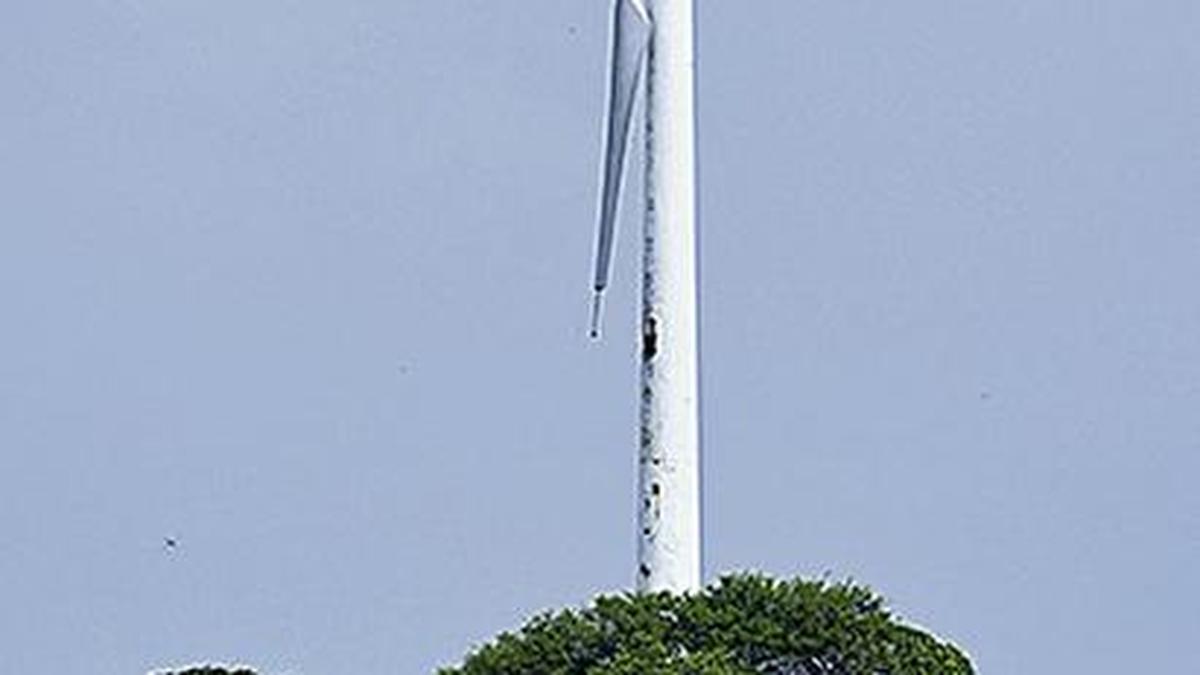
Image for representational purposes only.
| Photo Credit: PERIASAMY M
Instituting production-linked incentive (PLI) schemes to curtail import dependency on critical components in the longer-term, and rationalising import duties for support in the short term, forms the core of the wind energy producers’ wish list in the upcoming Union Budget.
Speaking to The Hindu, Varchasvi Gagal, MD and CEO at Datta Power Infra Pvt. Ltd. (DPIPL), said while India’s annual wind turbine manufacturing capacity is mostly assembled domestically, it is dependent on imports for high-value components like gearboxes, special bearing, controllers and yaw machines. “Dependency on these impacts cost, technology control and strategic autonomy,” he held. Separately, Sanjay Gupta, Ceo at Apollo Green Energy Ltd, also taking note of deeper value chain manufacturing being limited, observes, “This dependency manifests in foreign exchange outflows and vulnerability to geopolitical supply risks, cost pressures on developers due to fluctuating global prices and shipping costs & Technology gap risks.”
Mr. Gupta suggests a “deeper” PLI framework covering the full wind value chain, backed targeted capital support, would help encourage localisation of production rather than just assembly. He adds that at the same time, a “sensible duty rationalisation” would be needed to manage costs as domestic capabilities scale.
“In the medium to long term, a well-designed PLI for wind manufacturing is essential to build scale, attract investment, and localise high-value components sustainably,” he said.
Further, with respect to the PLI, the DPIPL CEO recommends that it must look to incentivise domestic production of critical components, such as, advanced gearboxes and alloys. Mr. Gagal added the government may also consider a viability gap funding for offshore wind and repowering alongside a budgetary push for the latter and restoration of accelerated depreciation benefits, among other things.
Published – January 17, 2026 08:20 pm IST