Virtual meeting between FinMin, US trade representative notes proposed framework advanced ‘significantly’
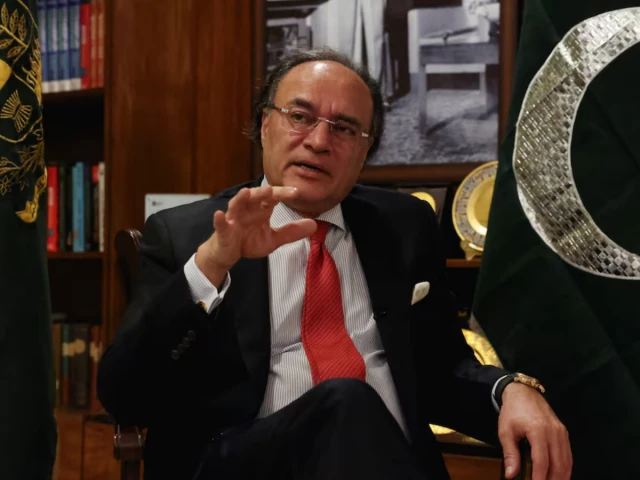
Finance Minister Muhammad Aurangzeb speaks during a Reuters interview in Islamabad, Pakistan, June 15, 2026. PHOTO: REUTERS
Pakistan and the United States made “significant” progress in negotiations on a reciprocal trade framework and are aiming to agree “at the earliest”, Pakistan’s Finance Ministry said on Wednesday following talks between Finance Minister Muhammad Aurangzeb and US Trade Representative Jamieson Greer.
The virtual meeting reviewed the latest round of negotiations aimed at strengthening bilateral trade and economic cooperation, with both sides expressing satisfaction over the pace of discussions and agreeing to maintain regular engagement to finalise the remaining elements of the framework.
The meeting was attended by Federal Secretary for Commerce Jawad Paul and senior officials from the Office of the US Trade Representative.
Finance Minister Holds Virtual Meeting with U.S. Trade Representative to Advance Pakistan–U.S. Trade and Economic Cooperation
Federal Minister for Finance and Revenue, Senator Muhammad Aurangzeb, today held a meeting with Ambassador Jamieson Greer, the United States Trade… pic.twitter.com/GXwuOC9LIZ
— Ministry of Finance, Government of Pakistan (@Financegovpk) August 5, 2026
According to a statement issued by the Finance Ministry, Aurangzeb recalled recent discussions held in Washington and welcomed “the steady progress made by the respective negotiating teams,” while appreciating “the constructive engagement that has characterised the dialogue over time.”
The ministry said both sides noted that negotiations on the proposed reciprocal trade framework had “advanced significantly” and reaffirmed “their shared commitment to concluding the agreement at the earliest.”
During the meeting, Aurangzeb stressed the importance of sustaining the current pace of negotiations in line with Pakistan’s economic priorities.
Read: ‘Despite US financing, reforms must continue’
The finance minister added that a stronger trade and investment partnership with the US would contribute to Pakistan’s “export-led growth strategy”, support economic resilience and create “greater commercial opportunities for businesses in both countries.”
He also highlighted the importance of continued collaboration with the US Export-Import Bank (EXIM) to facilitate bilateral trade and investment.
The statement by the Finance Ministry noted that Ambassador Greer welcomed Pakistan’s continued engagement throughout the negotiations and acknowledged the progress made on “labour and regulatory reforms, including measures relating to forced labour compliance.”
It added that the US trade representative reaffirmed Washington’s commitment to maintaining “the positive trajectory of bilateral trade discussions” and expressed confidence that the remaining issues could be resolved through continued technical engagement.
Further, Aurangzeb underscored the need for “maintaining close coordination and accelerating technical-level discussions” to build on the progress already achieved, the statement said.
Both sides expressed satisfaction with the progress made so far and agreed to continue working closely to finalise the remaining elements of the reciprocal trade framework. They also agreed to maintain regular engagement with a view to concluding the agreement soon, further strengthening what the Finance Ministry described as the “longstanding economic partnership” between Pakistan and the US.
Read More: Pakistan seeks US support for better access to global capital markets
The talks came amid a broader push by Islamabad to deepen economic ties with Washington and restore its access to global capital markets.
Last month, Aurangzeb launched a strategic partnership with a consortium of international banks under Pakistan’s Global Medium-Term Note and International Sukuk programmes, a move aimed at facilitating future sovereign debt issuances. The government has said the three-year arrangement could support up to $10 billion in conventional and Islamic financing over time, subject to market conditions and financing needs, as it seeks to diversify funding sources following an improvement in macroeconomic indicators.
The push has been accompanied by high-level economic engagement with the US. During a visit to Washington in July, Aurangzeb met US Treasury Secretary Scott Bessent and sought greater American support for improved access to international capital markets, stronger foreign exchange reserves, and better sovereign credit ratings.
The two sides also reaffirmed their commitment to deepening economic cooperation, increasing US investment and advancing strategic projects, with Islamabad saying the discussions reflected its broader shift from macroeconomic stabilisation towards export-led growth.