
Cnergyico is also considering spot purchases against longer-term contracts with Vitol and other suppliers
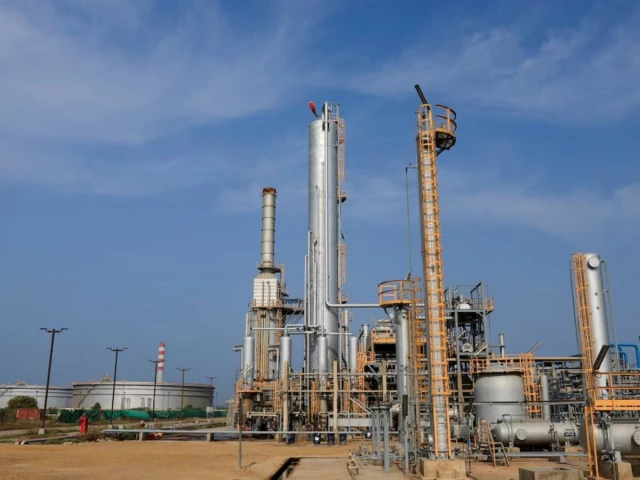
Cnergyico Pk Limited refinery plant and crude oil storage tanks at the Hub coast in Balochistan province, Pakistan March 18, 2026. — REUTERS
Pakistan’s largest refiner, Cnergyico, was buying more US crude as the federal government seeks to diversify the country’s energy supplies after disruptions caused by the war in Iran exposed its dependence on Gulf routes.
The government also wants to increase imports from the US to help narrow its trade surplus and secure reductions in trade tariffs imposed by President Donald Trump.
Cnergyico, which first bought US crude last year, was also considering spot purchases against longer-term contracts with Vitol and other suppliers based on “pricing, reliability and supply security”, Vice Chairman Usama Qureshi told Reuters.
Cnergyico imported about 8.1 million barrels of US crude over nine months, including 7.1 million worth about $750 million in the fiscal year ended June, Qureshi said.
Read: Pakistan to receive first US oil shipment as Cnergyico signs import deal
Refiners’ purchases lead US import increases
Pakistan’s US import payments rose by $914 million to $3.27 billion in that fiscal year, central bank data showed, making Cnergyico’s purchases equivalent to about 80% of the increase.
The refiner could increase US crude purchases if Pakistan’s proposed EXIM Bank trade-finance facility was extended to it, Qureshi said. Islamabad pitched the facility last month to allow Pakistani buyers to defer payments to US exporters for up to three years.
Pakistan mainly imports oil from Saudi Arabia and the United Arab Emirates, with about 90% of its oil and liquefied natural gas imports passing through Hormuz before the war.
Rising fuel costs have put pressure on the Pakistani government to act, as a new round of protests against inflation and fuel prices erupted this week. Islamabad has also sought alternatives, including Saudi crude via Yanbu, located on Saudi Arabia’s Red Sea coast.
Qureshi added that Cnergyico was evaluating a second offshore mooring linked to its storage network to import and export refined products on large tankers outside Karachi’s constrained ports, as part of a $1.2 billion upgrade to meet Euro V standards, cut furnace-oil output and expand capacity to about 200,000 barrels per day.
Read More: Oil refineries urged to swiftly upgrade plants
Fawad Basir, head of research at KTrade Securities, said Middle East disruptions highlighted the risks of relying on a single supply route. Using Very Large Crude Carriers for US crude could cut freight costs by 25% to 30%, while a second Single Point Mooring would speed vessel turnaround.
Cnergyico can process 156,000 barrels of crude per day and operates the country’s only single-point mooring terminal near Karachi, enabling it to handle large tankers unlike other refiners in Pakistan.
The company planned to install a second offshore terminal to allow larger or more frequent shipments, and to upgrade its refinery over the next five to six years.
The refiner, which had been operating at an average refinery run rate of 30% to 35% due to tepid local demand, was betting on growth in demand for oil products.