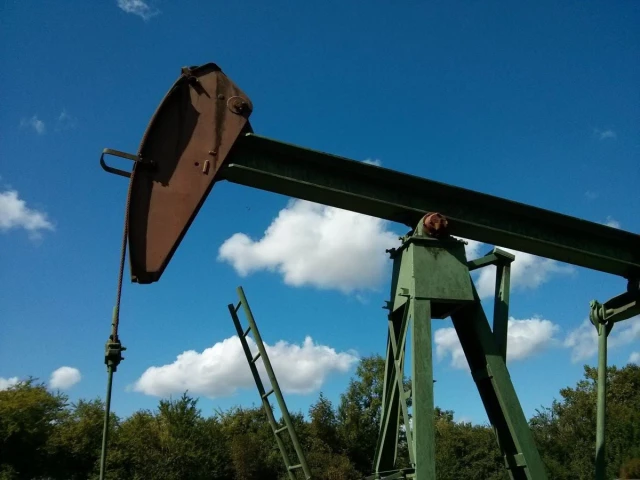
Iran renewed attacks on the United Arab Emirates on Tuesday, causing oil loading at the port of Fujairah to be at least partly halted after the third attack in four days. FILE IMAGE: PIXABAY
Oil prices rose on Friday, paring sharp losses from the previous session, after Hezbollah rejected a new Lebanon ceasefire proposal and Oman’s Mina al Fahal terminal suspended oil loadings following an explosion.
Brent crude futures rose 33 cents, or 0.35%, to $95.36 a barrel by 0408 GMT after settling down 2.84% in the previous session.
US West Texas Intermediate crude was at $93.06 a barrel, up 2 cents, or 0.02%, following a 3.1% loss on Thursday.
Both contracts are set to post their first weekly gain in three weeks, with WTI up more than 6%, after fighting flared up in the Middle East as US-Iran war-peace talks dragged on while traffic in the Strait of Hormuz, where a fifth of the world’s oil passes, remained limited.
Reuters reported on Friday that Oman’s Mina al Fahal terminal has suspended oil loading following an explosion near its single-buoy mooring (SBM) berths due to an alleged drone attack.
Analysts have also flagged concerns of falling oil inventories globally that could cause a price spike in the third quarter.
Hezbollah leader Naim Qassem rejected on Thursday a US-brokered agreement between Israel and the Lebanese government to halt the fighting. Iran has made a ceasefire in Lebanon a condition for any peace deal with Washington.
Read: Oil falls as Lebanon and Israel agree on a ceasefire
US President Donald Trump said on Thursday he believed progress was being made between Israel and Lebanon and that Lebanon deserved to have peace.
“Any optimism remains heavily clouded by a tangled web of headlines and counter-headlines,” IG market analyst Tony Sycamore said in a note.
“From a technical perspective, as long as (WTI) crude oil remains above trendline support in the low $80s, the risks remain skewed to the upside”.
OPEC is sticking to its oil demand growth forecast of 1.2 million barrels per day for this year, Secretary General Haitham Al Ghais said on Thursday, despite the Middle East conflict and closure of the Strait of Hormuz.
Iranian oil exports have fallen to their lowest level in six years, mainly due to the US naval blockade, according to shipping data, although weak demand in China has depressed prices for the oil.