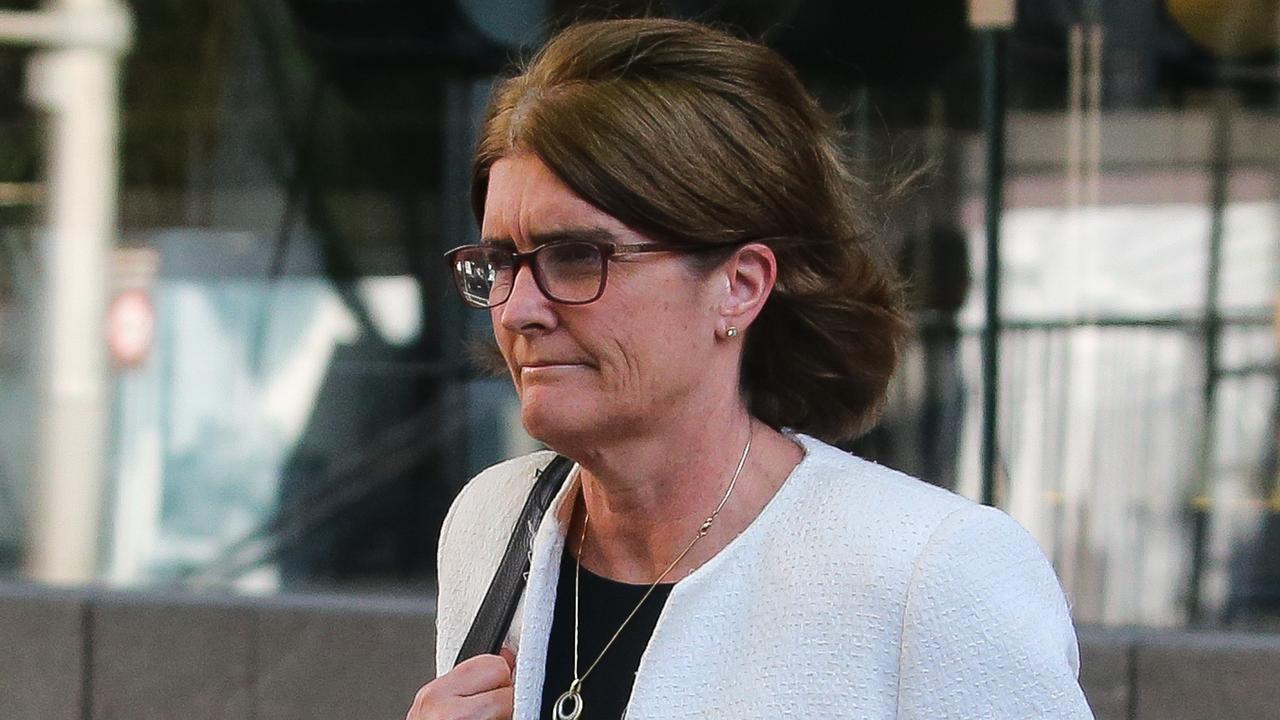
Freshly minted Reserve Bank governor Michele Bullock has spared borrowers further rate pain by holding the cash rate steady at 4.1 per cent for the fourth straight month.
But, in its first meeting with Ms Bullock in the governor’s chair, the central bank issued the same warning it offered in its September statement – that some further tightening of monetary “may be required” to ensure inflation returns to target in a “reasonable time frame”.
In its statement, the board said the higher interest rates were working to establish a more sustainable balance between supply and demand in the economy, and that inflation – although still too high – had passed its peak.
The board said that this latest pause would “provide further time to assess the impact of the increase in interest rates to date, and the economic outlook”.
Tuesday’s decisions shows the RBA is still awaiting the delayed impact of the 12 previous hikes, given the full effect of interest rates typically takes between 12 to 18 months to flow through the economy.
Economists have warned that due to an increase in fixed-rate lending during the pandemic, the transition may be even slower through this tightening cycle.
Economists almost unanimously expected rates to be held steady for Ms Bullock’s first meeting as top central banker – despite stubbornly persistent price pressures – with bond traders implying just a one-in-10 chance that rates would be hiked to 4.35 per cent.
Looking ahead, however, markets have ascribed a 62 per cent chance that the RBA will have hiked rates even further before the year’s end.
A rebound in property prices, coupled with a still-red hot jobs market and an oil price spike all risk posing an inflationary headache for the RBA, and will be watched closely in the months ahead.
The October decision follows fresh monthly inflation data, released by the ABS on Wednesday that showed price pressures accelerated for the first time in four months.
Soaring costs for fuel, rents, and across the labour-intensive services sector pushed consumer price growth to 5.2 per cent in the year to August, up from 4.9 per cent in July.
Experts say continuing weak retail trade and consumer confidence data has offered the board a clear sign that their concerted efforts to reduce demand in the economy have worked.
The central bank itself said the recent data was consistent with inflation returning to target, but pointed to “significant uncertainties around the outlook”.
In its statement, the RBA said services price inflation had been “surprisingly persistent” overseas, and a similar thing could occur in Australia.
The board also pointed to the lag effects of monetary policy and the previous rates decisions, and how that corresponds to a tight labour market.
“The outlook for household consumption also remains uncertain, with many households experiencing a painful squeeze on their finances, while some are benefiting from rising housing prices, substantial savings buffers and higher interest income,” the board said in its statement.
“And globally, there remains a high level of uncertainty around the outlook for the Chinese economy due to ongoing stresses in the property market.”
Pradeep Philip, head of Deloitte Access Economics, said Tuesday;’s decision was “the correct one”, and would allow businesses and households to “breathe a collective sigh of relief in a slowing economy”.
“Although inflation was slightly higher in August than it was in July, that increase was driven by an increase in the cost of more volatile items like fuel, energy and holiday travel. If you exclude those items, underlying inflation in the year to August was lower than it was in the year to July,” he said.
“There is clear evidence of a slowing economy – with confidence waning, consumer spending weak, and the retail sector in the doldrums.
“Increasing interest rates in this environment would have simply added to the economic risks facing the economy.”
Mr Philip said the September quarter inflation figures, due out this month, would “weigh heavily” on the next board meeting.
It comes as new internal RBA research, released under Freedom of Information, shows almost one in five home borrowers are spending more than 30 per cent of their household income on repayments.
Before the RBA began its aggressive rate hike series last May, that figure was just 14.5 per cent of home borrowers.
Battered by 12 interest rate hikes in the last 16 months, Australian households with an average loan size of $585,000 are now spending an additional $1415 each month on repayments.
Higher interest rates have also substantially diminished the amount households can borrow. A family with two children and a household income of $150,000 have had their borrowing capability slide by 28 per cent to $623,400 since last May.