KSE-100 closes at 146,480.14, down nearly 7% from the previous close of 157,496.10 points
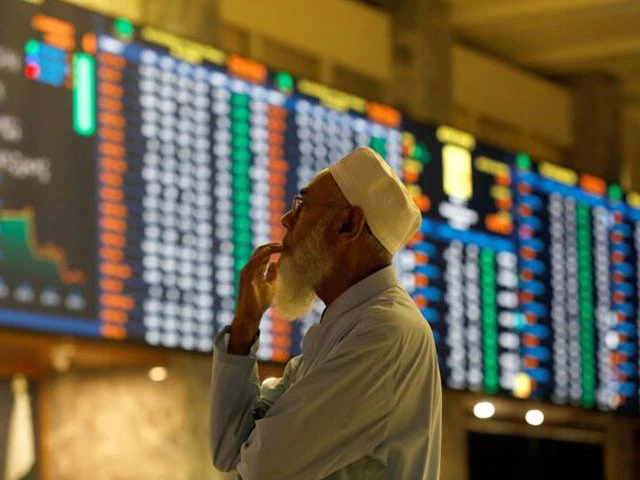
A stock broker reacts while monitoring the market on the electronic board displaying share prices during trading session at the Pakistan Stock Exchange, in Karachi on July 3, 2023. Photo: Reuters/ File
KARACHI:
Heavy selling marked trading at the Pakistan Stock Exchange (PSX) on Monday as the benchmark KSE-100 index plunged 11,015.96 points to close at 146,480.14, a decrease of 6.99%.
The market fell 7,322 points, or 6.21%, shortly after the commencement of proceedings, triggered by widespread panic among investors in the wake of the Gulf war and intensified selling pressure across major sectors.
In response to the steep fall, the PSX issued a market halt notice, stating that trading suspension had been activated after the KSE-30 index dropped by 5% from its previous closing level. As per PSX regulations, trading was temporarily halted and all outstanding orders in the system were automatically cancelled.
The exchange informed participants that trading would resume according to the prescribed reopening schedule following the halt.
Also read: Shares skid as oil surge threatens inflation shock
Market sentiment remained fragile amid uncertainty surrounding the monetary policy decision. The Monetary Policy Committee (MPC) later announced its decision, keeping the policy rate unchanged and soothing concerns over a potential rate hike. A sharp increase in global oil prices also fuelled widespread selling across the market.
KTrade Securities equity trader Ahmed Sheraz told The Express Tribune that the unprecedented surge in oil prices from around $83 per barrel to nearly $119 weighed heavily on investor sentiment. Besides, hopes for a potential de-escalation in the Middle East conflict failed to materialise as hostilities intensified, further exacerbated by strikes on oil tankers in the region.
“For Pakistan, persistently higher oil prices could carry significant economic repercussions, like the current account deficit, pressure on the rupee, high inflation and the risk of slower growth,” Sheraz said.
Those concerns were compounded by the possibility of a rate hike by the State Bank’s Monetary Policy Committee later in the day. Amid this increasingly uncertain backdrop, investor anxiety triggered broad-based selling across the market, leading to a trading halt, he added.