
New Zealand clinched its first-ever ODI series win on Indian soil.
| Photo Credit: R.V. MOORTHY
When a second-string New Zealand side arrived in India for the white-ball series about a week back, few gave the Michael Bracewell-led visitors even an outside chance, let alone making history. Yet, over an eventful week, the Kiwis produced a tactically superior performance to clinch a historic 2–1 series victory — their first-ever ODI series win on Indian soil.
New Zealand’s success was built on method and clarity, with Daryl Mitchell at the centre of it. Throughout the series, Mitchell displayed exceptional control against both pace and spin. Against the tweakers, he used his feet decisively — either getting to the pitch or rocking back to manipulate the length.
He repeatedly employed the sweep and reverse sweep, particularly against Ravindra Jadeja and Kuldeep Yadav, forcing them off attacking lines and unsettling field placements. Both spinners struggled to adapt, allowing Mitchell to milk singles effortlessly and maintain relentless scoreboard pressure.
Against pace, Mitchell was equally assured. He played late, worked the ball into gaps with soft hands, and denied India the opportunity to build pressure through dot balls — a recurring theme across the series and a key factor in New Zealand’s dominance during the middle overs.
Bright spot
Virat Kohli continued his tremendous form and once again stood tall as the fulcrum of the Indian batting. Beyond him, however, consistency remained elusive. Several batters got starts across the three matches but failed to convert them into match-defining innings — a drawback, captain Shubman Gill acknowledged after the series.
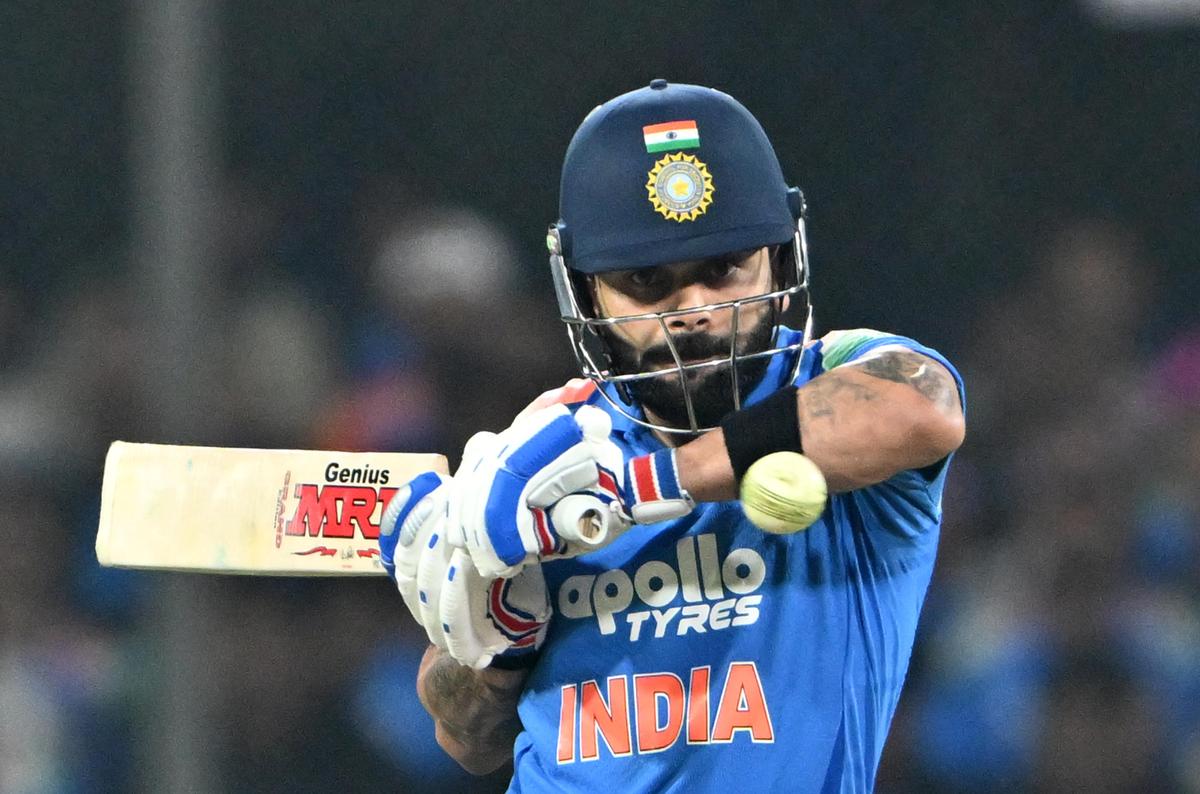
Kohli stood tall among the Indian batters.
| Photo Credit:
R.V. MOORTHY
The bowling, particularly the spin department, raised serious concerns for the hosts. Both Jadeja and Kuldeep were worryingly ineffective, especially during the middle overs, allowing the New Zealand batters to dictate terms and dominate crucial periods of play.
To compound matters, India’s fielding was abysmal, to say the least. Missed chances and sloppy ground fielding proved costly as the Black Caps pounced on every opportunity presented to them. Those lapses tilted the balance in New Zealand’s favour.
With the 2027 World Cup still a far away, this defeat should act as a timely wake-up call. For head coach Gautam Gambhir and Gill, the priority now is to address the shortcomings — tighten fielding standards, demand greater accountability with the bat, and settle on the most effective XI. There is time to course-correct, but rebuilding confidence and clarity within the group must begin immediately.
Published – January 19, 2026 06:16 pm IST