

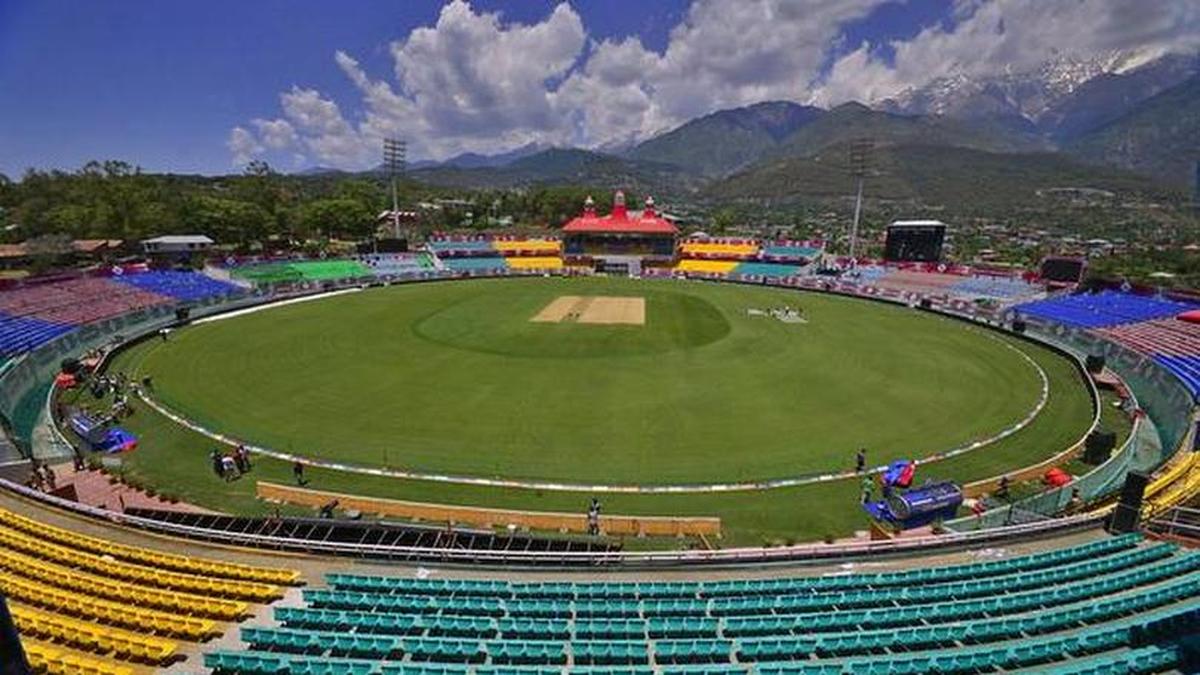
A view of the cricket stadium in Dharamsala. Dharamsala continues to offer seam movement and bounce, the old perception of it being a purely bowler-friendly venue no longer fully applies. The true carry has created conditions where batters can dominate once they survive the opening overs.
The evidence from the three IPL matches played in Dharamsala this season suggests that it has evolved into a high-scoring venue where fast bowlers still remain relevant, a combination that could shape Tuesday’s (May 26, 2026) Qualifier 1 between Royal Challengers Bengaluru and Gujarat Titans.
The numbers tell the story clearly. Across the three completed matches at the HPCA Stadium this season, every first-innings total has either touched or crossed 200.

So while Dharamsala continues to offer seam movement and bounce, the old perception of it being a purely bowler-friendly venue no longer fully applies. The true carry has created conditions where batters can dominate once they survive the opening overs.
What remains unique, however, is how the ball behaves early in the innings.
At roughly 1,450 metres above sea level, Dharamsala remains one of the few Indian grounds where fast bowlers consistently get conventional swing alongside steep carry. The cooler, thin mountain air helps seamers hit hard lengths effectively, especially with the new ball.
Also Read : IPL 2026 confirmed Points Table — RCB finishes on top; Rajasthan Royals sneaks through to Playoffs
But unlike venues where assistance for pacers translates into low totals, Dharamsala’s quick outfield and even bounce allows batters to recover rapidly after the initial movement. That pattern has repeated itself in all three matches this season: wickets and play-and-miss chances in the powerplay followed by heavy scoring once the ball softened.
The tactical battle in Qualifier 1 may therefore depend on which side maximises the first six overs with the ball.
On current evidence, RCB appear to hold a slight edge in those conditions.

Their pace attack, led by Bhuvneswar Kumar and Josh Hazlewood, is built more around control, swing and hard-length execution. These are attributes that have historically worked in Dharamsala. Bowlers capable of moving the ball under lights and varying pace intelligently at the death have enjoyed success here even in high-scoring games.
Against Punjab Kings, RCB could defend 222 because their seamers kept striking during the chase.
GT’s attack, meanwhile, arguably possesses greater raw pace, which the extra carry in Dharamsala could amplify. But one factor that may reduce their usual advantage is the limited role of spin at this venue. Rashid Khan is usually effective but this pitch will test him.

Statistical trends from recent matchesin Dharamshala show pacers accounting for the overwhelming majority of wickets, with teams rarely turning extensively to spin in decisive phases.
Another significant trend is toss dominance.
Chasing sides have won two of the three matches this season, largely because batting becomes easier once the ball loses shine and dew settles in. That could make bowling first the preferred option again on Tuesday night.
Overall, Qualifier 1 is unlikely to be a traditional “bowler’s match” despite Dharamsala’s reputation. The surface now rewards aggressive batting far more than before, but it still offers enough early movement to keep fast bowlers central to the contest.
In that regard, RCB’s more rounded seam attack may give them a marginal advantage over GT in exploiting the venue’s most decisive phase: the powerplay.
Published – May 25, 2026 03:00 pm IST


