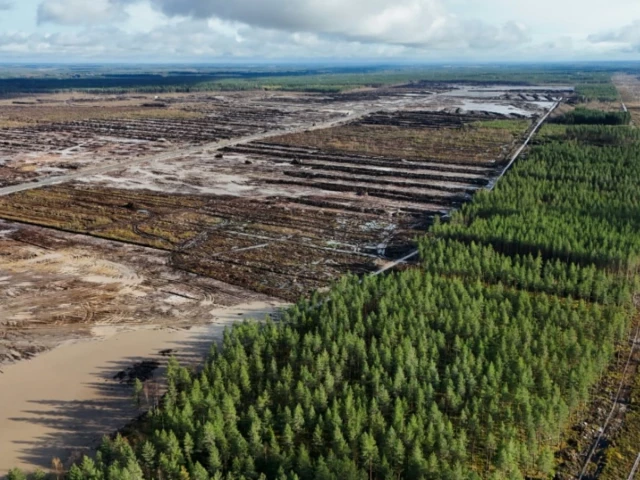
Photo used for representation purpose only.
| Photo Credit: Reuters
Moody’s Ratings warned on June 25 that India’s growing water shortage and increasingly frequent climate change-driven natural disasters, amid a rise in consumption and rapid economic growth, can negatively affect the country’s sovereign credit strength.
Currently rated Baa3 stable by Moody’s, which denotes the lowest investment grade rating, India is susceptible to increasing water stress, and any drop in water supply, for which it is heavily reliant on monsoon rains, could disrupt operations in factories and farms. This, the firm said, would result in inflation in food prices and declines in income for affected businesses and communities, while sparking social unrest.
“This in turn can exacerbate volatility in India’s growth and undermine the economy’s ability to withstand shocks given that more than 40% of the country’s workforce is employed in agriculture,” Moody’s said in a note on environmental risks for India, identifying coal-fired power generation and steel production as the industrial sectors most vulnerable to water stress.
Moody’s stressed that India is one of the sovereigns that are most vulnerable to risks associated with water management and has the poorest access to basic services, including water, among G-20 economies.
India’s fast economic growth, accompanied by rapid industrialization and urbanization, is reducing water availability in the world’s most populous country. Average annual water availability per capita is likely to drop to 1,367 cubic meters by 2031 from an already-low 1,486 cubic meters in 2021, the firm said. A level below 1,700 cubic meters indicates water stress, with 1,000 cubic meters being the threshold for water scarcity, according to the Water Resources Ministry.
Pointing to the strain on water supply due to the current heat wave, with temperatures hitting 50 degrees Celsius in Delhi and northern Indian States, Moody’s said floods that are one of the most common types of natural disasters in India, also disrupt water infrastructure as it is insufficient to retain water from sudden large downpours.
“Monsoon rainfall is also lessening. The Indian Ocean warmed at a rate of 1.2 degrees Celsius per century during 1950-2020, and this will intensify to 1.7-3.8 degrees Celsius during 2020-2100, according to the Indian Institute of Tropical Meteorology. This is leading to a narrowing gap between land and sea temperatures and weakening the monsoon circulation because the higher the temperate of seawater relative to that of land, the weaker monsoon rainfall generally becomes,” the note said, adding that droughts are becoming more severe and frequent.