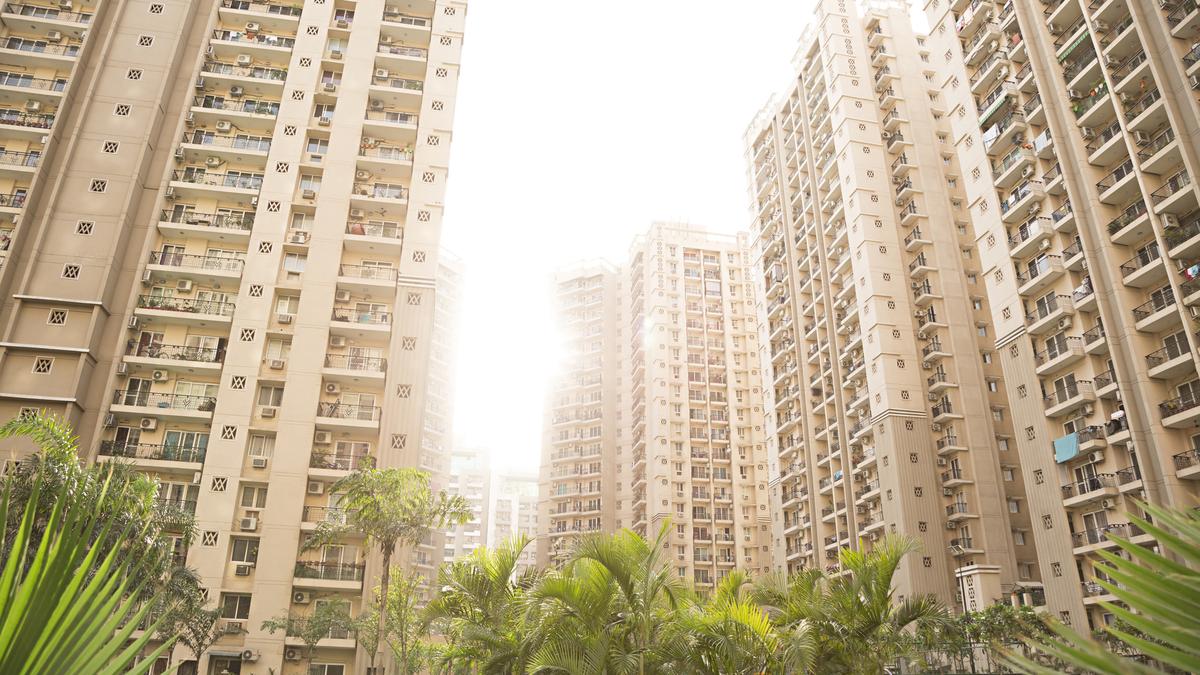
There was a time, not so long ago, when a ₹10 crore house made heads turn. It meant something. It whispered of old money, of a certain kind of gravity, a Lutyens bungalow perhaps, or a sprawling plot somewhere in South Delhi where the trees were older than the city’s ambitions. Beyond that number, real estate almost ceased to be a transaction. It became mythology.
That mythology has been rewritten. India’s super-luxury residential market has quietly crossed a threshold that even its most bullish observers didn’t see coming quite this fast. The new benchmark isn’t ₹10 crore. It isn’t even ₹25 or ₹50 crore. Today, the conversation that matters, the one happening in hushed tones over single malts at rooftop bars, is the ₹100 crore home. And what’s striking isn’t just the price tag. It’s what the price tag now gets you, and more importantly, who’s buying it.
Moving forward
The idea that true luxury meant low-rise living, a private garden, a driveway, a gate you could close on the world, held for decades. Bungalows in Lutyens’ Delhi and sea-facing bungalows in Juhu defined aspiration for a generation of industrialists and inherited wealth. But that generation is no longer the only one at the table.
Today’s ₹100 crore homes aren’t bungalows. They’re sky-high residences sitting on the upper floors of towers that have been engineered to feel like nothing else exists at that altitude. We’re talking floor plates of 8,000 to 12,000 square feet. Private pools on the terrace. Wine cellars tucked behind library walls. Smart home systems that adjust the temperature of your whiskey glass, if you’ll permit the exaggeration. The amenities aren’t amenities anymore; they’re addresses within addresses. Concierge services modelled on the finest hotels in the world. Private cinema rooms. Wellness floors. Helipads, yes, but also herb gardens and meditation pods, because the people buying these homes are not just rich — they are restless, curious, and relentlessly alive.
A different kind of buyer
The bungalow gave you space. These towers give you everything else, too. If there is one phrase that has quietly transformed the character of India’s ultra-luxury housing market, it is this: by invitation only.
When developers started restricting access to certain projects, not just through price, but through genuine vetting, something shifted. The homes became more exclusive, yes. But more importantly, the community inside them changed.
Gone is the old guard’s monopoly. In its place walks a different kind of buyer: the 35-year-old founder who took his startup public, the couple in their early 40s who built a D2C brand from a garage in Gurugram and sold it for a number nobody expected, the young entrepreneur who thinks in quarters but lives for decades.
These buyers don’t want a home that feels like a museum; they want one that feels like fuel. A space where the energy of what they’ve built follows them through the front door. They’re not retiring into luxury — they’re accelerating into it.
Ask anyone in Indian real estate where the pulse of the ₹100 crore market beats loudest today, and the answer, increasingly, is Gurugram. Specifically, Golf Course Road, a corridor that has done for Indian luxury real estate what the Bandra-Kurla Complex did for finance: turned a geographical stretch into a state of mind. Or, to put it better, what Sheikh Zayed Road is to Dubai is what Golf Course Road is to India.
Luxury expands
Mumbai’s MMR has always been the benchmark. It was, for the longest time, India’s only credible ultra-luxury market. Even a decade ago, transactions crossing ₹100 crore in MMR weren’t unheard of. But the distribution has shifted meaningfully. In 2025, the city’s luxury real estate market continued to push new highs. Plix co-founder Rishubh Satiya purchased a ₹125 crore apartment at Oberoi 360 West in Worli, while Piramal Realty closed multiple deals exceeding ₹100 crore, including penthouses and duplex residences at its Piramal Mahalaxmi project in South Mumbai.
Bengaluru is still some distance away from that benchmark. Even some of the city’s most high-profile transactions recently remain well below the ₹100 crore mark. For instance, a luxury duplex penthouse at MAIA Estates’ 27 Summit project was acquired by Market Financial Solutions CEO Paresh Raja for ₹54.38 crore or Infosys founder N.R. Narayana Murthy purchased a second apartment in the same project for over ₹50 crore in late 2024.
At the same time, Gurugram has not just caught up, it has pulled ahead. At DLF Camellias, the tower that has, over the last few years, quietly become shorthand for the very ceiling of Indian residential luxury, the transactions have started writing their own history. Entrepreneur Rishi Parti closed what is believed to be the highest-ever residential transaction in Gurugram here, at a staggering ₹190 crore, a number that didn’t just set a record but announced, in no uncertain terms, that Camellias was operating in a category of its own.
Value over vanity
Strip away the superlatives and what you’re left with is a simple observation: the ₹100 crore home in India today is not a vanity purchase. It is a considered, often deeply strategic decision made by people who have spent their careers understanding the difference between price and value.
What they are buying is extraordinary real estate, space that rivals what you’d find in Dubai or Singapore, finishes that compete with anything in London’s super-prime market, amenities that have redefined what residential living can mean in this country. But they are also buying community. Proximity to people who are building, thinking, and creating at the same altitude. In a country where the network is everything, the floor you live on has started to matter in ways that extend well beyond the view. Today’s luxury is no longer just about exclusivity, but exclusivity with excellence.
That, perhaps, is the most interesting thing about the ₹100 crore club. The door is open, but only for those who know what they’re walking into.
The writer is president and country head, eXp Realty India.
Published – May 23, 2026 04:32 pm IST