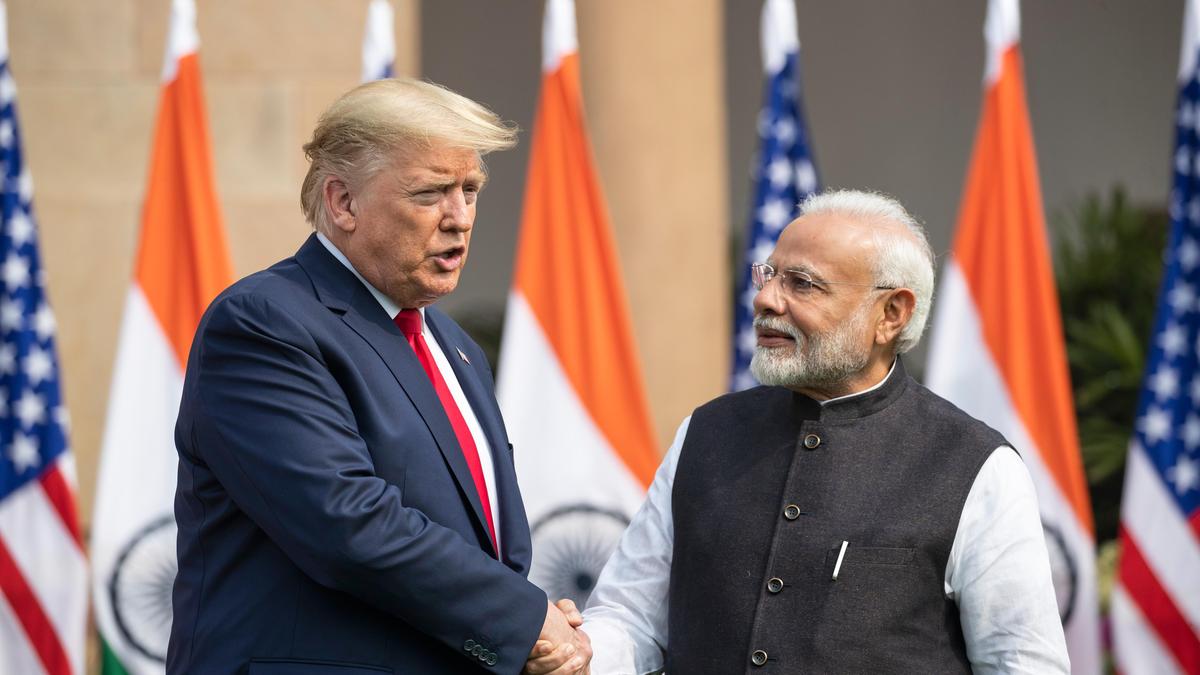
India will remove or reduce tariffs on all industrial goods and a “wide range” of agricultural goods imported from the U.S., according to the joint statement between the countries issued early Saturday (February 7, 2026) morning.
In return, the U.S. will reduce its tariffs on Indian imports to 18% from the existing 50% by amending the relevant executive order, the statement confirmed. Notably, the statement did not have any mention of India’s imports of Russian oil.
India-U.S. trade deal LIVE updates
These commitments are part of the framework the two countries have worked out in an Interim Agreement on trade.
Staged implementation
Earlier, Commerce Minister Piyush Goyal had stated that this tariff reduction by the U.S. would be possible only after the joint statement was released. India, on the other hand, will be able to reduce or remove its tariffs on American goods only after the formal Interim Agreement is signed, which Mr. Goyal said is expected to happen in mid-March.
Notably, the joint statement includes a specific clause that says that the two countries can modify their commitments if the other country changes the agreed upon tariffs.
“This framework reflects the growing depth, trust and dynamism of our partnership,” Prime Minister Narendra Modi said on X. “It strengthens ‘Make in India’ by opening new opportunities for India’s hardworking farmers, entrepreneurs, MSMEs, StartUp innovators, fishermen and more. It will generate large-scale employment for women and youngsters.”
Also Read | India-U.S. trade deal will not include sensitive agricultural items and dairy: Goyal
Tariff changes
“India will eliminate or reduce tariffs on all U.S. industrial goods and a wide range of U.S. food and agricultural products, including dried distillers’ grains (DDGs), red sorghum for animal feed, tree nuts, fresh and processed fruit, soybean oil, wine and spirits, and additional products,” the statement said.
Commerce Minister Piyush Goyal also hailed the framework, saying on X that it “reflects India’s commitment to safeguarding farmers’ interests and sustaining rural livelihoods by completely protecting sensitive agricultural and dairy products, including maize, wheat, rice, soya, poultry, milk, cheese, ethanol (fuel), tobacco, certain vegetables, meat, etc”.
The statement said that the U.S. would reduce its tariffs to 18% on several imports from India, including textile and apparel, leather and footwear, plastic and rubber, organic chemicals, home décor, artisanal products, and certain machinery. Further, it said that following the conclusion of the formal interim agreement, it will remove tariffs on a wider range of goods, including generic pharmaceuticals, gems and diamonds, and aircraft and aircraft parts.
In Focus Podcast | India-US ‘trade deal’: What does India gain from it?
In addition, the U.S. also said it would remove tariffs on aluminium, steel, and copper.
“The United States and India commit to provide each other preferential market access in sectors of respective interest on a sustained basis,” the statement said. “The United States and India will establish rules of origin that ensure that the benefits of the Agreement accrue predominately to the United States and India.”
Non-tariff barriers
The statement said that the two countries would also address non-tariff barriers that affect trade between them.
India has agreed to address such non-tariff issues raised by the U.S. with regard to the import of U.S. medical devices and Information and Communication Technology (ICT) goods.
“Recognising the importance of working together to resolve long-standing concerns, India also agrees to address long-standing non-tariff barriers to the trade in U.S. food and agricultural products,” the statement said.

Larger Bilateral Trade Agreement and beyond
The statement added that the two countries would work towards “further expanding market access opportunities” through negotiations on a more comprehensive Bilateral Trade Agreement (BTA).
“The United States affirms that it intends to take into consideration, during the negotiations of the BTA, India’s request that the United States continue to work to lower tariffs on Indian goods,” the statement said.
The two countries also agreed to strengthen “economic security alignment” to enhance supply chain resilience and innovation through complementary actions “to address non-market policies of third parties”, as well as cooperating on inbound and outbound investment reviews and export controls.

“India intends to purchase $500 billion of U.S. energy products, aircraft and aircraft parts, precious metals, technology products, and coking coal over the next 5 years,” the statement said. “India and the United States will significantly increase trade in technology products, including Graphics Processing Units (GPUs) and other goods used in data centers, and expand joint technology cooperation.”
The two countries also committed to addressing “discriminatory or burdensome” practices and other barriers to digital trade and to set a “clear pathway” to achieve mutually beneficial digital trade rules as part of the BTA.
Published – February 07, 2026 05:26 am IST