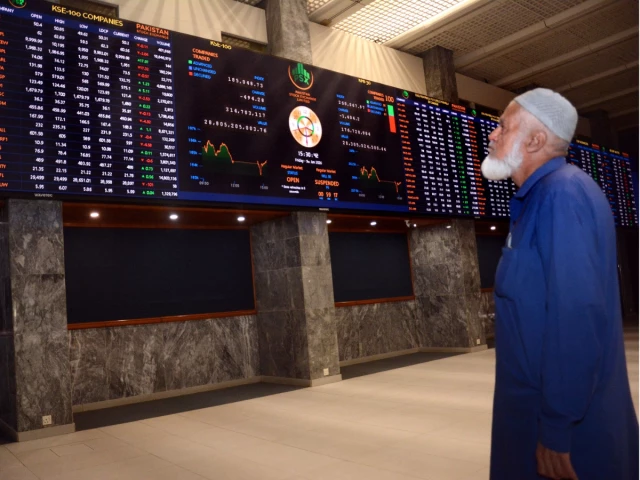
Image used for representational purposes. File
| Photo Credit: Getty Images/iStockphoto
India’s equity markets slipped to seventh place in terms of market capitalisation on Tuesday (June 2, 2026) as heavy foreign selling, weak earnings growth and limited exposure to AI-linked stocks allowed South Korea’s chip-heavy market to overtake it.
South Korean stocks have rallied this year, driven by AI chipmakers, which have lifted the combined value of companies listed on the KOSPI, KOSDAQ and KONEX to $5.01 trillion, surpassing the $4.85 trillion value of firms on India’s National Stock Exchange, exchange data showed.
India, once a darling among emerging markets, has now fallen two rungs in a fortnight after slipping behind Taiwan last month.

“About 18 months ago, India’s equity market cap was roughly 3.5 times South Korea’s and more than twice Taiwan’s. Fast forward just five months into 2026 and that lead has evaporated,” Bernstein analysts Venugopal Garre and Nikhil Arela said in a note.
India’s Nifty 50 and BSE Sensex have lost 10.1% and 12.5% each this year, while the IT index – the second-heaviest sector on the benchmarks – has tumbled 19%, pressured by a subdued earnings outlook and persistent foreign selling.
Foreign investors have pulled out $26.4 billion from Indian stocks so far in 2026, surpassing $18.91 billion in 2025 – the previous annual record.
Additionally, India’s share in the MSCI Global Standard index has shrunk to 12.3% from a peak of 21% in September 2024.
“It’s really a remarkable decline and a restructure of the whole investment environment for us because of, obviously, the rise of South Korea and Taiwan as well,” said Naomi Waistell, a fund manager in the emerging equities team at French firm Carmignac, which manages 41 billion euros ($47.76 billion) in assets.
The contrast is particularly stark in technology-heavy markets. South Korean chipmakers Samsung Electronics and SK Hynix have surged this year, lifting the KOSPI 107% higher while Taiwan SE Weighted index has advanced 59%, boosted by demand for AI-linked stocks.
India, by comparison, has struggled to benefit from the AI-driven investment boom.
Market returns indicate that the narrative is that “AI is the defining theme and semiconductors are at its centre and within emerging markets, that story belongs to Taiwan and Korea, not India,” said Abhay Laijawala, managing director and India chief investment officer at Lighthouse Canton.
However, that view may be overstated as India offers a “picks-and-shovels” opportunity in the AI era through investments tied to electricity, cooling systems, physical infrastructure and data centres that underpin the broader AI ecosystem, Laijawala added.
Published – June 02, 2026 10:23 pm IST