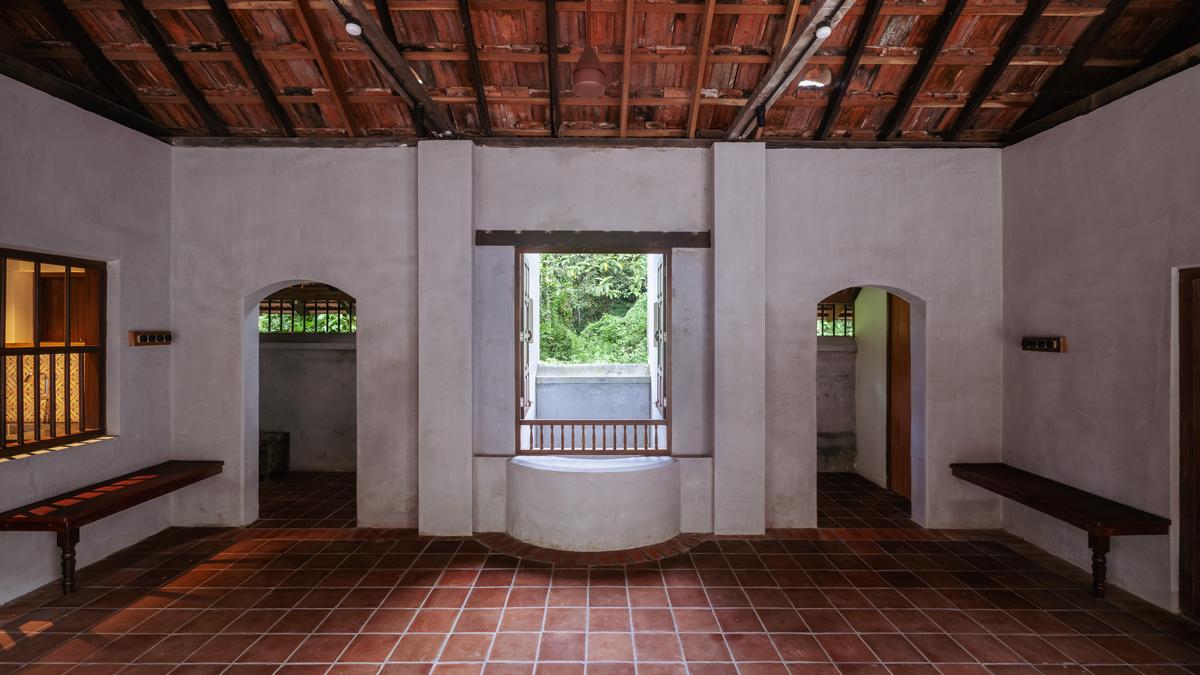
When Sethu Thampuratty passed away at 105-and-a-half, Prasanna Varma decided the best tribute to her grandmother would be to save her beloved home. Then seven of her cousins joined in. Two years later, Thekkekottaram is ready to be lived in again.
Thekkekottaram is one of the rowhouses on the southern edge of the Kilimanoor Palace. Located 30 kilometres from Thiruvananthapuram, the Kilimanoor palace is the ancestral home of Raja Ravi Varma, one of India’s most influential painters. It was also the site of his studio. Ravi Varma was the grand uncle of Sethu Thampuratty.
A portion of the renovated row house
| Photo Credit:
Prasanth Mohan
The palace comprises a complex of buildings, small and big structures that were built as the family grew, with a large portion of its residences in the form of row houses. Prasanna, who is an author and translator, reminisces about her early days at the palace. “Some of us were born here and all of us were brought up here; Ammoomma and Muthachan [Rama Varma] treasured this plain little house and transformed it into a real palace for each of us. A palace of love.”
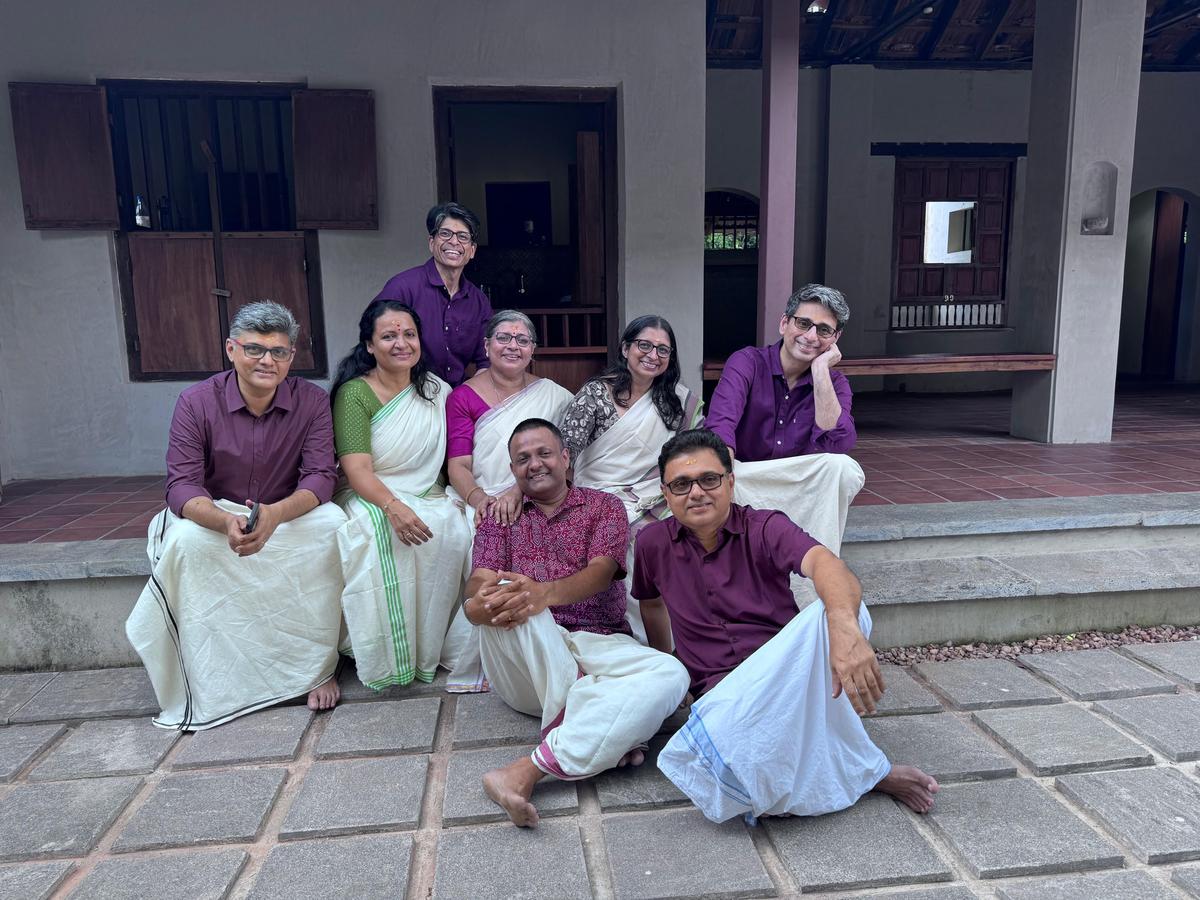
Cousins who came together to renovate the row house
| Photo Credit:
SPECIAL ARRANGEMENT
The sloping-roofed row houses are connected, built around the central naalukettu. One can only imagine the bustle when it was alive with people and activities. Today, in stark contrast, it is silent and parts of it wear decrepitude.
So when Aswathy Ganesh of The One Architecture Studio, Tripunithura, the architect who led the renovation of Thekkekottaram set to work, she felt the design had to reflect the simplicity that defines the entire Kilimanoor palace and retain its soul.
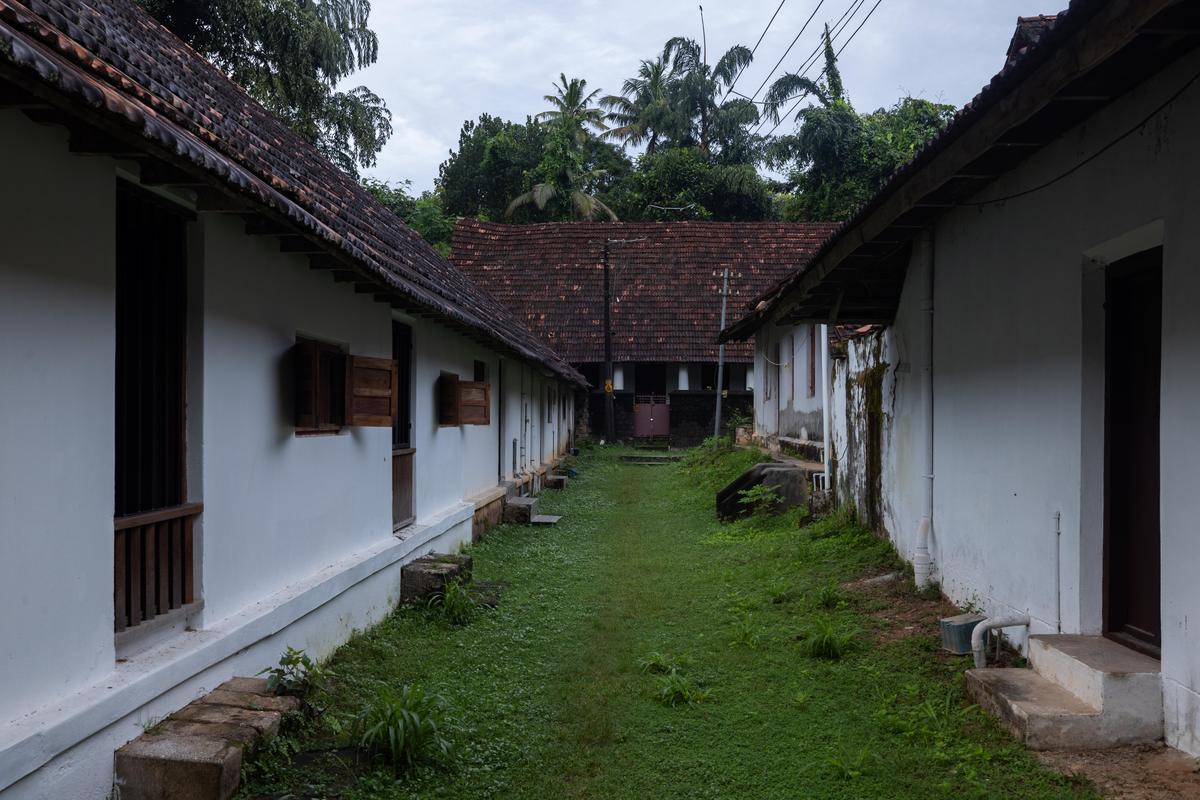
The buildings that comprise the palace
| Photo Credit:
Prasanth Mohan
A graduate of College of Engineering Trivandrum (CET), Aswathy worked with architect and urban planner, the late Christopher Charles Benninger in Pune. Some of the projects she was part of include the Azim Premji University, Bengaluru and IIT Hyderabad. Working with him, she says, shaped her as an architect, for instance in the honest expression of materials through a clarity and elegance of form. These show in her work at Thekkekottaram: the lines are neat and simple, sans unnecessary flamboyance, retaining the character of the space.
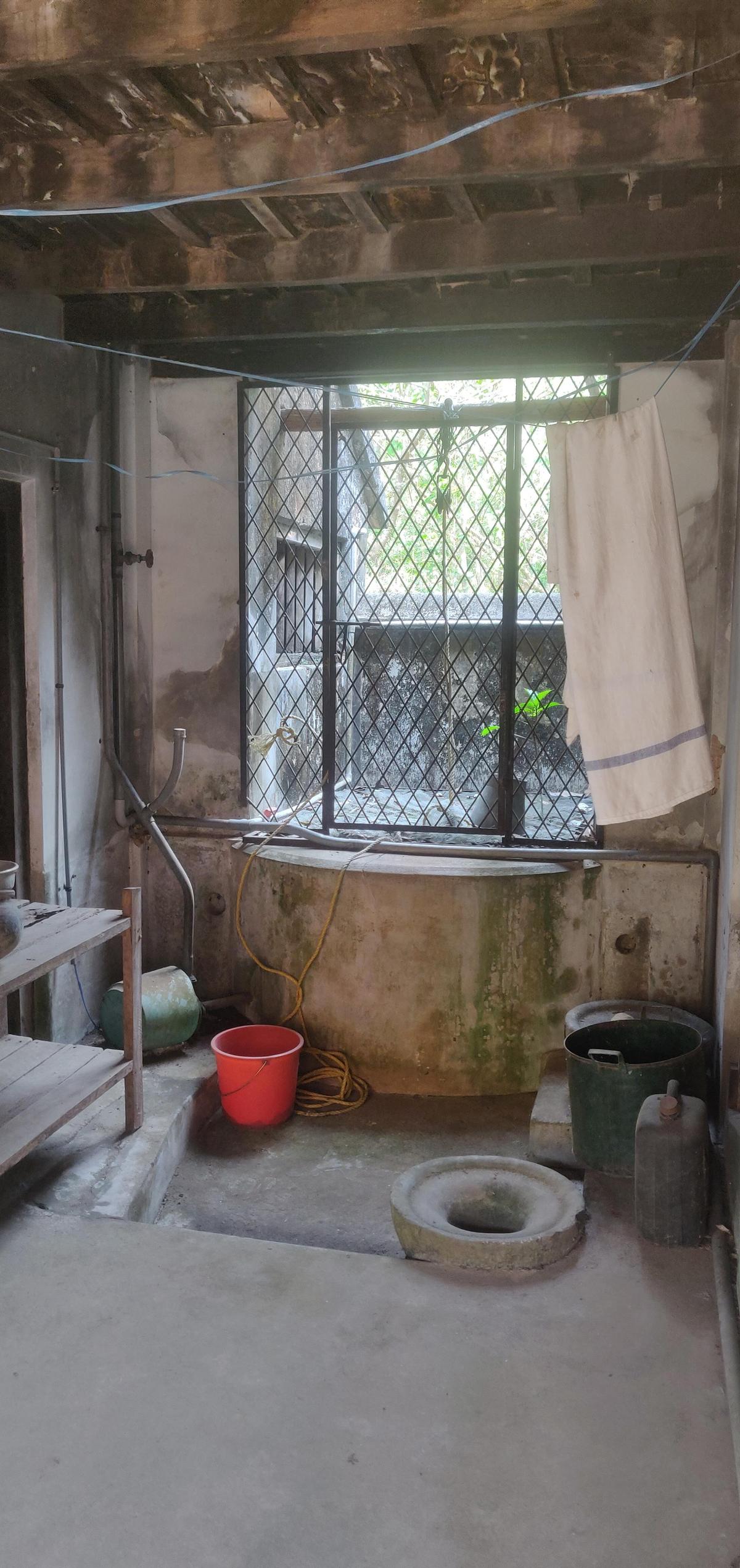
Aportion of the row house before renovation
| Photo Credit:
SPECIAL ARRANGEMENT
Physically deteriorating, but alive and thriving in memories, there were many things Aswathy wanted to do with the house as an architect; but she was working on a modes tbudget. She says, “Cost was a constraint. I had the memories of eight cousins to work with, of their vacations spent here…I had to imagine what it was like, there were no photographs as references,” says Aswathy. Since the construction was more than 100 years old, Aswathy also had to tread carefully.
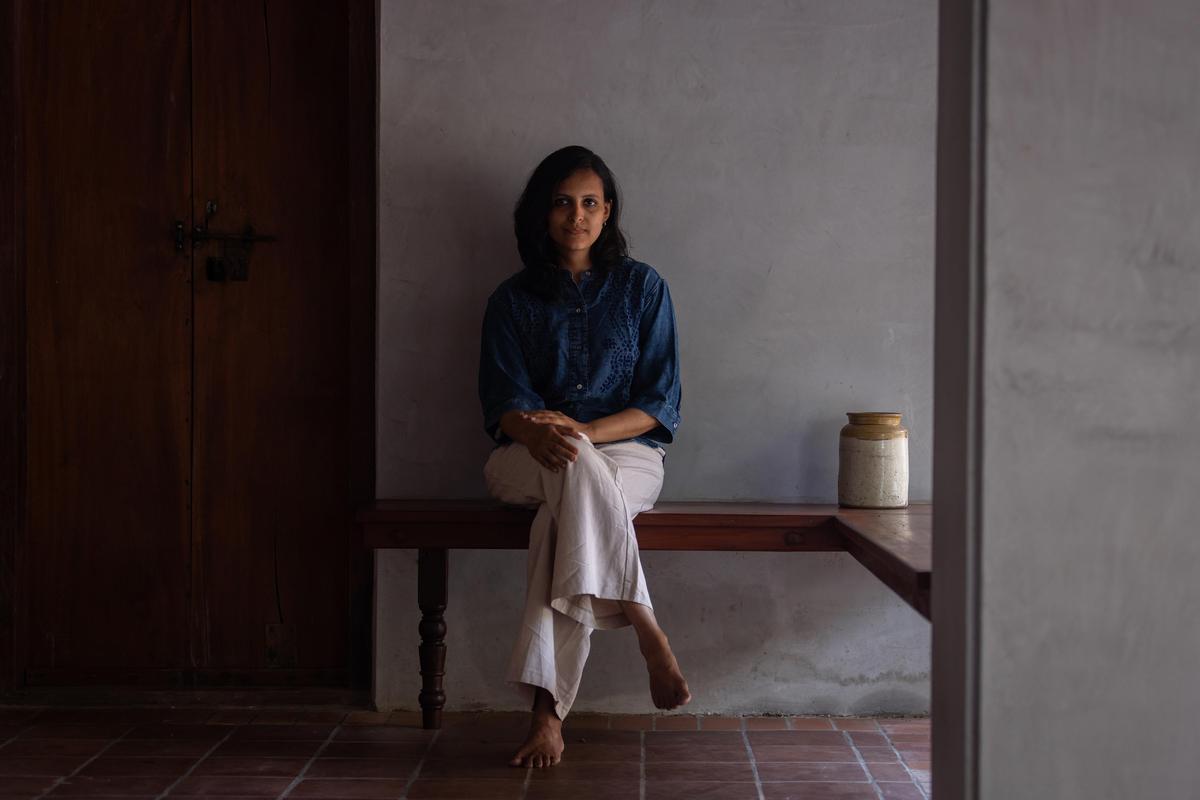
Aswathy Ganesh
| Photo Credit:
Prasanth Mohan
In keeping with the style of the times it was built, spaces were not very well lit and were cramped by today’s standards. Renovation let in more light and air, while retaining older elements wherever possible. The walls were repaired or altered while keeping the roof in place.
Aswathy chose construction material frugally, sourcing material and labour locally. “I retained what we could of the woodwork, especially the windows. What could not be used was repurposed for the seating or put to other uses and new were made.” She also retained pieces of furniture, such as an easy chair, an aattukattil (a swinging bed) and an ara (granary). Most of the existing furniture was repaired including cots, tables, chairs.
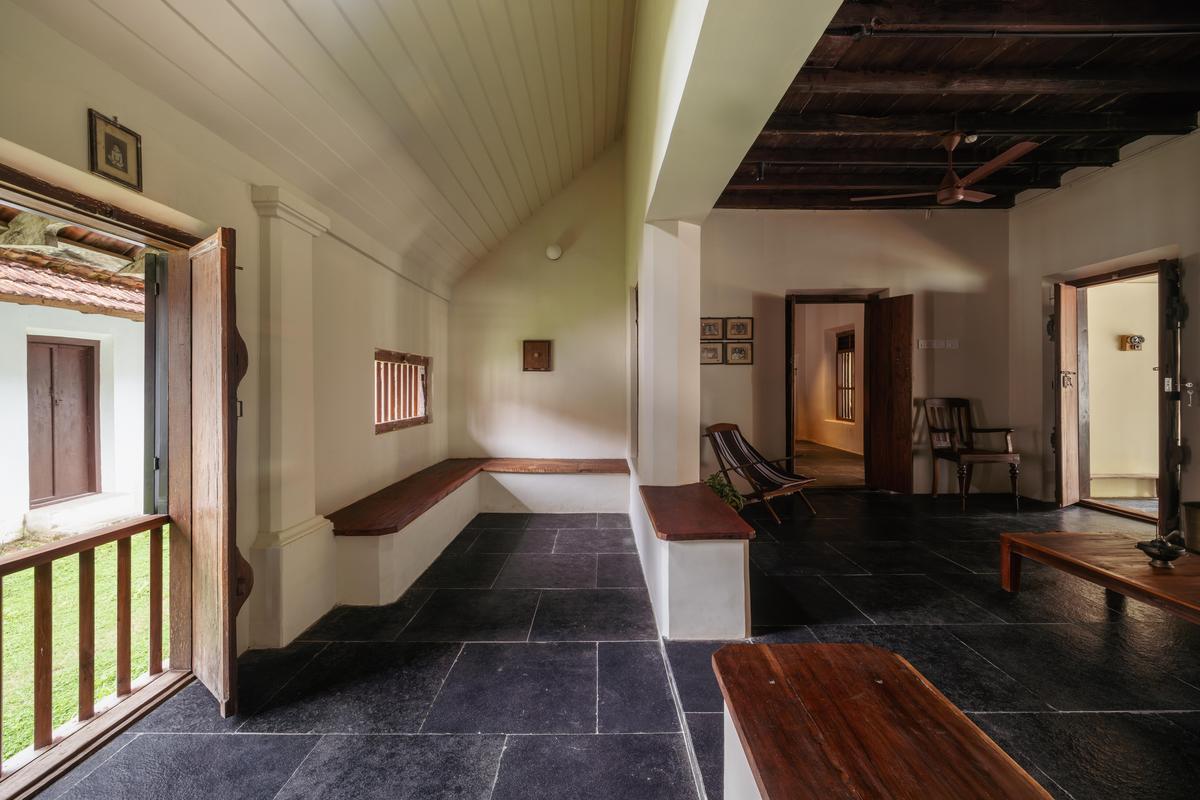
A portion of the renovated row house
| Photo Credit:
Prasanth Mohan
Rooms were combined to become an open space with parapets/thinnai that also serve as seating. Kadapah stone replaced the black oxide flooring damaged with age.
Explains Prasanna, “We wanted to retain the faded grey of the floor, even the dull gleam of the walls. And, of course, the two courtyards with the curious wall in between. We wanted to retain the feeling of space where we could sit together, talk, laugh and tell stories rather than having a large number of rooms to retire to.”
Prasanna and her cousins are elated with the result. “From all the desolation and deterioration, Aswathy somehow managed to find Thekkekottaram’s soul.”
Published – February 20, 2026 03:01 pm IST