

Full disclosure: I am a dedicated Anglophile when it comes to music. I’m deeply invested in the kind of music that comes out of that rainy island in the North Atlantic. I’m fascinated by how the people of the U.K. are constantly able to innovate, iterate and surprise when it comes to music.
The latest estimate is that music is worth £8 billion annually to the British economy. And if we look at music tourism, more than £11 billion is spent every year. Governments know, this and push music tourism with vigour. Liverpool, for example, has a Beatles industry worth £120 million annually.
If you’ve done any traveling, you’ll know that geography is destiny. Where you come into the world determines much of how your life will turn out, as my brother-in-law, a professor with a specialty in how geography impacts the arts, will tell you.
This really hit home over the last 10 days as I’ve toured with a group of music fans through England on a trip called UK Legends of Rock. I was specifically struck by how living conditions in Britain create environments for musical creativity. I’ve written plenty on the subject over the decades, but there’s nothing like seeing, feeling and smelling it for yourself. Nothing beats walking the same streets, marveling at the same night sky, walking along the same streetscapes to help you fundamentally understand their roots.
About 60 million people live in an area that would fit comfortably in southern Ontario, all connected by railways, roads and extensive metro systems. Cornwall starts at Windsor. Greater London sits on top of the Greater Toronto Area, with Wales touching the Bruce Peninsula. Birmingham, Leeds and Manchester fit nicely between London and Barrie while the Ottawa Valley can accommodate Glasgow, Edinburgh and the Scottish Highlands. Getting to and from any major city is a matter of hopping on a train for a few hours or hitting the highway in a transit van. This makes touring, even for the smallest acts, a snap.
So many different cultures so tightly packed together make ideas spread at the speed of sound.
At the same time, each city is made up of tightly-packed neighbourhoods where residents are fiercely loyal to their chunk of town. London is the best example. Camden is its own world, as is Notting Hill. East London might as well be East Timor compared to Shepherd’s Bush. Each has its own musical culture, individual petri dishes where new sounds and attitudes develop that either become so big that other neighbourhoods rush to check things out or a few brave souls book gigs across the city. And no matter what happens, they remain loyal to home.

Get daily National news
Get daily Canada news delivered to your inbox so you’ll never miss the day’s top stories.
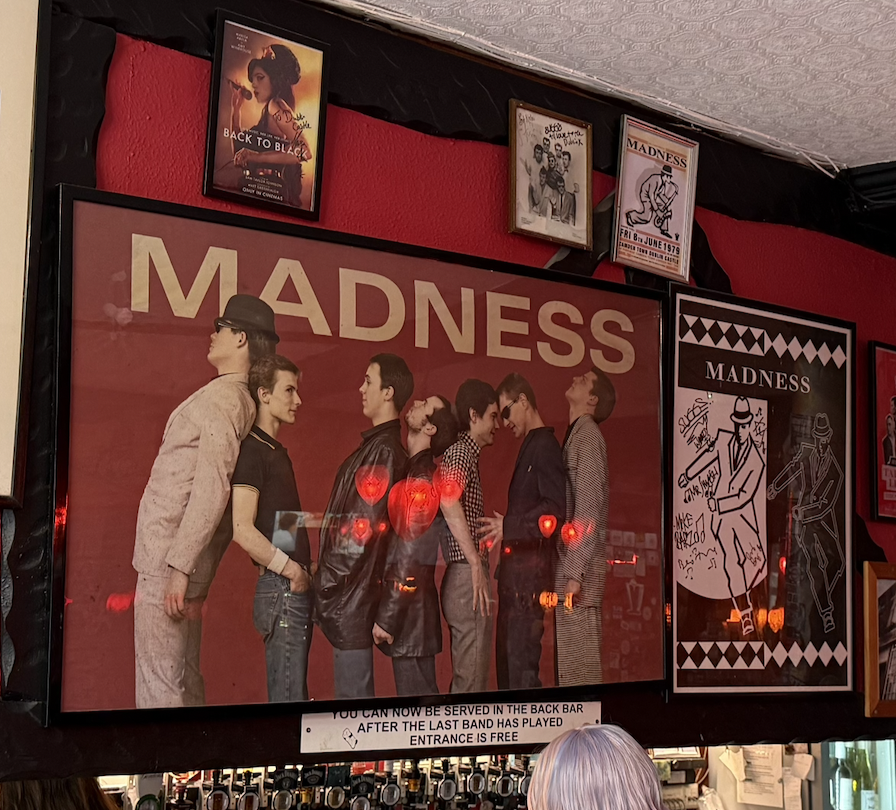
Here, for example, is a shot inside The Dublin Castle, a bar where Amy Winehouse used to pull pints and where Madness played their first show. It’s become a shrine to the band.
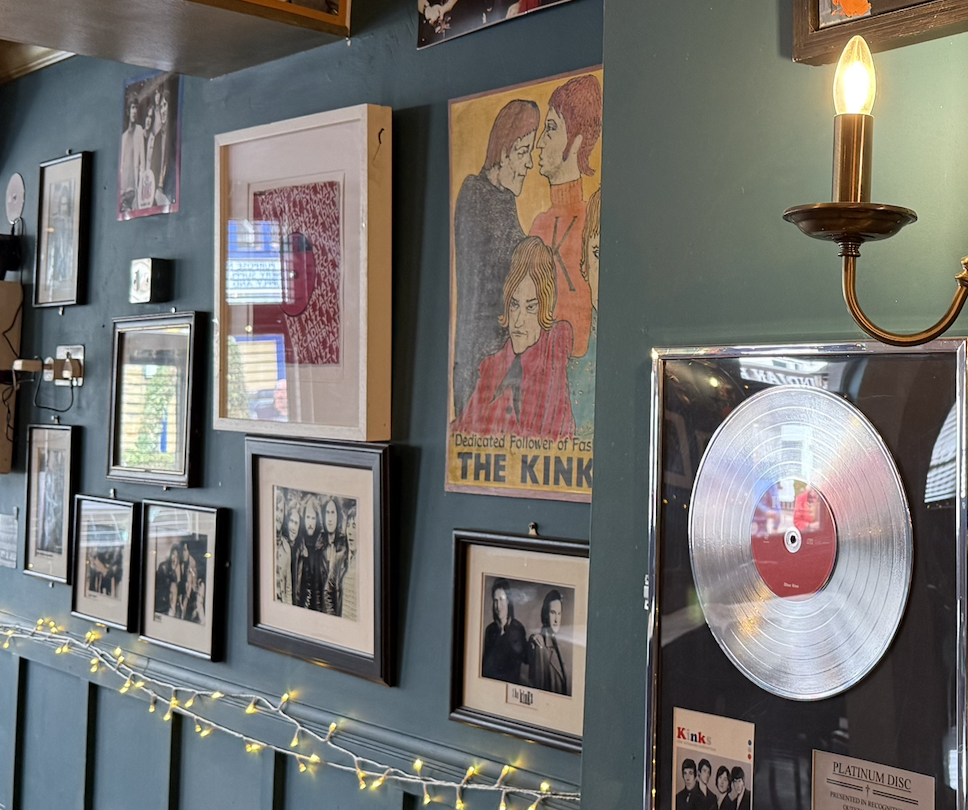
Meanwhile, to the north, there’s The Clissold Arms, a pub directly across the street from where Ray and Dave Davies of The Kinks grew up. Look at the size of this place. The whole house is to the right.
Less than 20 metres away is the pub. It’s still their local and has a room dedicated to them.
What drives people to form groups? There’s the love of music, of course, but it’s also seen as a way out. Housing can be tiny with many people packed into a miniscule flat. Getting out to a gig or a pub gives you a chance at some space that you may not have at home.
Look at George Harrison’s birthplace. It’s the door below the historical blue plaque on a short private road in Liverpool. Each upper window is a different flat.
Paul McCartney’s boyhood home isn’t much bigger.
Small homes encourage going out. Going out means mingling. Mingling involves networking. Networking turns into collaboration. Because the homes are so small, there’s no place to rehearse. That leads to out-of-home rehearsal spaces shared with other bands. More cross-pollination happens. As you get better and start playing gigs, you begin to run across the same musicians and fans over and over. Rapport builds. Things start to happen. Ideas are exchanged and adapted.
Britain also has national radio, which means a new song on, say, BBC 1, can quickly be heard by tens of millions of people. That might lead to a TV appearance which results in exposure to millions more. The U.K. has one of the most impressive star-making machinery on the planet and it could be an extension of its colonization history.
Culturally, the U.K. consistently punches above its weight and perhaps because of the grounding schoolkids get in literature and history, musicians are able to incorporate everything from Shakespearean themes to classical riffs into songs that transcend geography and weave themselves into the fabric of global popular culture.
Meanwhile, the British Isles are the only native English-speaking territories in Europe, meaning further concentration of attention to domestic music product. At the same time, British music is exported to the world.
If you ever get a chance, do some in-person exploring of U.K. music. You won’t hear those songs the same way again.
© 2026 Global News, a division of Corus Entertainment Inc.