Story so far: In the wake of the oil crisis triggered by the Israel-U.S. strikes on Iran, Centre has invoked the Essential Commodities Act, 1955, on Friday (March 5, 2026), ordering all oil refining companies to maximise production of Liquified Petroleum Gas (LPG) and make it available to domestic consumers only.
Naming public Oil Marketing Companies (OMCs) — IndianOil, Hindustan Petroleum and Bharat Petroleum, which supply gas to 99% of domestic households in India, the Centre’s order highlights the ‘need to prioritise the utilisation of Propane and Butane streams for LPG production’ to maintain adequate gas availability. The order prohibits the companies from using propane or butane streams for manufacturing other petrochemical products and orders the OMCs to supply solely to domestic consumers.
The order invokes clauses 3 and 5 of the Essential Commodities Act which empowers the Centre to regulate production levels of Oil refining companies and set supply limits for OMCs. The order is in force with immediate effect and will remain so until further orders.
The Essential Commodities Act, 1955 (ESA) has been a tool used by the government through the years to offset rising food prices, prevent hoarding and maintain food security.
In 2020, Parliament amended the Act to limit the Centre’s powers to regulate cereals, pulses, potato, onions, edible oilseeds and oils only under extraordinary circumstances such as war, famine, extraordinary price rise and natural calamity of grave nature. It also stipulated regulating stock limit of any agricultural produce only in case of a 100% rise in retail price of horticultural produce or 50% increase in retail price of non-perishable agricultural foodstuffs.
However, the Centre has invoked the ESA five times since then, imposing stock limits on cereals and wheat, sugar exports, citing the need to rein in food prices and maintain domestic needs.
When did the government last invoke ESA?
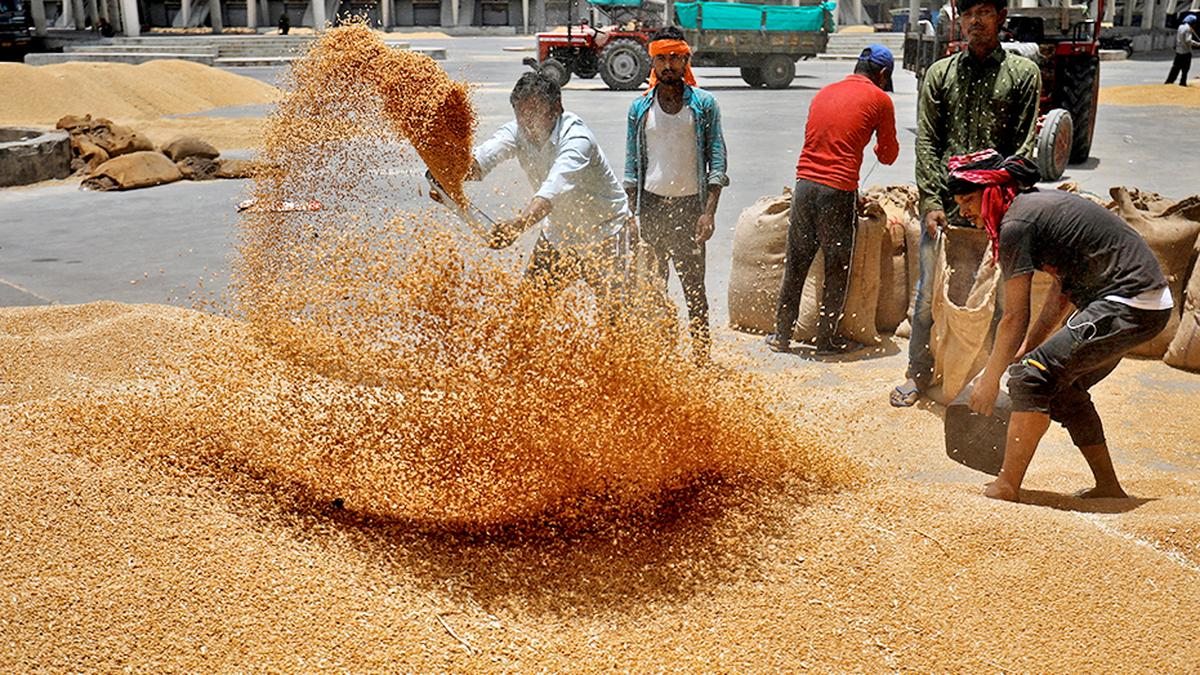
Six months ago, the Centre invoked the ESA on August 26, 2025, to reduce wheat stock limits for traders/ wholesalers from 3,000 metric tonne (MT) to 2,000 MT and for retailers the limit was reduced from 10 MT to 8 MT. It also imposed a limit on processors at 60% of Monthly Installed Capacity (MIC), reduced from 70% MIC. The limits will remain until March 31, 2026, and is part of the Centre’s “continuous efforts to moderate prices of wheat before festive season”. Both Deepavali and Bihar Assembly elections were slated for October and November respectively.
Previous instances
April 2020: In the wake of a national lockdown to contain the spread of COVID-19, the Centre invoked the ESA and urged States to do the same to ensure availability of essential goods to citizens at fair prices and avoid hoarding. With the loss of production mainly due to reduced labour supply, Centre and State governments imposed stock limits, capped prices, enhance production to ensure no black marketing occurred.
September 2020: As the country opened up after the lockdown, Parliament passed an amendment to the ESA to kickstart the economy. Deregulating stock limits on cereals, pulses, potato, onions, edible oilseeds and oils, Parliament imposed the above-mentioned conditions for imposing ESA.
May 2022: Capping sugar exports at 10 million tonnes till September that year, the Directorate of General of Foreign Trade (DGFT) issued an order to maintain the domestic availability and price stability. Centre claimed that the order had been taken as sugar exports in 2020-21 touched a record high of 7 million tonnes, compared to 5.96 million tonnes in 2019-20.
August 2022: Hours before the retail inflation numbers for July was released, the Centre invoked the ESA, asking States to monitor and verify the stocks of tur dal available with traders. Tur Dal prices had been rising s ince mid-July amid slow progress in kharif sowing as compared to last year due to excess rainfalls and water logging conditions in parts of major tur dal growing States of Karnataka, Maharashtra and Madhya Pradesh, noted the Department of Consumer Affairs. Inflation had been maintained over 7% since April 2022.

September 2023: Fearing rice in wheat prices, Centre reduced stock limits from 3,000 MT to 2,000 MT for traders, wholesalers, retailers, big chain retailers and processors in all States and Union Territories. Blaming ‘artificial scarcity’ created by hoarders, the Centre asked all wheat-stocking entities to register on the wheat stock limit portal, update the stock position every week and reduce it if it exceeded the limit.
December 2023: Wheat stock limits were reduced further to 1,000 MT for traders and wholesalers as prices of wheat and wheat flour (atta) remained unchanged in many parts of the country. Retailers’ stock limits were reduced from 10 MT to 5 MT at outlets and processors’ limit was reduced from 75% to 70% MIC. Centre cited overall food security as the reason for invoking ESA.
Published – March 06, 2026 07:51 pm IST