

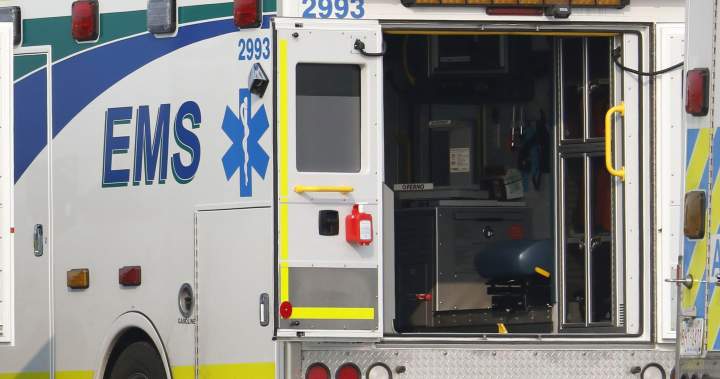
An Edmonton paramedic is speaking out. He says he’s noticed ambulance wait times increasing and more patients seeking care.
It comes at a time when the union says retention of staff is a major issue.
Alex Robb has worked as an advanced care paramedic in Edmonton for the past 10 years and says he’s reaching a breaking point.
“We’re working within the rubble of what used to be a health care system, essentially,” he said.
Like other paramedics, Robb works 12-hour shifts. Although lately, he says those shifts are turning into 13 or 14-hour days.
“It’s not uncommon that you’ll be driving lights and sirens in one direction, you have to turn around, drive lights and sirens in the other direction, turn around again. You can be zipping all over the place, and this whole time, you’re seeing all these different people who are asking for help and waiting,” said Robb.
With the busy shifts, Robb says patients are seeing massive delays after they call 911. The wait times are having a big impact on not only those seeking care, but also the paramedics treating them.
“It’s exhausting, it’s heartbreaking. I think people become paramedics because they want to help others, and right now, we really feel like the system isn’t being set up to put us in the best position to help people,” he said.

Get weekly health news
Receive the latest medical news and health information delivered to you every Sunday.
Acute Care Alberta says many initiatives are underway to improve EHS response times in the province.
“For example, dedicated ambulances have been added in Calgary, Edmonton, and Red Deer to manage the transfer of patients who do not require emergency care between health facilities. This will allow emergency ambulances to remain in their communities to respond to emergency calls,” read a statement.
“To address delays in EHS patient handoff, AHS implemented the 45-minute Return to Service target. The goal is to return ambulances to the community within 45 minutes of arriving at the emergency department to ensure crews are ready to respond to emergency calls.”

The union representing paramedics says this is not a new problem. It’s been calling for more resources for years.


“We’re running units in the City of Edmonton or Calgary at 50 per cent capacity because we don’t have the people. It wipes out those that are left behind,” said Mike Parker, president of the Health Sciences Association of Alberta (HSAA).
The province says it’s working on the systemic issues, but points out that it is respiratory illness season.
“…which can lead to delays for EHS to quickly transition patients to the emergency department. However, we work together to ensure that patients always receive the care they need,” said Acute Care Alberta.
But Parker says struggles are year-round and that’s hurting recruitment and retention efforts.
“We can’t even keep the ones that we have. So our members are stepping away to change, not just their career, their entire life. They’re walking away from health care,” Parker said.
For Robb, he’s trying to stay optimistic about his work, but it’s not easy.
“When you already have a health care system that’s basically a house of cards, it doesn’t take much to topple it,” he said.

© 2025 Global News, a division of Corus Entertainment Inc.


