

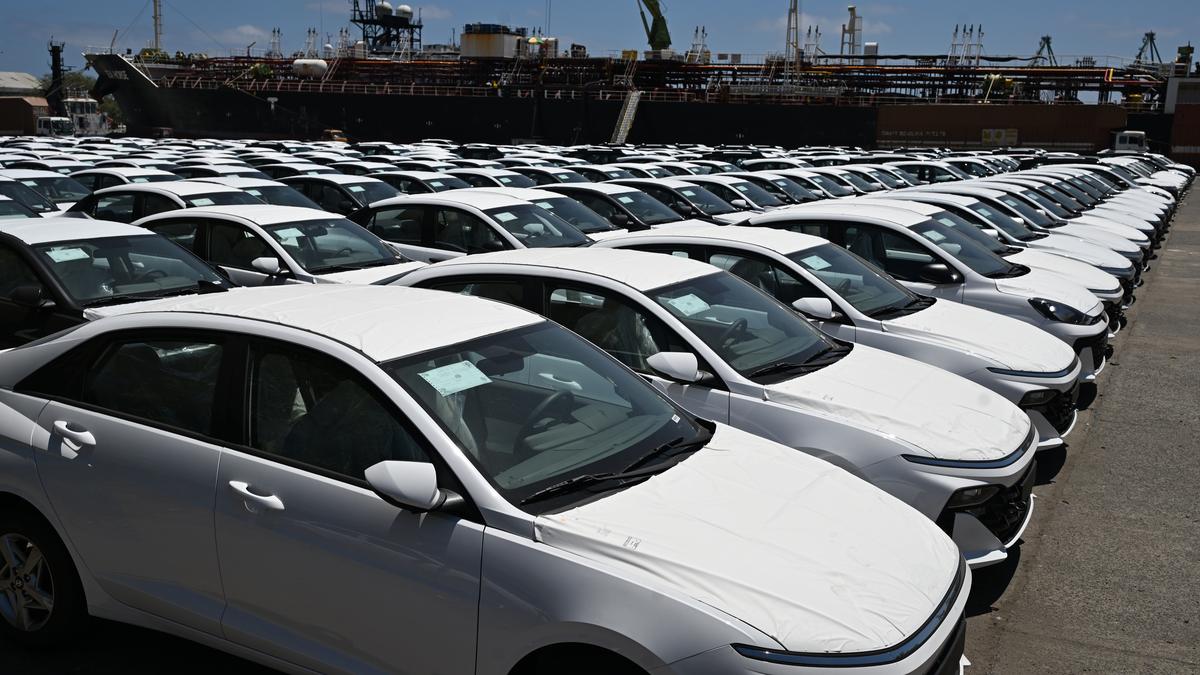
Photo used for representation purpose only.
| Photo Credit: The Hindu
The Centre on Monday (June 2, 2025) notified the guidelines to promote domestic manufacturing of electric cars, offering a concessional import duty of 15% on completely built-up units on a day Union Minister H.D. Kumaraswamy said global EV giant Tesla was not interested in manufacturing cars in India.
The detailed guidelines for the “Scheme to Promote Manufacturing of Electric Passenger Cars in India” (SPMEPCI) comes 15 months after the government first announced its import policy. The notice for inviting applications under the scheme will be notified shortly.

“Tesla… They are more [interested] only to start showrooms. They are not interested to [start] manufacturing in India,” Mr. Kumaraswamy told reporters during the launch of the guidelines.
The scheme allows EV manufacturers to import Completely Built-in Units (CBUs) cars with a minimum cost-insurance-freight value of $35,000 at reduced customs duty of 15% for a period of five years from the date of the application approval. The maximum number of electric four wheelers allowed to be imported at the reduced customs duty will be capped at 8,000 units per year. The government scheme allows unutilised annual imports to be carried over into the next year.
In a departure from the 2024 version of the policy, the government has also allowed brownfield investments following protests from Indian manufacturers such as Maruti Suzuki India and Tata Motors.
(With PTI inputs)
Published – June 02, 2025 08:31 pm IST


