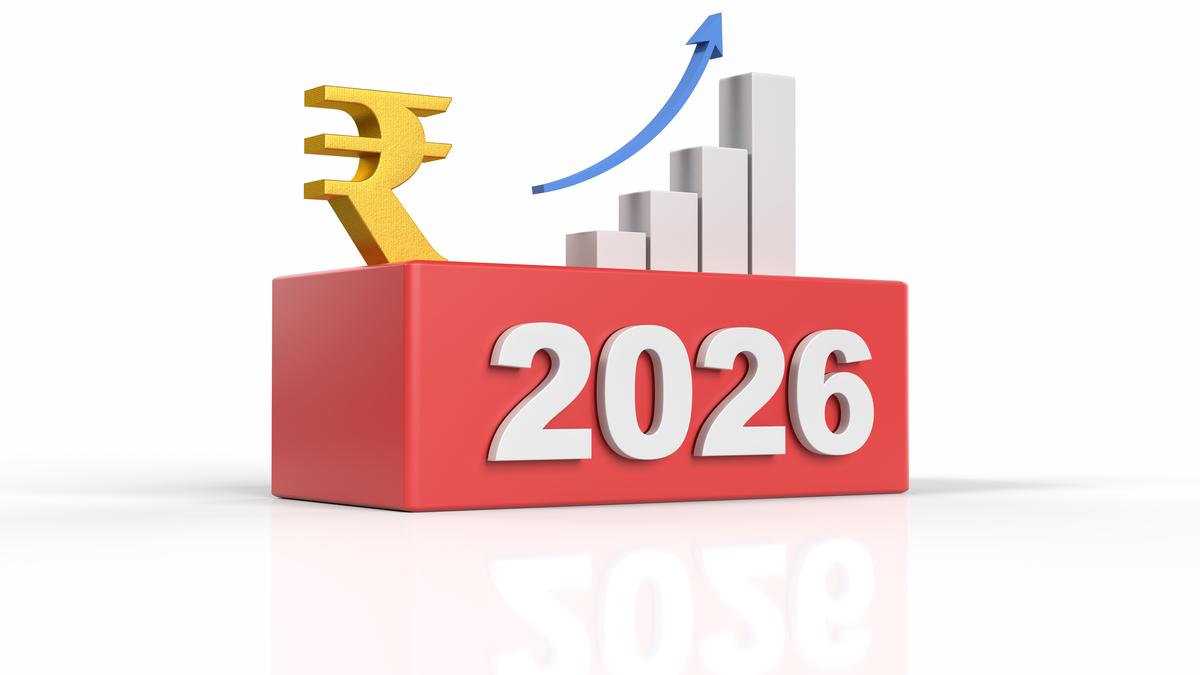
India faced global headwinds in 2025 but belied fears that America’s 50% tariffs would hurt its economy. The resilience of the Indian economy had a lot to do with the government’s reformist measures. As Prime Minister Narendra Modi said recently, “2025 will be remembered as a year when India treated reforms as a continuous national mission.” Budget 2026-27 can give a fillip to the mission.
India needs to strengthen the domestic levers of growth. This can be done by prioritising growth-enhancing productive capital expenditure and social sector spending, while maintaining the current fiscal consolidation glide path and keeping debt risks contained.
Continue the focus on defence
First, the government should continue the focus on defence, with higher expenditure on the capex. The share of capital outlay in defence should be enhanced to 30% from the budgetary estimate for 2025-26 of 26.4%. The budgetary allocation for the Defence Research and Development Organisation should also be increased by at least ₹10,000 crore. Defence industrial corridors in Uttar Pradesh and Tamil Nadu have made strides in promoting defence indigenisation and raising defence production. The government should consider establishing an eastern India defence industrial corridor.
Second, private enterprises have played a key role in augmenting defence exports in recent times, contributing nearly 65% of total defence exports in 2024-25. There can be a further boost by setting up a defence export promotion council for enhanced coordination with armed services, their foreign directorates, defence public sector undertakings, private manufacturers, the Ministry of External Affairs, Indian embassies, the Ministry of Defence, and communicate with foreign governments and buyers. This will also help achieve the target of defence exports set at ₹50,000 crore by 2028-29.
Third, a transition toward clean energy, advanced manufacturing, electric mobility, semiconductors and strategic technologies is driving a demand for critical minerals. The National Critical Mineral Mission (NCMM), approved in early 2025 provides a strong strategic foundation to secure these materials. This can be supplemented by a dedicated critical minerals tailings recovery programme under the NCMM, with the purpose of treating tailings recovery. The government should also consider offering dedicated financing for this.
Fourth, exports need a significant policy thrust in the current global environment. The present budgetary allocation for the Remission of Duties and Taxes on Exported Products Scheme, at around ₹18,233 crore needs to be raised significantly to make the exports more competitive.
Fifth, India has emerged as the world’s leading hub for Global Capability Centres, but its transfer pricing (TP) framework has yet to evolve. The government may consider issuing clear guidance on acceptable TP models for different categories.
Sixth, to accelerate drone adoption, global competitiveness, and exports, the government should consider catalysing scale through targeted financial support, including enhancing the production linked incentive outlay from ₹120 crore to ₹1,000 crore and setting up a ₹1,000 crore drone research and development fund.
Finance credit and tax disputes
Seventh, deepening the corporate bond markets is critical for diversification of finance credit beyond the banking system. The government could consider lowering the qualifying borrowing threshold and include listed and unlisted corporates to widen the issuer base and stimulate bond supply, encourage large corporations to diversify borrowings through market issuances, increase investment caps for insurance companies beyond the current 25% limit and revise the ‘Approved Investment’ threshold from AA to AA-, enabling prudent allocation into high-quality but lower-rated issuers. It could also permit provident funds to invest in non-convertible debentures issued by infrastructure investment trusts and real estate investment trusts, enabling long-term capital to support infrastructure aggregation vehicles.
Eighth, measures to address disputes pendency need to be prioritised. The first appellate level in direct tax disputes, the office of the Commissioner of Income Tax (Appeals) or CIT(A), is facing severe pendency. There is a need to prioritise high-pitched assessments, cases with complete submissions, cases covered by jurisdictional High Court or Supreme Court rulings, appeals older than five years, and matters that are chronologically the oldest. The need is a dual-track disposal system: a fast-track for simple or low-value matters and a detailed track for complex or high-value matters. Also, around 40% vacancies at the CIT(A) level need to be filled.
Ninth, newly incorporated companies (even for new companies formed by established Authorised Economic Operator or AEO-accredited groups) are ineligible for certification by the AEO. Removing this restriction for AEO-accredited groups will help enhance trade efficiency and facilitate greater trade.
Tenth, the reforms related to customs tariffs introduced in the last Budget must continue. Further reduction in the customs tariffs slabs can help streamline the duty structure, address the issue of inverted duties and benefit trade. Import duties should be calibrated across the value chain to support domestic manufacturing competitiveness and address the inverted duties.
Ensure competitiveness
Budget 2026-27 must focus on sustaining India’s growth momentum by deepening competitiveness across sectors and strengthening the domestic engines of expansion. By combining fiscal prudence with unlocking growth potential across industries, ensuring policy certainty and addressing structural bottlenecks, the Budget can crowd in private investment and enhance India’s global competitiveness.
Jyoti Vij is Director General, Federation of Indian Chambers of Commerce & Industry (FICCI)
Published – January 17, 2026 12:08 am IST