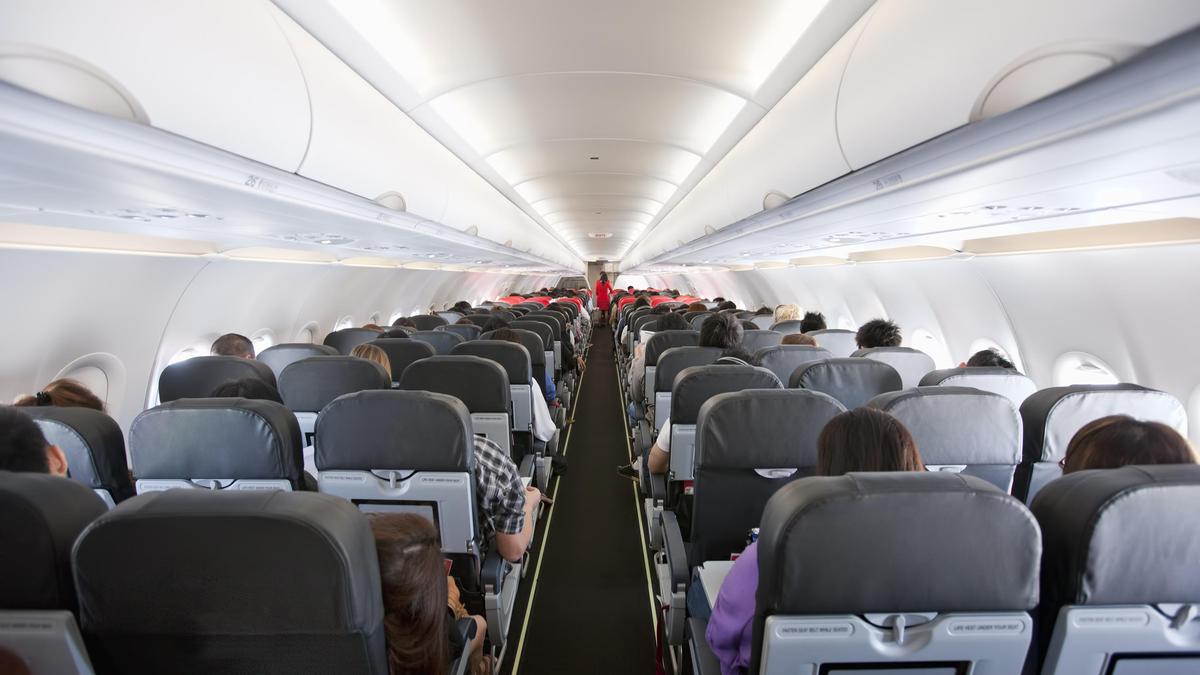
Passengers, who book their tickets under the same PNR (Passenger Name Record), must be seated together, “preferably in adjacent seats”. File (Image used for representational purposes only)
| Photo Credit: Getty Images/iStockphoto
The Ministry of Civil Aviation has directed airlines to make at least 60% of seats on every flight available for selection at no additional cost beyond the airfare, following concerns that passengers were increasingly being charged for seat allocation.
This move comes amid complaints that free seat options at the time of booking have become limited, often restricted largely to middle seats.

Passengers booked under the same Passenger Name Record (PNR) must be seated together, the Ministry said in a statement. This is aimed at preventing situations where families, particularly those travelling with children, are forced to pay extra to secure adjacent seats.
The Ministry has also asked airlines and booking agents to clearly and prominently display passenger entitlements in cases of delays, cancellations, and baggage loss. This information must be made accessible at booking counters as well as during the travel process, it said, in a bid to improve transparency and passenger awareness.
‘Exploitation,’ says SC
The directions come while the Supreme Court is hearing a public interest litigation seeking regulatory guidelines to curb sharp fluctuations in the airfares and ancillary charges imposed by airlines. During a hearing on February 23, a Bench of Justices Vikram Nath and Sandeep Mehta granted the Centre four weeks to complete its deliberations and inform the court of the outcome. The matter is scheduled to be heard next on March 23.
In January, the court had termed steep fare increases during festivals and other peak travel periods as “exploitation”, and directed the Centre and the Directorate General of Civil Aviation to respond to the petition.
The plea, filed by social activist S. Laxminarayanan, calls for the establishment of a robust and independent regulator to ensure transparency and passenger protection across the civil aviation sector. It argued that the State’s inaction in regulating fare algorithms, cancellation policies, service continuity, and grievance mechanisms amounted to a dereliction of its constitutional duty, warranting urgent judicial intervention.
Published – March 18, 2026 11:17 am IST