What does an unprecedented drought in Central America mean for Australia’s Christmas shopping baskets? We’re about to find out – with a parched Panama Canal struggling to find enough water to shuffle cargo ships between the Pacific and the Atlantic.
The sudden onset of the El Nino weather phenomenon earlier this year has been blamed for severe water shortages in Panama.
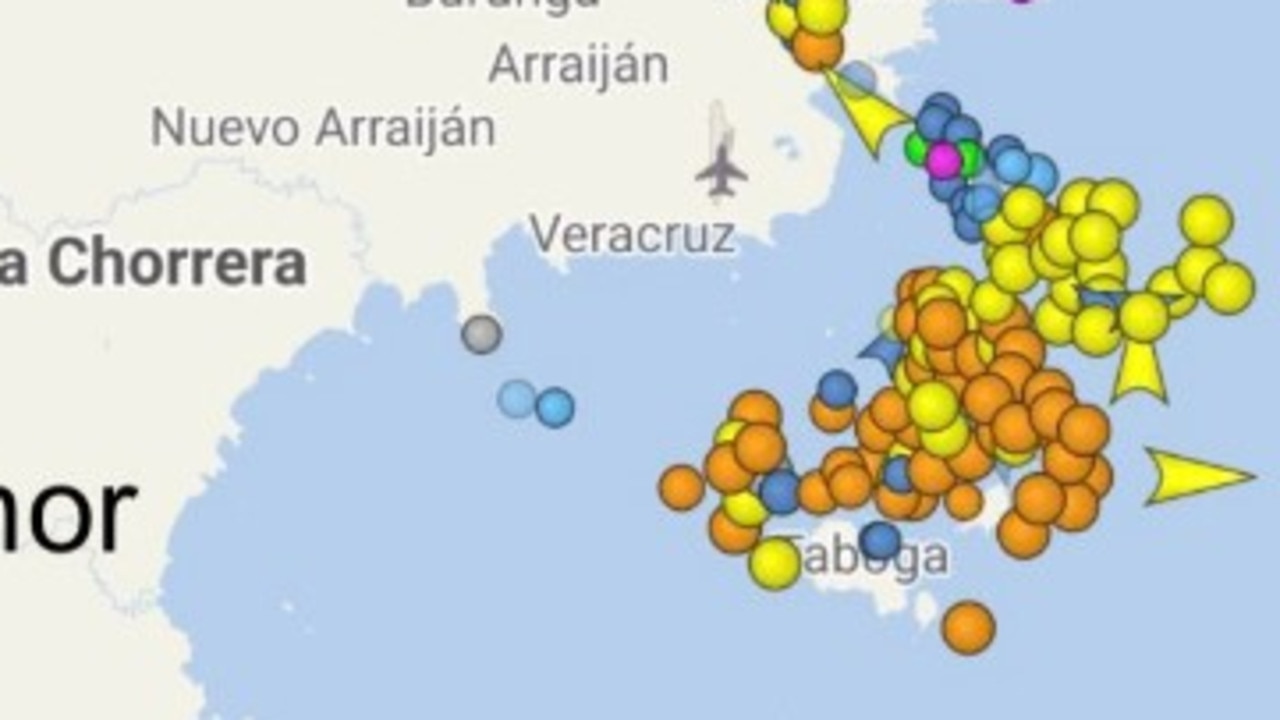
And the low levels of reservoirs feeding the 83km artificial waterway are creating growing queues among ships hoping to take the 110-year-old shortcut.
The Panama Canal Authority (ACP) says the extended drought is presenting “unprecedented challenges” that have “no historical precedence”.
The authority is responsible for safely and efficiently operating the thoroughfare’s narrow channels, locks and weirs. And it has been imposing steadily increasing limitations on the size and number of ships using the facility since June.
Usually about 36 ships are allowed through each day after waiting a few hours. In October, only 29 ships were allowed passage. This week it fell to 25. And it’s expected to decline to 18 by February.
Ships now find themselves sitting idly at anchor for about a week. And bidding wars are breaking out as new transit slots are released.
An LPG tanker last week reportedly paid a record $A7 million to access the canal. And that ticket came with a week-long wait. Normal prices are around $1.5 million.
“Every day, the Panama Canal will literally raffle off one spot,” says maritime affairs analyst and US Merchant Marine Academy adjunct professor Sal Mercogliano.
“One of the things we’re seeing right now is companies are paying a huge amount of money to get that spot. And the reason ships are not diverting around South America is because, number one – that’s ridiculous. It’s 8000 miles (13,000km). And it’s really dangerous to go through the Drake Passage.”
Global shipping companies have begun introducing surcharges to cover increased fuel consumption costs and the cascade of paying extra crew hours and missing follow-up shipping movements.
Downstream impact
The ACP says the canal is an arterial junction point for more than 6 per cent of global shipping traffic, linking 2000 ports in 170 countries. And while the United States, China and Japan are its biggest users – the trickle-down effects of significant delays to the delivery of raw materials and manufacturing components are already mounting worldwide.
And it this week said the canal was headed into its traditionally most busy season.
Disruptions caused by port shutdowns during the Covid-19 pandemic are partly blamed on the current surge in inflation worldwide. And while the apparent impact of the Panama Canal slowdown is minimal, there’s a growing hole beginning to spread through global supply chains.
And that means the potential for broader disruption is real and growing.
“Extreme weather events are broadening and strengthening,” a Morgan Stanley analyst warned last week. “The micro effects are proliferating, and stocks are diverging. The macro effects have the potential to be inflationary if increased restrictions through the Panama Canal become more acute.”
The exact fallout for Australia is uncertain. But it will come on top of delays and disruptions caused by a severe cyber attack last week on one of the nation’s major container shipping companies – DP World.
Morgan Stanley notes chocolate and other food exports, retail goods, and component chemicals were among the first trade items to suffer from the Panama slowdown.
But worldwide climate extremes are having an even broader effect.
“The upstream impact from El Nino is trickling through sectors and supply chains,” the Morgan Stanley report states. Lower available supplies are also leading to higher global prices for wheat, sugar and corn.
Water woes
This is not the first time climate has caused a problem for a major canal network. One of the world’s longest container ships – the Ever Given – ran aground and was blown sideways across the Suez Canal in 2021. The “ship that launched a thousand memes” fell foul of an intense dust storm and abnormally low water levels.
The blockage reportedly held up more than $A93 billion in global trade.
Meanwhile, abnormally low water levels in Europe’s iconic Rhine River, China’s arterial Yangtze River and the United States’ enormous Mississippi are having a similar choking effect on transport.
Each of Panama Canal’s 12 locks needs up to 200 million cubic metres to refill after passing a single ship. And that’s needed to lift – and lower – each ship the 26 metres necessary to pass over the narrow peninsula.
Users may pay for that water. And about 50 per cent then flows through to the oceans on either side.
Replacement water is sourced from adjoining lakes – the same lakes that supply drinking water to the surrounding population. These can only be refilled by natural rainfall.
This year, the seasonal tropical rains have not come.
“The Canal and the country face the challenge of the upcoming dry season with a minimum water reserve that must guarantee supply for more than 50 per cent of the population and, at the same time, maintain the operations of the interoceanic waterway,” the ACP said in a statement earlier this month.
Panama’s government has failed to implement several plans to provide backup water access to the Indio River. Now, it has asked the United States to order its military engineers to urgently examine what solutions may be available.
A climate of change
Meteorologists say updated El Nino climate modelling – updated to account for this year’s exceptionally high temperatures – suggests Panama’s dry spell could extend well into next year.
Merclianglio says recent rains have topped up the Panama reservoir reserves somewhat. But levels remain at record seasonal lows as the dry season begins.
“So the fear here isn’t what’s happening right now,” he says. “It’s that we’re going to be on the downside here coming into the new year with less rain, and the lake levels may get critically low.”
But Merclianglo says the brutal maths of logistics warns Panama shipping, and therefore global supply lines, are in for tough times ahead.
In June, 29 ships were stuck in a five-day queue. In August, it was 160 ships for 21 days. This week, the number had dropped slightly to 118 – but that may be due to impatient shipping companies upping anchor and taking a longer alternative route.
He says the worst affected ships are the large Neo Panamax container vessels of about 16,000 tonnes. These can only use one of the canals through lanes. And these ships draw the most water.
“That means half the vessels going through the Neo Panamax lanes are going to be cut,” Merclianglio warns. “And that is going to mean that containers are going to have to go a different route. They’re either gonna have to go on smaller container ships through the older locks. Or they’re going to have to be offloaded and railed overland to the other side for another ship to pick up.”
Whatever the option, Mercliangia adds, it entails higher costs and greater delays than what global markets are used to.