Data centres power AI systems, and a proposed tax could disrupt global expansion by US developers
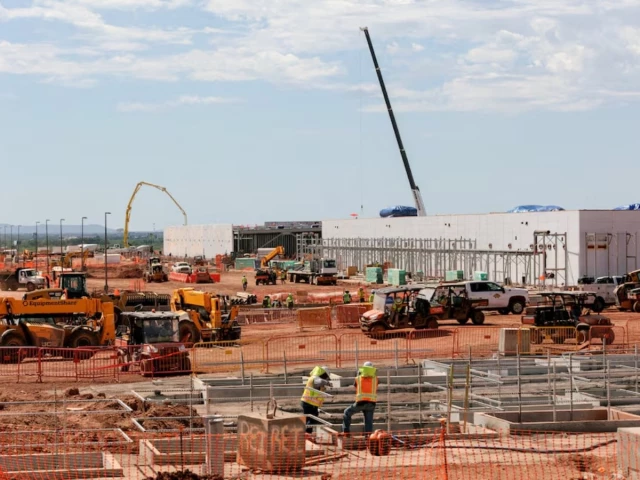
Data center buildings are under construction during a tour of the OpenAI data center in Abilene, Texas, U.S., September 23, 2025. A total of eight data center buildings are planned to exist on the campus. REUTERS
President Donald Trump said on Friday that the US would penalize American companies that build data centers overseas, a move he said is intended to help the US artificial intelligence sector compete with its Chinese counterparts.
“We’re not going to allow our companies to build data centers outside of our country,” Trump said while discussing AI at a White House news conference following his trip to Asia. He said he would impose a “tremendous tax” on companies that build data centers abroad.
Read More: Like SpaceX, Anthropic ran an unusual IPO process, chafing some bankers
Data centers are critical to the AI boom because they provide the computing power needed to train and run increasingly complex AI systems, and a penalty could complicate the global AI buildout. Several major American data center developers build and operate such facilities outside the US, including Equinix and Digital Realty.
Data center developers often locate facilities close to users to reduce delays for time-sensitive tasks such as payment processing. Transmitting large volumes of data over long distances can also add significant costs.
Trump has been a staunch advocate for data center construction in the US, a position that is unpopular with voters. Data centers have drawn opposition in communities nationwide over concerns about electricity demand, utility costs and other local impacts.
The Commerce Department moved on Monday to restrict exports of advanced AI chips to several Southeast Asian countries, part of a broader effort to prevent China from obtaining the technology through third countries.
The United States already bars direct sales of the most advanced AI chips to China, but Chinese companies have continued to access them by renting computing capacity at data centers in countries that can legally import the chips.