PUBLISHED
November 08, 2026
As we step into adulthood, Halloween becomes less about dressing up as supernatural entities and more about impersonating pop-culture icons. This practice can either honour the legacy of prominent figures or expose their flaws by lampooning their behaviour. It is difficult to walk the tightrope between adulation and caricature in these matters. However, most people aren’t too concerned about the broader implications of their choice of Halloween costume. Driven by playfulness, they seldom pause to consider if it is a homage to a respected personality or an ill-conceived, unintended indictment of their legacy.
Some years ago, a friend announced that she was planning to go to a Halloween party dressed as Madam Noor Jahan.
“I’m going to wear a sari and a regal choker,” she said with an enthusiastic grin. “I’ll backcomb my hair, draw a mole on my cheek and apply bold smoky eye makeup. Maybe I’ll also carry a microphone for good measure.”
Once the words left her lips, I was tempted to ask what inspired her to dress as the diva of respected Pakistani playback singinger. I couldn’t tell if her decision was fuelled by genuine admiration for Madam Noor Jahan or a frivolous desire to amuse herself and others with an exaggerated impersonation. Quite frankly, it was hard to imagine that my distinctly anglicised friend had ever heard a song by Madam Noor Jahan. Yet, she had meticulously studied her appearance and was determined to recreate her signature style.
At the time, I couldn’t summon the courage to voice these reservations. However, my friend’s uncharacteristic interest in Madam Noor Jahan led me to question my own connection to one of the subcontinent’s most prolific and influential singers. For the greater part of my carefree, cable-free childhood years, Madam Noor Jahan was simply the sari-clad woman who sang on PTV. Back then, most singers lip-synced their pre-recorded tracks in ornately decorated studios. Even in my child’s mind, it all seemed like a carefully constructed facade. But Madam Noor Jahan bluntly refused to adhere to this practice, which made her performances irrefutably real. Even as a child who lacked any musical inclination, I wondered how she could hit a difficult note while keeping a serene facial expression. Her melodies soon became a lingering presence, though I was much too young to perceive them as an abiding soundtrack to my early years.
During my teens, I came across Khalid Hasan’s essay on the esteemed songstress, titled ‘Awaaz De Kahan Hai Tou: A Portrait of Nur Jahan’ in the multi-authored anthology Beloved City: Writings on Lahore (which was also published in City of Sin and Splendour: Writing of Lahore). Peppered with facts, personal observations, insights from a wide range of interviews and a fair amount of hearsay, Hasan’s essay depicted her life and legacy in vivid hues and with refreshing candour. That said, the only tidbit from the essay I can now recall is about Madam Noor Jahan’s first husband, who wrote a book to viciously malign her and denigrate her lineage. It’s tragic that we only remember the most scandalous parts of a celebrity’s life. For celebrities who constantly grab headlines under some pretext or the other, this isn’t particularly damaging. However, the legacy of an iconic personality such as Madam Noor Jahan now runs the risk of being forgotten nearly 26 years after her demise. It should, therefore, not be polluted by a thick web of rumours surrounding her private life. Instead, more fact-driven accounts on her achievements need to be produced. While sceptics might view them as an oft-repeated laundry list of her accomplishments culled from a quick Google search, such accounts are a reminder of her timeless brilliance.
Madam Noor Jahan had the rare distinction of enjoying a musical career spanning more than six decades. During this period, she wore many hats, and her life took numerous creative and personal detours. Amid the highs and lows of her life, she was defined by an unflagging commitment to her craft.
On September 21, 1925, Madam Noor Jahan was born as Allah Rakhi Wasai to a Muslim family in Kasur with a strong ancestral connection to music. Her grandmother, Amma Hasso, was a popular singer who was held in high regard for her charitable pursuits. Imdad Ali, her father, was also a musician.
From an early age, Allah Rakhi possessed a raw vocal prowess. Sensing her innate passion for music, her family decided to nurture this strength. They urged her to receive training in classical vocalisation at the tender age of five. Under the tutelage of Ustad Ghulam Muhammad, Kajjanbai and the Patiala Gharana masters, she was able to hone her vocal gifts and develop a fine melodic range. At the same time, this foundational training gave her a working knowledge of the complex structures of ragas. She drew heavily upon her early training later in life when playback singing became her primary vocation and she expertly straddled numerous musical genres.
While performing as part of a rural theatre troupe, she caught the attention of musician Ghulam Ahmed Chishti. He later provided her opportunities to perform on stage in Lahore, and gave her a rich panoply of ghazals and folk songs to perform. In the 1930s, her family moved to Calcutta to lay the groundwork for her and her sisters’ film careers. It was here that she was mentored by Mukhtar Begum and went on to adopt the stage name Baby Noor Jahan.
At a young age, Baby Noor Jahan drew the attention of regional filmmakers and appeared in Punjabi films. She made screen appearances as a child artist in Pind di Kuri (1935), Missar Ka Sitara (1936), Heer Sayyal (1937) and Gul-e-Bakawali. After a triumphant career in Calcutta, she relocated to Lahore in 1938 in the earnest hope of broadening the scope of the opportunities available to her. In 1942, she finally transitioned into her first major adult role opposite veteran actor Pran in Khandaan (1942), which was directed by Shaukat Hussain Rizvi, who became her first husband in 1943. The film’s commercial success catapulted her to national fame. After the film’s release, Noor Jahan moved to Bombay along with Rizvi and her career rose to hitherto unimaginable heights. Between 1945 and 1947, she established herself as a prominent star in the Indian film industry and delivered consecutive top-grossing blockbusters, such as Badi Ma (1945), Zeenat (1945) and Jugnu (1947).
Following Partition, Noor Jahan and Shaukat Hussain Rizvi settled in Karachi, Pakistan. In 1951, she starred in and co-directed Chanwey, thereby becoming Pakistan’s first female film director. The film, along with Dupatta (1952), was a commercial success. She consolidated her position in the industry by delivering acclaimed cinematic performances for which she eventually received the President’s Award for Pride of Performance in 1957.
After appearing in over 40 films, Noor Jahan distanced herself from acting and devoted herself exclusively to playback singing. The decision to shift gears gave her the opportunity to return to her first love: music. She sang flawlessly in a variety of languages, including Urdu, Sindhi, Punjabi and Hindi. A dedicated professional, she recorded songs almost daily at Radio Pakistan. With time, her voice became the elixir to a nation’s fractured soul, offering consolation in a time of deep despair.
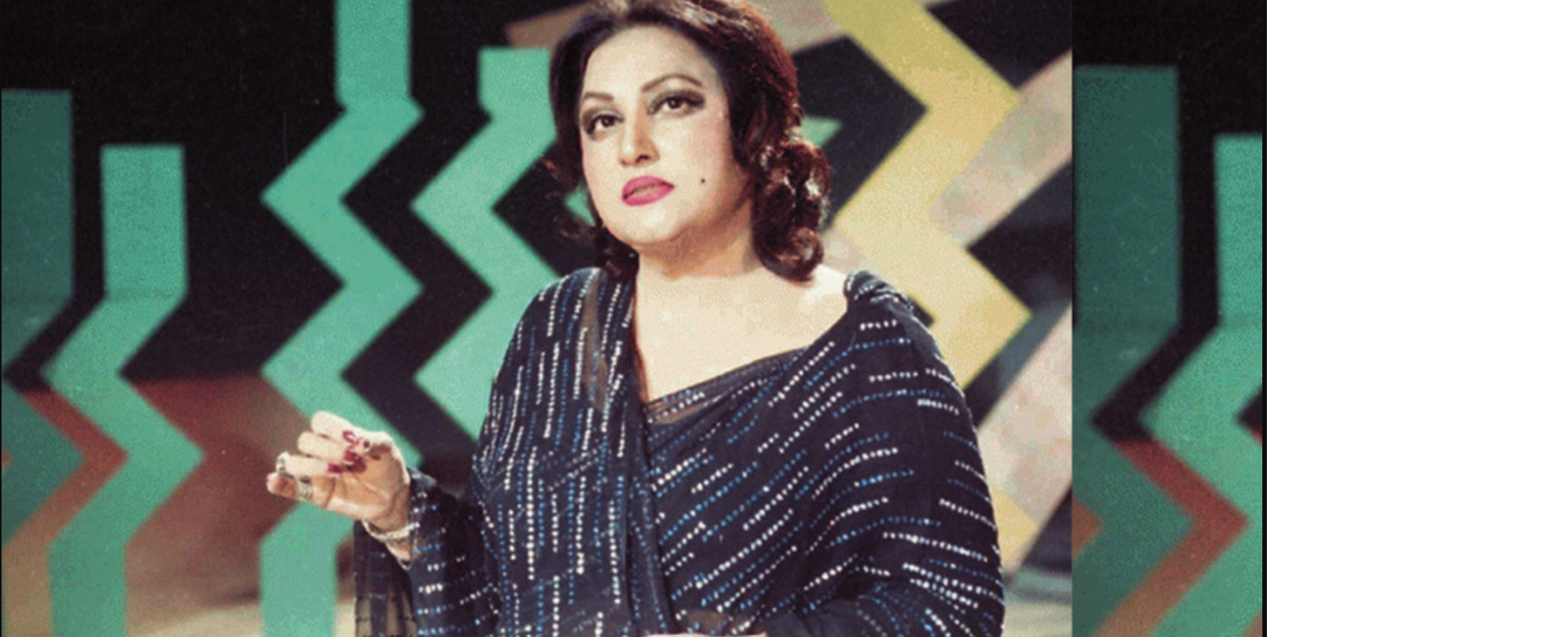
During the 1965 war, Noor Jahan sang numerous iconic patriotic songs that were broadcast live on Radio Pakistan. These wartime anthems boosted the morale of the nation during the seventeen-day war and motivated the military personnel on the frontlines. The extent of her spiritual and emotional influence can be gauged from a passage in a short story, titled ‘Electric Shadows’, by British-Pakistani author Aamer Hussein. “It was said,” Hussein writes, “that Madame [sic] Noor Jahan the Melody Queen, the country’s most famous singer who’d once been a movie star, had gone to the radio station on the first day of war with a sheaf of lyrics in praise of our soldiers and pilots and sailors tucked under an ample arm. She’d set them to music right there, demanding they be recorded on the spot. Her songs filled the airwaves – Ai watan ke sajile javano, merya dhol sipaiya – and we sang them all day, even at school.”
Owing to her concerted efforts to galvanise the nation during one of its darkest hours, Noor Jahan was conferred the prestigious title of Malika-e-Tarannum (the Queen of Melody). In 1966, she was awarded the Tamgha-e-Imtiaz. Beyond these honours, Madam Noor Jahan became a symbol of national unity amid a climate of chaos.
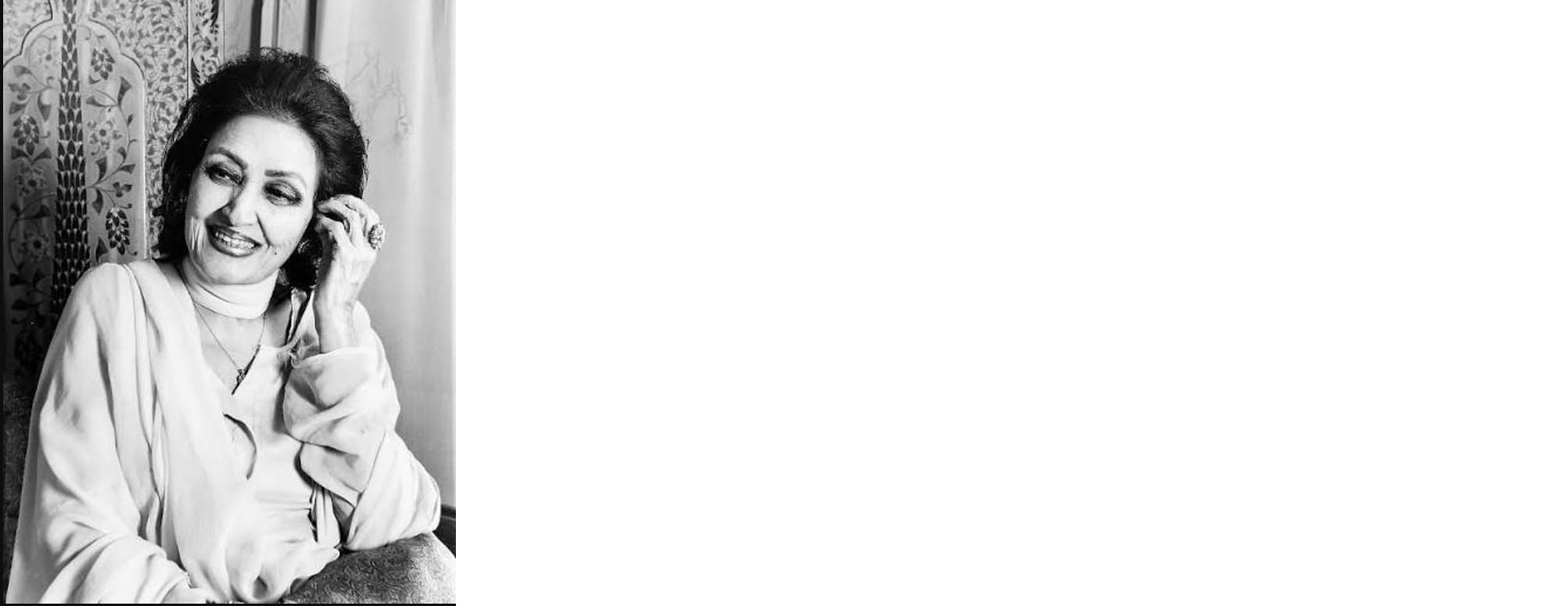
Lauded as an elegant and glamorous cultural icon, she was referred to as “Madam” by her fans. She was a veritable trend-setter and was often compared with Marilyn Monroe. Mercifully, she didn’t encounter a tragic fate like Monroe did.
Madam Noor Jahan has left an enduring legacy through a formidable body of romantic tracks, ghazals and wartime anthems. She recorded over 10,000 songs in her lifetime, which serve as a testament to her prowess, versatility and prolific nature.
As I reproduce this condensed biography of Madam Noor Jahan, I wonder if my friend knew even half of these facts about the women she intended to impersonate on Halloween. In fact, I’m convinced that this information would only interest someone who is genuinely interested in Madam Noor Jahan’s work. This is rather unsettling. It is an alarming sign that Pakistan’s golden age is gradually slipping away from our collective memory. Moreover, it is a reminder that we have to preserve that bygone era for posterity.
September 21, 2026 marked the 100th birth anniversary of Madam Noor Jahan. Yet, her centennial birthday passed into collective amnesia, with little or no tributes to the late singer from state functionaries.
Actor Ahmed Ali Butt, her grandson, posted a story on Instagram that revealed the glaring lack of interest in honouring one of Pakistan’s most revered songstresses.
“No tribute, no PTV special transmission, no special show on any network, not even a poster at Liberty to wish you a 100th birthday,” he wrote. “If it weren’t for your songs that people still listen to, the state would have forgotten you yesterday.”
Butt decried the government’s inability to honour the legacy of esteemed figures in a constructive and cohesive manner. “We as a nation have always failed to give our legends their due,” he asserted. “We don’t document their work, we hijack their copyrights and we make sure the artist and their legacy are never protected. It’s a shame how we as a country have lost touch with our own identity, culture and the people who made it.”
In light of this neglect, my friend’s willingness to dress as Madam Noor Jahan for Halloween seems like a rare, unusual compliment. Even so, this gesture in itself appears to be a cosmetic measure and can do little to foster interest in the work of a national icon. At this critical juncture, a more substantive effort needs to be made to encourage people to remember Madam Noor Jahan.
The business of preserving a legacy is undoubtedly complex and often assailed by half-hearted execution. Instead, it requires a long-term commitment to the cause and a deep awareness of the impact of cultural and technological trends. If Madam Noor Jahan’s legacy is to be preserved, we need to find unique ways to incorporate her oeuvre into the digital age. More of her classic films and songs should be available on modern streaming platforms. What’s more, scenes from her films and snippets from her songs should be used in reels on Instagram and TikTok to ensure that her work lingers in the public imagination. These strategies could provide a doorway for a new generation to discover her body of work.
Above all, schools and universities need to find inventive ways to integrate her creative output into the curriculum. Teaching students about her contributions in a cursory manner during a history lesson just won’t suffice. Exposing students to her music might attract a genuine interest in her body of work. Years ago, I recall that the headmistress of my school organised a musical programme in which students performed Madam Noor Jahan’s songs. Her life, legacy and vocal techniques were discussed between performances. Many millennials seated in the auditorium where that event was conducted gained a front-row seat to understand the breadth and richness of her oeuvre. Some of them, like me, are still humming the melodies.
Apart from that, the media needs to produce high-quality documentaries and biopics about Madam Noor Jahan. A diverse menu of official and unofficial biographies needs to be commissioned by publishers to allow readers to learn about her legacy. In addition, her memory can be kept alive through lively debates and discussions at seminars and festivals. If the conversations surrounding her work come to a grinding halt, Madam Noor Jahan’s legacy will rapidly fade and all her work will become a forgotten footnote in Pakistan’s rich musical landscape.
Madam Noor Jahan’s death anniversary falls on December 23. We can only hope that the state remembers this milestone; neglecting it would only expose its blatant disregard for an important cultural icon.
The writer is a critically acclaimed author
All facts and information are the sole responsibility of the writer