He was arrested on October 9 and faces up to five years in prison on charges of intercepting oral communications
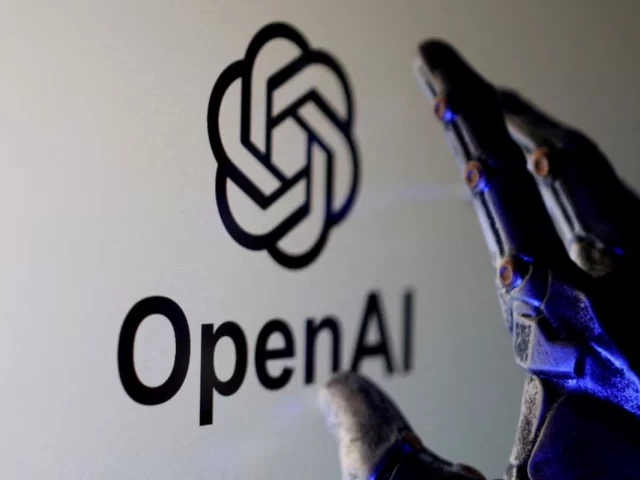
The case illustrates the power of AI technology to damage reputations and shape public opinion long before the facts have emerged.. PHOTO: REUTERS
A former OpenAI employee accused of planting a recording device at the company’s San Francisco offices was ordered held without bail a day earlier, after a federal judge deemed him a flight risk.
US District Judge Alex Tse ruled that there was “significant” risk that Abdulrahman Alfozan, 35, would fail to appear in court, rejecting his attorneys’ request for release.
Prosecutors cited Alfozan’s frequent contact with an unnamed member of the Saudi royal family in arguing against his release. Alfozan, 35, appeared in court a day earlier, dressed in orange prison clothing. He did not speak during the hour-long hearing.
He was arrested on October 9 and faces up to five years in prison on charges of intercepting oral communications.
Read More: OpenAI employee arrested over alleged recording device
In a document filed on Sunday, the US Attorney’s Office alleged that Alfozan, who had worked at OpenAI since 2025, maintained frequent communications with a member of the Saudi royal family.
While the complaint against Alfozan does not allege spying activities, US Director of National Intelligence Jay Clayton implied in a statement last week that the case had national security implications.
“The government’s investigation is ongoing and may result in additional serious charges,” the new court filing said, adding that the matter is “a concern for the national security of the United States.”
Also Read: OpenAI employee who left for Apple took files about unreleased device, OpenAI alleges
“Whether the defendant wanted to record OpenAI meetings to enrich himself by enhancing his own business prospects, or to provide aid (to) a foreign government, or both, his conduct is criminal,” the document added.
The unnamed Saudi royal family member tried several times to recruit the engineer for an AI initiative in Saudi Arabia.
“Saudi (Arabia) needs you more than [sic] the US,” the person wrote in one WhatsApp exchange, according to the filing. Alfozan responded with “100” — a common way to indicate agreement.
Before his arrest, Alfozan bought a one-way ticket to Riyadh for October 12, with prosecutors arguing that such a move demonstrated he was a flight risk.
Alfozan’s lawyer William Pernik disputes that, saying Alfozan had a US naturalisation interview scheduled on November 6.
Alfozan’s wife and their baby left the United States on October 10, the day after his arrest.
They used tickets paid for by a Saudi military official, according to prosecutors, noting that the United States and Saudi Arabia do not have an extradition treaty.
Bigger case
Alfozan’s attorneys argued in court that he was not a flight risk because he was working towards becoming a US citizen and was willing to put down $1 million worth of assets to secure his release on bail.
Prosecutors suggested it could be even more lucrative for him to return to Saudi Arabia.
Read: FBI arrests Saudi OpenAI engineer over covert recording device, DOJ says
“Once he leaves, there’s no getting him back, the case goes away, and that is why this is a bigger case,” Tse said in the courtroom.
The next hearing is scheduled for November 6.
Alfozan was caught on security footage from inside a restricted conference room where he appeared to look behind the television where a USB recording device, wrapped in toilet paper, had been placed, the Justice Department said last week.
The arrest and allegations come amid a fierce global race to dominate in artificial intelligence, which the Trump administration has pushed to be rebranded as “superintelligence.”
Saudi Arabia’s state-backed AI firm Humain invested $3 billion in Elon Musk’s xAI shortly before the American billionaire’s space company, SpaceX, acquired the AI division in February.
Now known as SpaceXAI, the division announced last year that it was teaming up with Humain to build a 500-megawatt data centre in Saudi Arabia.
In 2022, a former Twitter worker, Ahmad Abouammo, was found guilty of spying for Saudi officials keen to unmask critics on the platform.
A second former Twitter employee, Ali Alzabarah, was similarly accused of helping Saudi officials but left the United States before he could be charged — which prosecutors in Alfozan’s case cited in Sunday’s filing.