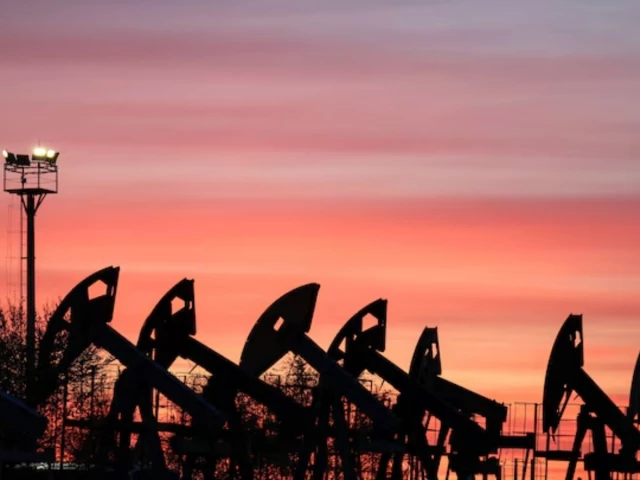
Storage tanks for Liquified Natural Gas (LNG). File
| Photo Credit: The Hindu
The story so far
On July 4, 2026, the government lifted emergency curbs it had imposed on the supply of natural gas during the West Asia crisis in March. It cited “ceasefire and negotiations” and the resumption of “sea traffic through the Strait of Hormuz” to restore gas supplies to fertilizer plants, refineries, distributors and industrial users. The Petroleum and Natural Gas Ministry, in a notification, amended the Natural Gas (Supply Regulation) Order, 2026, and omitted provisions that had prioritised sale of domestically produced natural gas and imported Liquefied Natural Gas as per a priority list released by the government during the U.S.-Israel war on Iran.
The priority list
On March 12, Union Minister for Petroleum and Natural Gas Hardeep Singh Puri told Parliament about the “immediate priority sequence”. “Domestic piped gas to homes and CNG for vehicles receive 100% supply with no cuts. Industrial and manufacturing consumers will receive up to 80% of their previous six-month average. Fertilizer plants will receive up to 70%, protecting the agricultural input chain ahead of the sowing season. Refineries and petrochemical units absorb a managed reduction, with that gas redirected to higher-priority sectors,” he had said.

Why the relaxation?
The latest measure follows a series of steps the government has taken to ease the supply of gas in the wake of an improved supply situation. On June 25, it restored the supply of industrial and commercial LPG to the pre-West Asia crisis levels. “In a major relief to industrial and commercial LPG consumers, the government has removed all sectoral restrictions on the supply of non-domestic packed LPG and restored supplies to the levels prevailing prior to the West Asia crisis,” the Petroleum Ministry said.

Which sectors benefit?
The move is expected to benefit the fertilizer plants, refineries, city gas distributors, and industries such as ceramic. These sectors need reliable supply of natural gas at affordable rates.
Fertilizer plants are known to consume a bulk of India’s LNG. According to a July 2025 article published by the Institute for Energy Economics and Financial Analysis, a global team of energy analysts, on India’s LNG consumption, “The fertiliser sector… has accounted for almost all of India’s LNG demand growth since FY2016.”

Prashant Vasisht, senior vice president of ICRA, a ratings agency, had told The Hindu in March: “A little less than 30% of natural gas use goes into making fertilizers, while power plants account for 13% and city gas distribution 21%.”
Urea, which has around 46% of nitrogen, is the most common nitrogen fertilizer. It is produced by converting natural gas (methane) into ammonia and then combining it with carbon dioxide. The energy-dependent process, hence, makes LNG a crucial ingredient of the product.
The ceramic industry too stands to gain. Manufacturing units based in Gujarat’s Morbi were badly hit when the West Asia crisis peaked with reports indicating that 600 factories and 4 lakh workers were affected amid a shortage of propane and natural gas, both used in the production of ceramic.

LPG vs LNG
LPG, mostly used as cooking gas in India in cylinders, is made of propane and butane, and stored as liquid under pressure. India imports around 60% of its LPG and with supplies via the Strait of Hormuz stopped during the war, it procured LPG from the U.S., chiefly from its Gulf coast.

LNG is natural gas, mostly methane. It is cooled to around -160°C and liquefied so that it can be shipped in specialised tankers. It is re-gasified in vaporisers (heat exchangers) at port terminals before being supplied through pipes. India imports half of its LNG, most of which would come from Qatar before the war through long-term contracts. But as supply from Qatar dwindled to a trickle after its gas fields were attacked, the U.S. (26%), Oman (24%), Nigeria (22%), and Angola (16%) became the major sources, according to a report by Businessline.
What now?
India has been diversifying its energy sources. As Mr. Puri put it in a recent blog post, “The widening of our crude basket from 27 countries to 41, the doubling of our import terminals, and the pipelines and reserves built across a decade under Prime Minister Modi were not abstractions when the Strait finally closed; they were the very reason the lights stayed on.”
The road ahead now is one of capacity building. As Mr. Puri put it, “Learning from this experience, we will build additional capabilities to strengthen our energy resilience…”
Published – July 06, 2026 11:21 am IST