A cursed wish becomes a chilling tale of control, consent and the terrifying cost of manufactured love
KARACHI:
One of Obsession’s most unsettling moments arrives in the middle of an otherwise ordinary dinner, until Nikki, already beginning to fracture under the weight of something unseen—snaps with an abrupt, jittering insistence: “No no no no no, I thought we were having a nice day.” The audience laughs. Then instantly regrets it. That delayed discomfort is the exact frequency Curry Barker’s film operates on, forcing viewers to confront how easily suffering can be misread in real time.
Obsession presents itself as a familiar supernatural horror: A cursed wish, glowing eyes in the dark, a girl watching a boy sleep from the corner of his room like an intrusive thought made physical. On paper, it belongs to the ecosystem of low-budget streaming horror that leans on mythology and jump scares yet Barker is building an airtight case against his protagonist — a coward who erases Nikki’s autonomy through desire disguised as love.
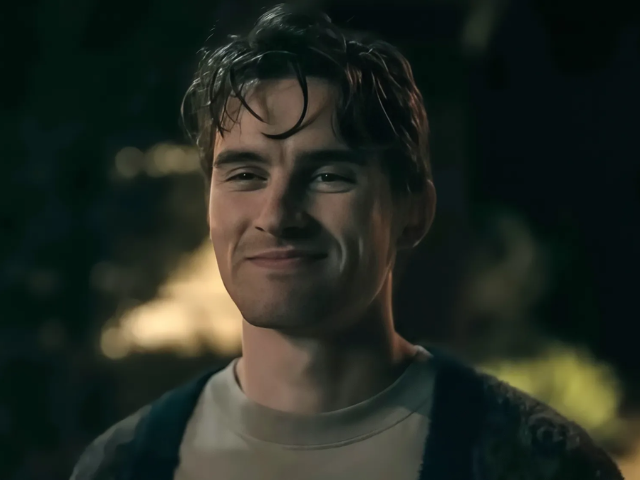
Michael Johnston plays Bear with a kind of emotional avoidance that never fully tips into caricature.
The premise is deceptively simple—an insecure young man makes a wish that his close friend Nikki will love him more than anyone else in the world. What follows is not romantic transformation but manufactured attachment, a grotesque simulation of devotion that replaces consent with programming. The curse does not give Bear Nikki. It imprisons her inside a version of herself that was never allowed to choose.
Barker is careful not to frame Bear as an obvious monster. He makes the wish almost absent-mindedly, like a thought he doesn’t fully believe has consequence. Yet the film’s most disturbing insight is that harmful choices do not require malicious intent.
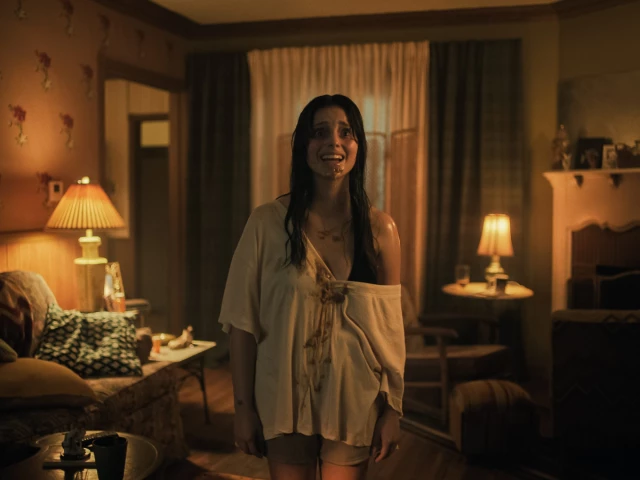
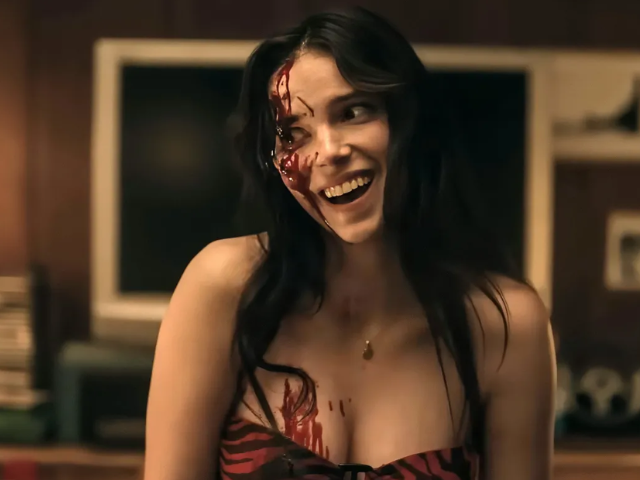
The emotional centre of the film belongs to Inde Navarrette’s performance as Nikki, which is one of the most physically precise horror performances in recent memory. She performs not a single character but a fracture—two selves occupying the same body: the original Nikki attempting to surface, and the imposed version constructed by the curse. The result is constant dissonance. Nothing she does feels fully owned by her.
Navarrette communicates that division through bodily logic rather than exposition. She walks backwards through spaces, watches Bear from corners of the room. There is a recurring stillness to her that feels less human than observational, as though the body is paused while something else calculates. At moments, she becomes almost feral in her self-awareness, as if identity has been stripped down to instinct and resistance.
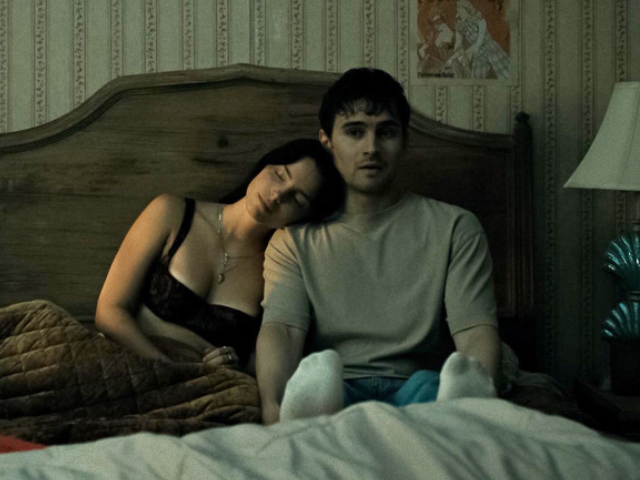
She slams fragments of glass into her face, and in the brief moments before the possession reasserts itself, she screams, “IT’S NOT ME.” She slips Polaroids with handwritten warnings into Bear’s lunchbox — placed beside the remains of his dead cat in one of the film’s most quietly devastating images. She retells Hansel and Gretel at a party in a way that feels broken, almost like a coded scream. Every action is a cry for help. The tragedy is that Bear sees all of it.
Some of the most disturbing passages are the quietest. The possessed Nikki’s affection is not seductive so much as procedural, like behavior learned without comprehension. She becomes attached to being called “Freaky Nikki,” a name the real Nikki rejected, and the film uses this as a brilliant technique to override her identity.
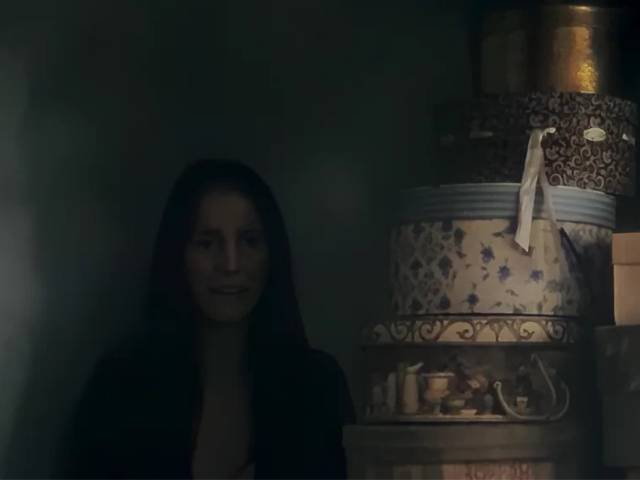
One of the film’s most disturbing sequences arrives when Nikki steps out of darkness and asks, almost clinically, “I feel like you don’t love me as much as I do? It’s not mutual.” The line, on the page, is straightforward.
On screen, Navarrette stretches it into something unbearable and corpse-like. Her face is isolated in near-total blackness, expression locked into a strained approximation of sincerity that reads less like emotion and more like reconstruction. It is one of the film’s clearest horror arguments: love, when stripped of reciprocity, does not become devotion—it becomes imitation.
Barker extends this horror in another sustained shot as Navarrette stares directly into the camera with a serene, impossibly wide smile for nearly twenty seconds. Nothing changes.
That is the point. The horror is not threat, but duration and the violation of being forced to hold an expression that does not belong to her. The smile lingers long enough to become unbearable.

Even when confronted with the consequences of his wish, Bear responds not with rupture but negotiation. Again and again, his comfort outweighs her freedom. “What’s so bad about being with me?” he asks. “I’ve never been with you, Bear,” the real Nikki replies.
The line lands like a correction that arrives too late to matter. The film’s treatment of consent becomes its most sustained horror principle. Nikki does not want him. She says so, directly and repeatedly, even asking for death as release. Yet Bear continues to centre his emotional discomfort over her literal suffering. Love becomes indistinguishable from entitlement.
The film makes clear, without overstating it, that Nikki was never singularly enough for him. The moment another romantic possibility enters Bear’s orbit, Nikki becomes structurally expendable—no longer an object of longing but an obstacle to it.
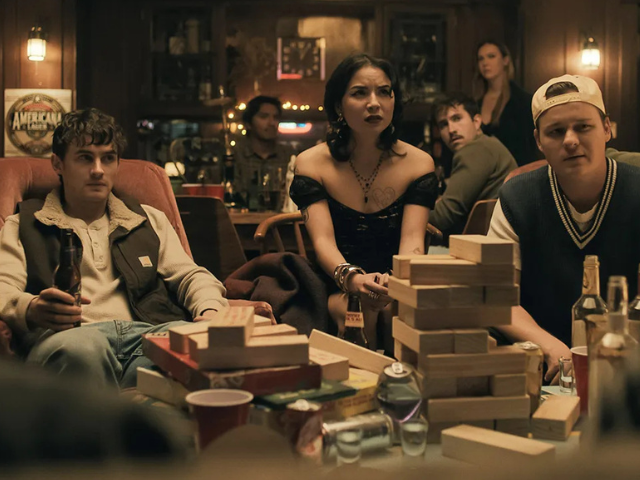
Even the film’s mythology carries a darkly comic looseness that never fully releases the tension. At one point, another character casually wishes for a billion dollars, delivered like a joke, almost a throwaway gag about human greed.
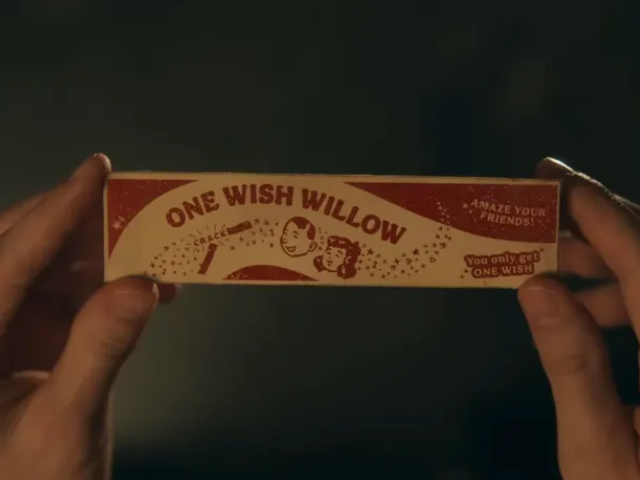
The film allows the laugh, then refuses to honour it. The One Wish Willow does not function as punishment, but as exposure, revealing how easily desire replaces accountability. Barker doesn’t soften the horror with humour; he lets humour expose how thin the boundary is between curiosity and catastrophe.
Unable to face consequence even in escape, Bear chooses pills as his way out—a final act of avoidance that quietly echoes the earlier death of his cat. Even in death, he chooses an easy way out. By this point, Bear is no longer positioned for sympathy, but for exhaustion; a response the film deliberately engineers rather than avoids.
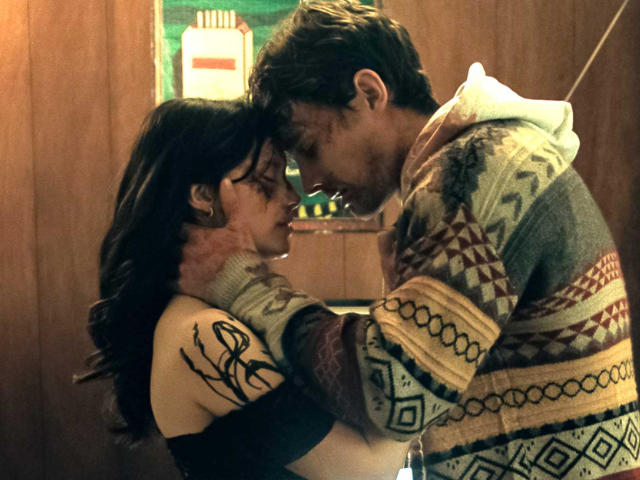
Over the end credits, set to The Little Dippers’ Forever, Nikki sobs. The choice of song is quietly devastating—its softness doesn’t soothe the ending so much as expose it. There’s an almost cruel elegance to the pairing: a gentle, nostalgic melody laid over the sound of grief that refuses to resolve. The sound continued even as audience members began leaving the theatre, no longer contained within the frame.
Obsession works because Barker understands that the scariest element was never the glowing eyes or unnatural stillness. It was a recognisable person making unrecognisable choices and calling it love.
In lesser hands, it is a horror film that understands the most frightening monsters are often people who believe they are acting out of love. Its final argument lands with clarity: Obsession does not love a person. It loves the idea of a person. And if preserving that fantasy requires destroying the real one, it will do so without hesitation.