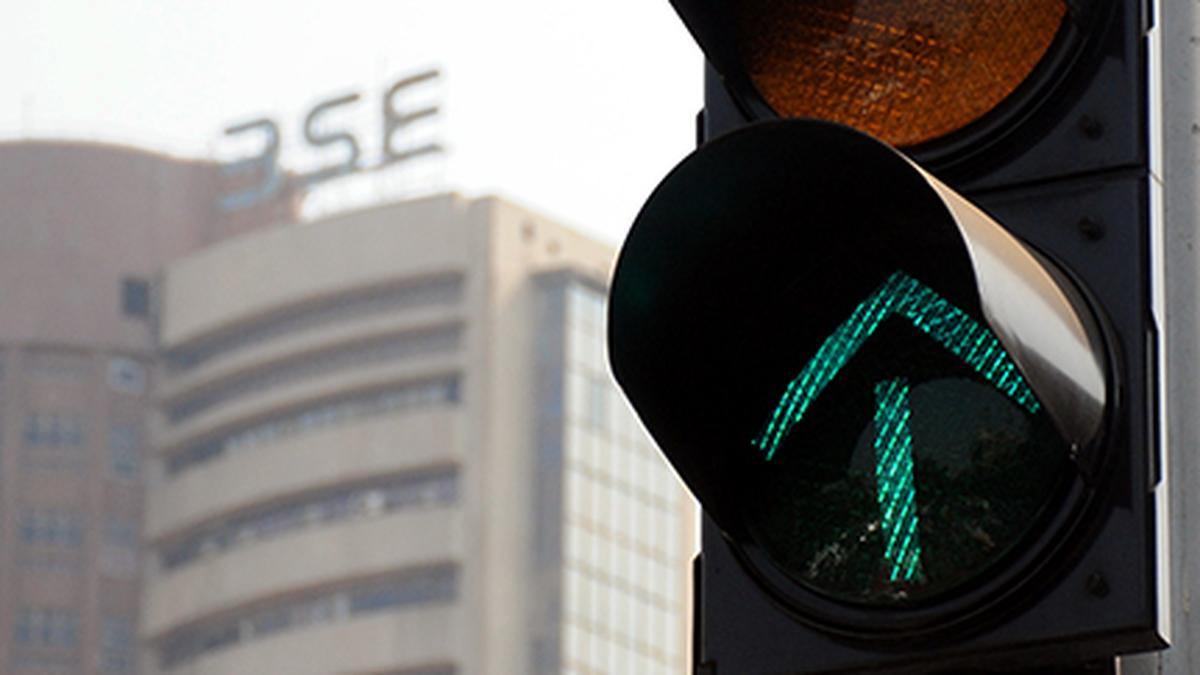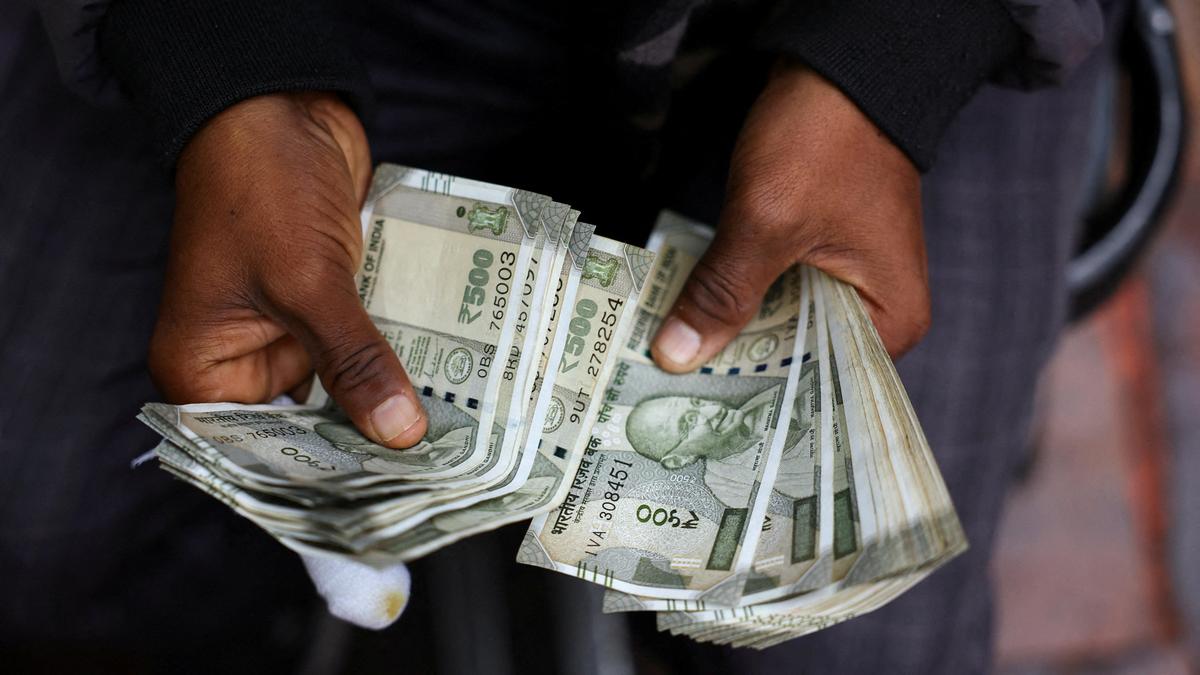
Forex traders said USD-INR is under pressure and hovering very close to the 96 mark as dollar buying continues amid upside in oil prices.
| Photo Credit: Reuters
The rupee opened on a weaker note and fell 30 paise to 95.94 on Friday (May 15, 2026) after hitting new lows over three straight sessions, as elevated crude oil prices, a strong dollar, and concerns over the West Asia crisis weighed on investor sentiment.
Forex traders said USD-INR is under pressure and hovering very close to the 96 mark as dollar buying continues amid upside in oil prices.
Moreover, the Summit between U.S. President Trump and Chinese President Xi did not yield any fruitful results, particularly on the U.S.-Iran front, denting investor sentiments further.

The USD/INR pair, which had slumped to 95.96 against the American currency on Thursday (May 14, 2026), recovered sharply after reports surfaced that India is considering a major cut in taxes paid by foreign investors on Indian bonds.
On Friday (May 15, 2026), the government hiked the petrol and diesel prices by ₹3 per litre in the latest move to curb the demand of these fuels.
At the interbank foreign exchange market, the rupee opened at 95.86, then fell further to 95.94 against the U.S. dollar, registering a fall of 30 paise from its previous close.
The rupee weakened to a fresh record low of 95.96 before closing with a marginal gain of 2 paise at 95.64 against the U.S. dollar on Thursday (May 14, 2026).
Meanwhile, the dollar index, which gauges the greenback’s strength against a basket of six currencies, was trading at 99.05, higher by 0.24%.
Brent crude, the global oil benchmark, was trading up 1.30% at $107.09 per barrel in futures trade.
On the domestic equity market front, Sensex rose 239.14 points to 75,637.86 in early trade, while the Nifty was trading 78.30 points higher at 23,767.90.

“The Dollar Index rose for a fourth straight session after strong US retail sales and stable labour market data reduced expectations of aggressive Federal Reserve rate cuts,” CR Forex Advisors MD – Amit Pabari said.
Adding another layer of uncertainty for the rupee was the closely watched meeting between U.S. President Donald Trump and Chinese President Xi Jinping. While both sides tried to maintain stability, disagreements over Taiwan and China’s continued oil purchases from Iran kept geopolitical concerns alive.
“And whenever uncertainty rises globally, the dollar usually becomes the market’s preferred safe place. For now, the rupee remains caught between policy support at home and global pressure from oil, inflation, and the dollar abroad,” Pabari added.
Foreign Institutional Investors turned net buyers purchasing equities worth ₹187.46 crore on Thursday (May 14, 2026), according to exchange data.
Meanwhile, the government on Thursday (May 14, 2026) imposed a limit of 100 kg on gold imports under the Advance Authorisation scheme, which allows jewellery exporters to import raw or input materials at zero duty.
The government has tightened the conditions for issuing and monitoring advance authorisation for the import of gold. Earlier, there was no limit on gold imports under the scheme.
The Advance Authorisation scheme allows the duty-free import of inputs that are incorporated into an export product. In addition to any inputs, packaging material, fuel, oil, and catalyst that are consumed or utilised in the process of production of export products, are also allowed.
Published – May 15, 2026 10:28 am IST