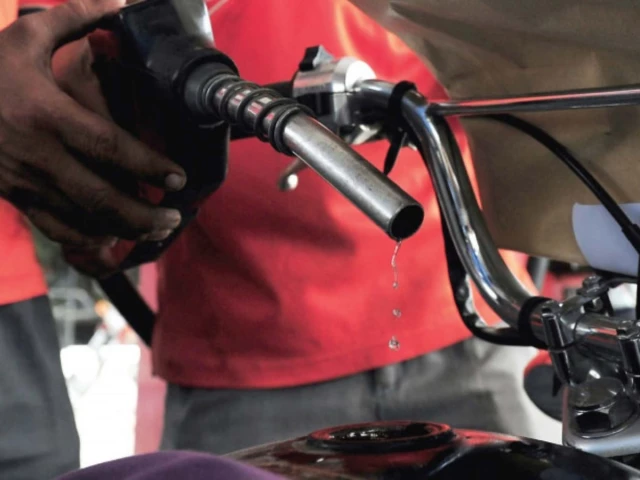
For representative purposes
| Photo Credit: Getty Images
The recent announcement by Prime Minister Narendra Modi urging individuals to reduce their consumption of gold and petrol brought to the fore what many analysts have warned about: India’s situation on the external front is far from rosy. The rupee has witnessed significant depreciation over the last few weeks, while the rise in LPG prices has caused hardships for the working classes and triggered a reverse migration of workers back to villages.
Let us focus on the question of capital flows. The outbreak of hostilities in the Persian Gulf and the closure of the Strait of Hormuz have led to an outflow of foreign capital and a weakening of the rupee relative to major currencies. These are to be expected given the profound uncertainty that has gripped global markets. What makes the situation doubly worrying for India is that these outflows and depreciation have occurred even though interest rates in the U.S. and the U.K. have not changed. If foreign central banks do raise interest rates, it might lead to even more pressure on India’s external account in the future.
The taper tantrum
Emerging market economies such as India offer higher returns, but they are also exposed to currency and inflation risks. A rise in Indian inflation and/or a depreciation of the rupee can lower the net return to a foreign investor on holding Indian assets. The returns on Indian assets would have to be higher relative to those on foreign assets to compensate for these risks. In simple terms, the decision to hold Indian assets relative to foreign ones depends on the difference between Indian and foreign interest rates.
If Indian interest rates remain fixed, an increase in foreign interest rates can prompt foreign investors to reduce their holdings of Indian assets. This leads to depreciation of the rupee as it is exchanged for dollars. The only way — apart from capital controls — to arrest such a slide is to raise domestic interest rates, but that would negatively affect domestic investment. Monetary policy in emerging economies is tied to that of the U.S.; any increase in U.S. interest rates often forces smaller economies to consider raising their own rates to defend their currencies.
Given the ease with which capital can flow across borders, these outcomes can occur merely on the expectation that interest rates will rise, even before any actual rise. Such an outcome was seen in 2013. With interest rates hitting the zero lower bound in the wake of the 2008 Great Recession, the U.S. Federal Reserve announced a possible end to quantitative easing. The mere expectation of higher future interest rates caused a massive withdrawal of capital from emerging market economies. This was known as the ‘taper tantrum’.
What is happening currently is somewhat similar, with capital flight occurring even though interest rates have not actually risen. What is worrying about the current scenario is that India’s depreciation and capital flight have occurred even though foreign central banks have not made any definitive signal that they intend to raise interest rates in the future.
Uncertainty in monetary policy
Despite turmoil in energy markets, central banks in developed economies did not initially raise interest rates. The U.S. Federal Reserve and the Bank of England have maintained interest rates at 3.75% since December 2025. Their initial forecasts were built on the idea that the war — and the subsequent oil price increase — would be temporary, with prices returning to normal levels. Raising interest rates in such a scenario would only prove deflationary.
However, the longer the war continues, the greater the possibility that oil prices will remain elevated, thereby increasing inflationary expectations. Rising wages and prices, as economic agents fought to maintain their purchasing power in the face of rising energy prices, would result in rising inflation.
As the war drags on, the possibility of interest rate increases to combat inflationary pressures rises.
The beginning of the war provided confusing signals to central banks. While the futures market in the energy sector anticipated an eventual decline in prices, interest rate futures assumed heightened inflation. In dealing with this profound uncertainty, the central banks of the U.K. and the U.S. initially maintained interest rates, providing detailed forecasts outlining different scenarios. And yet, foreign capital exited the Indian economy despite foreign central banks making no commitment to raising interest rates and forecasting the rise in energy prices as being merely temporary.
The rupee had been facing depreciatory pressures for some time; the war gave impetus to a process already occurring. Perhaps one could argue that foreign capital has priced in the possibility of future interest rate hikes and has already acted upon these expectations. The future rise in interest rates — if it were to occur — may not have much of an effect then. But this is to assume that foreign wealth holders have completely discounted the initial stance of Central Banks that inflation was temporary. This is a dangerous assumption to make in a situation of such profound uncertainty.
The Prime Minister’s announcement diagnoses the problem the economy currently faces. The current account deficit is widening owing to rising oil prices. Coupled with capital flight, it puts significant pressure on the rupee. But moral suasion cannot be a policy response.
The RBI had initially intervened by imposing restrictions on certain foreign exchange derivative contracts, and the government has recently announced the imposition of import duties on gold. But this has not resolved the underlying vulnerabilities. If interest rates were to rise in the future, these vulnerabilities would come under further stress. The economy is not out of the woods yet.
(Rahul Menon is associate professor at O.P. Jindal Global University)
Published – May 15, 2026 08:30 am IST