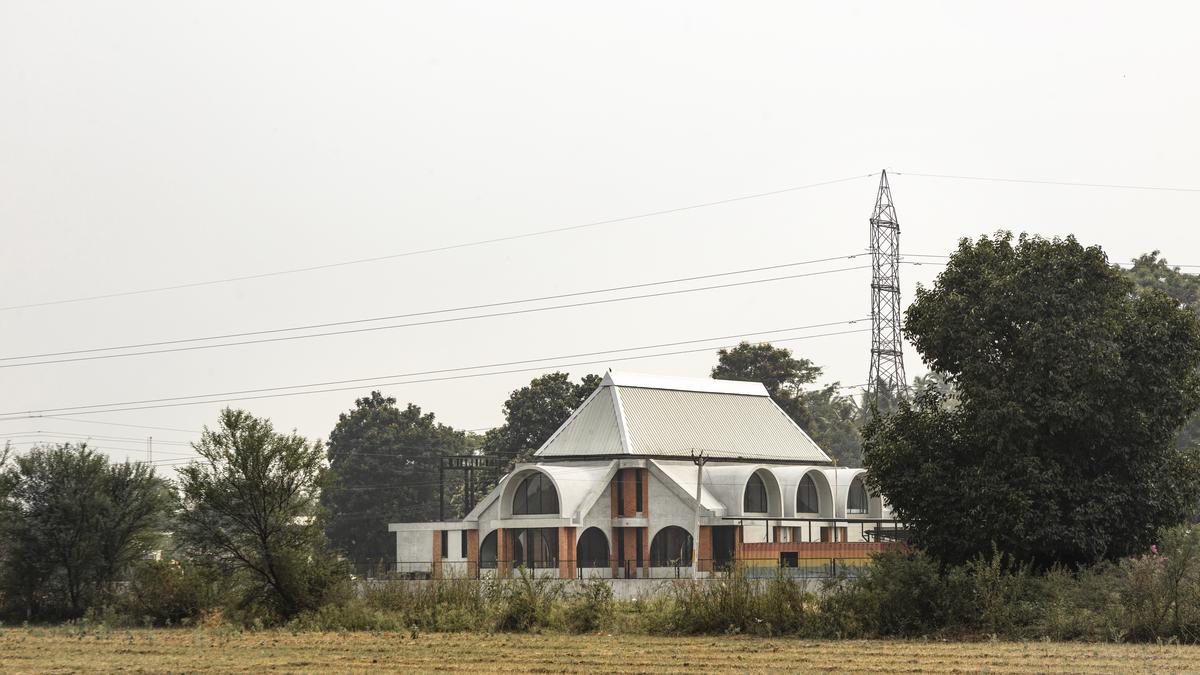
An imposing brutalist building forged of brick, concrete and steel, Studio Alt, sits in the midst of the verdant 125-acre Sardar Patel organic farm in Bilasya, Kathwada, around 30 km from central Ahmedabad. It houses two creative practices, Studio Wildflower by Dhruva, showcasing work by ceramic artist and NIFT Chennai alumnus Dhruva Patel, and Sonic Architect by Sahil Thappa (Patel’s brother-in-law), a mechanical engineer and alumnus of NID, Ahmedabad, who creates speaker systems. For Patel, who used a retrofitted shipping container as a ceramic workshop on her family farm, and for Thappa, whose handcrafted wood speaker architecture needed a suitable home, this 740 sq. m. edifice, created on a budget of about ₹4 crore, offers a collaborative space that celebrates dualities.
The entrance
Between a church and factory
The building was designed by Ahmedabad-based Rushnaiwala Architects, Muntaha and Filza Rushnaiwala. The duo envisioned a studio that was “poised between the ordered procession of a church and the utilitarian logic of a factory”. They are alumni of CEPT, Ahmedabad.
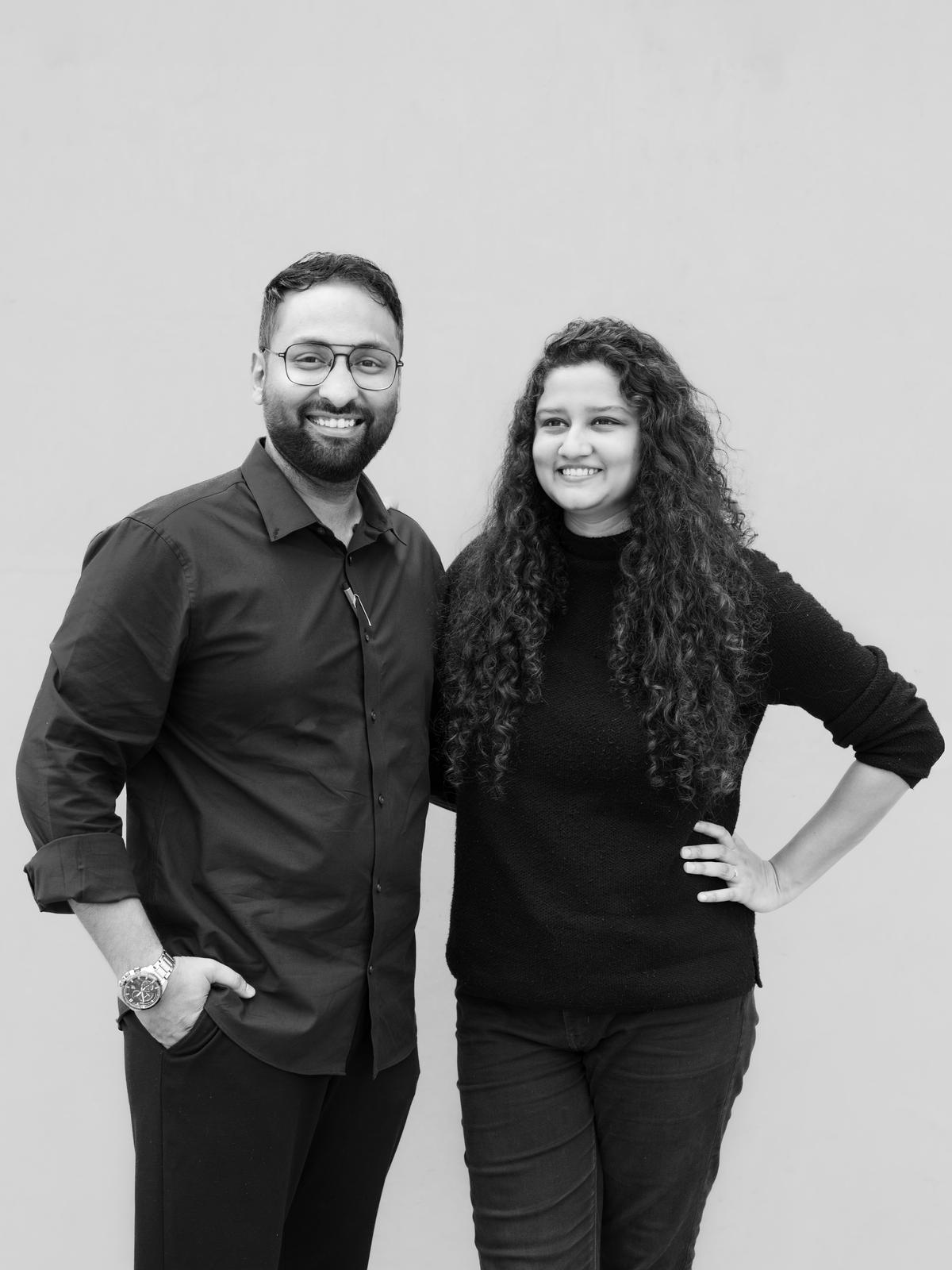
Filza and Muntaha Rushnaiwala

“We were inspired by the juxtaposition you see at Henri Labrouste’s Bibliothèque Nationale de France, with imposing arches but a certain delicate appeal within.”Muntaha RushnaiwalaAhmedabad-based architect
Muntaha started the project in mid-2022 with a very specific client brief — it needs to be raw and industrial. “We knew we had to work with the dualities of their practice — one with clay, and the other with wood, and by using two material approaches as well. We were clear that we did not want too much concrete to overwhelm the structure,” he says. “Our initial idea was to use stone, with larger pieces for the exterior facade, and a complete contrast in the interiors with slender stonework. We were inspired by the juxtaposition you see at Henri Labrouste’s Bibliothèque Nationale de France, with imposing arches but a certain delicate appeal within.”
Who is Henri Labrouste?
French architect Henri Labrouste (1801–1875) created two glass-and-iron reading rooms in Parisian libraries: the Bibliothèque Sainte-Geneviève (1838–50) and the Bibliothèque Nationale (1859–75). His spaces with exposed metal frameworks and exquisitely detailed masonry used new mechanical systems and forms of heating. And added luminosity using gas lighting.
Sunlight on Kota flooring
For Patel, the term Alt suggests alternative perspectives, one shaped by vivid colours and textures in glazed ceramic and the other with sonic pieces in wood. She says, “This studio has panned out exactly as we envisioned, a raw space that can complement our work. This neutral palette also uses local materials and is constructed by a local crew.”
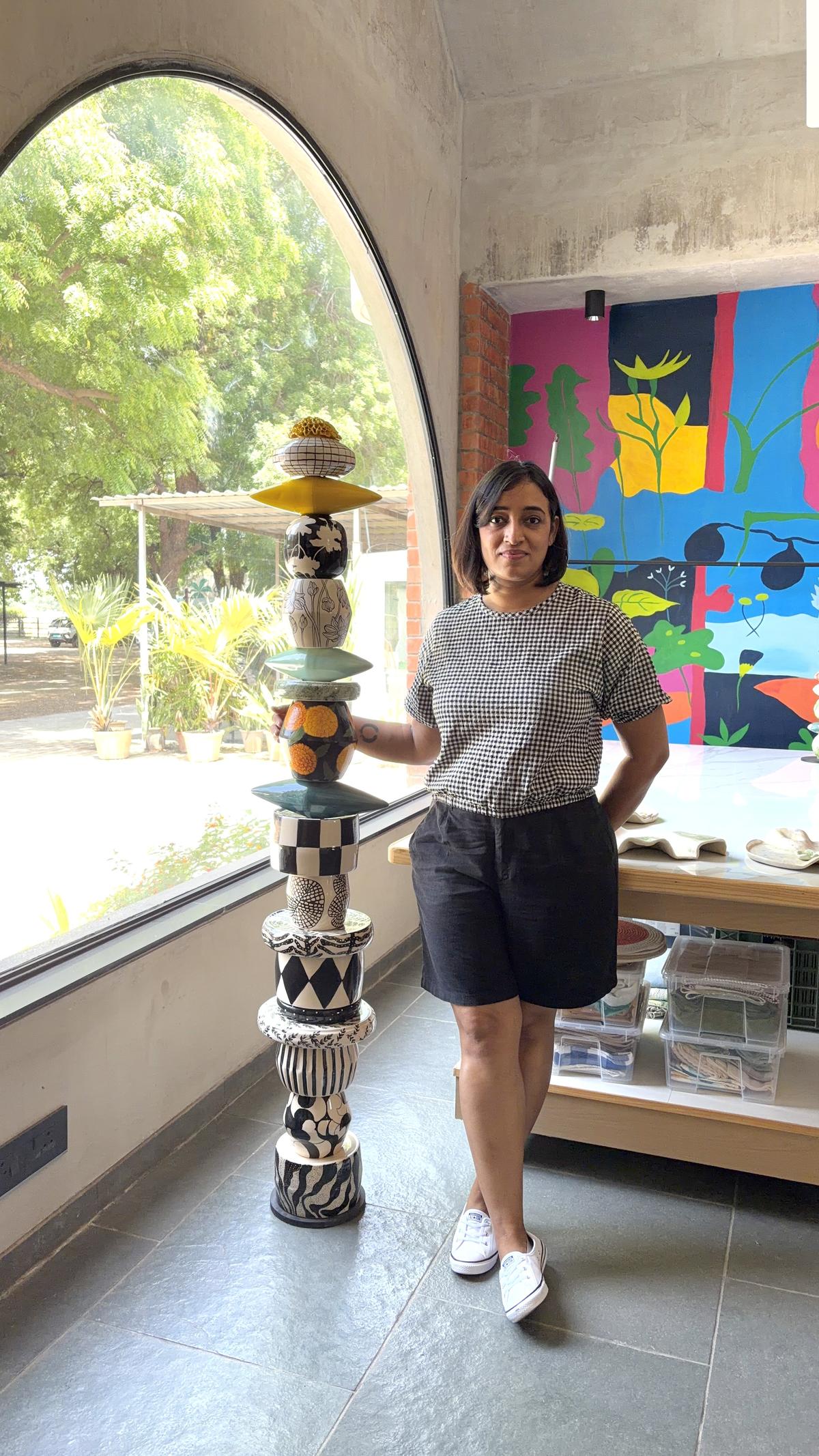
Dhruva Patel
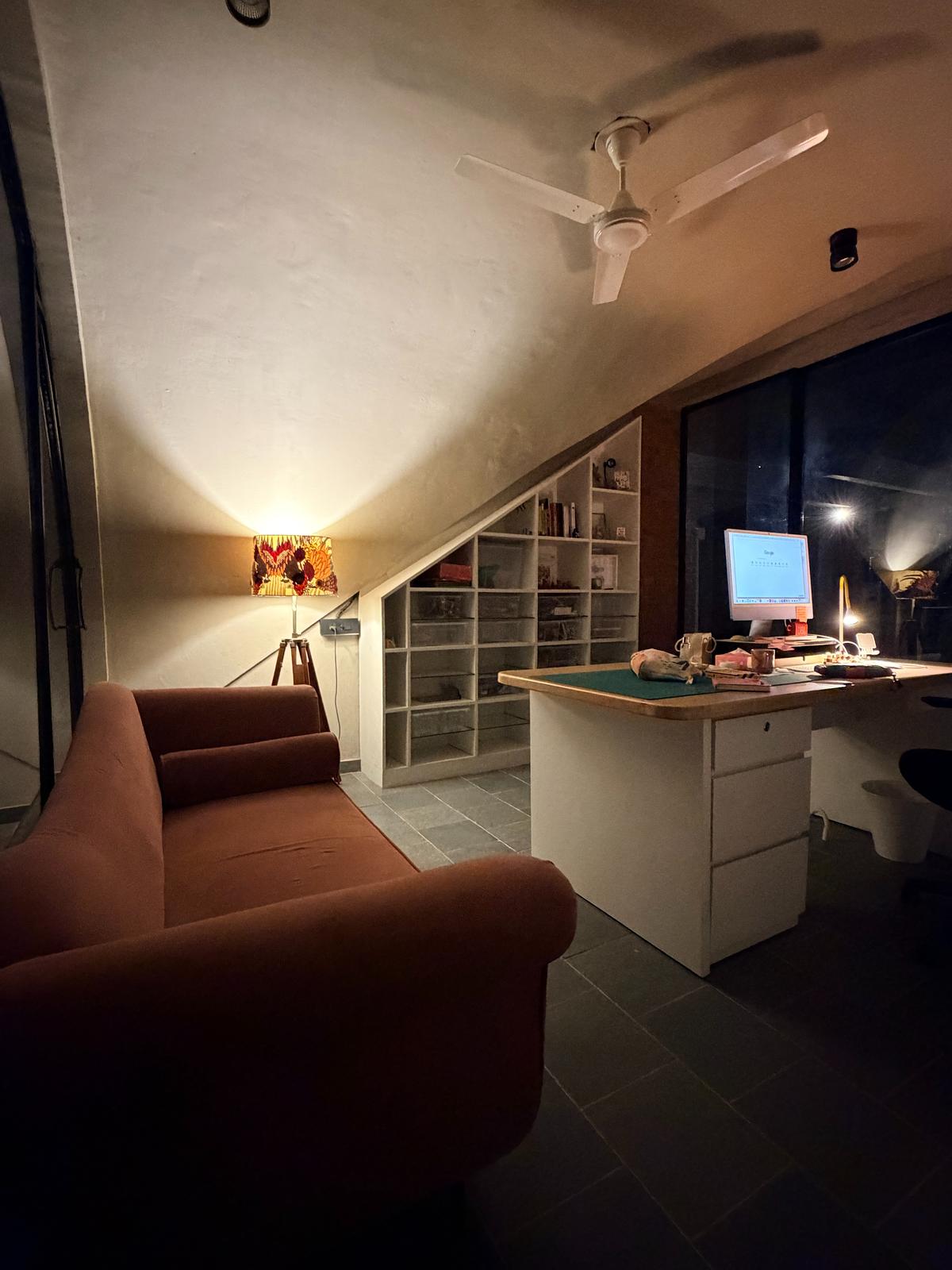
Dhruva Patel’s office space on the mezzanine.
The entrance to Studio ALT welcomes you with curved steps leading to an entrance with a 12-metre walkway. As you set foot in the generous exhibition/gallery space, you are immediately struck by the warmth of the filtered golden light that streams in through the large windows and skylights, and the cool, textured Kota flooring.
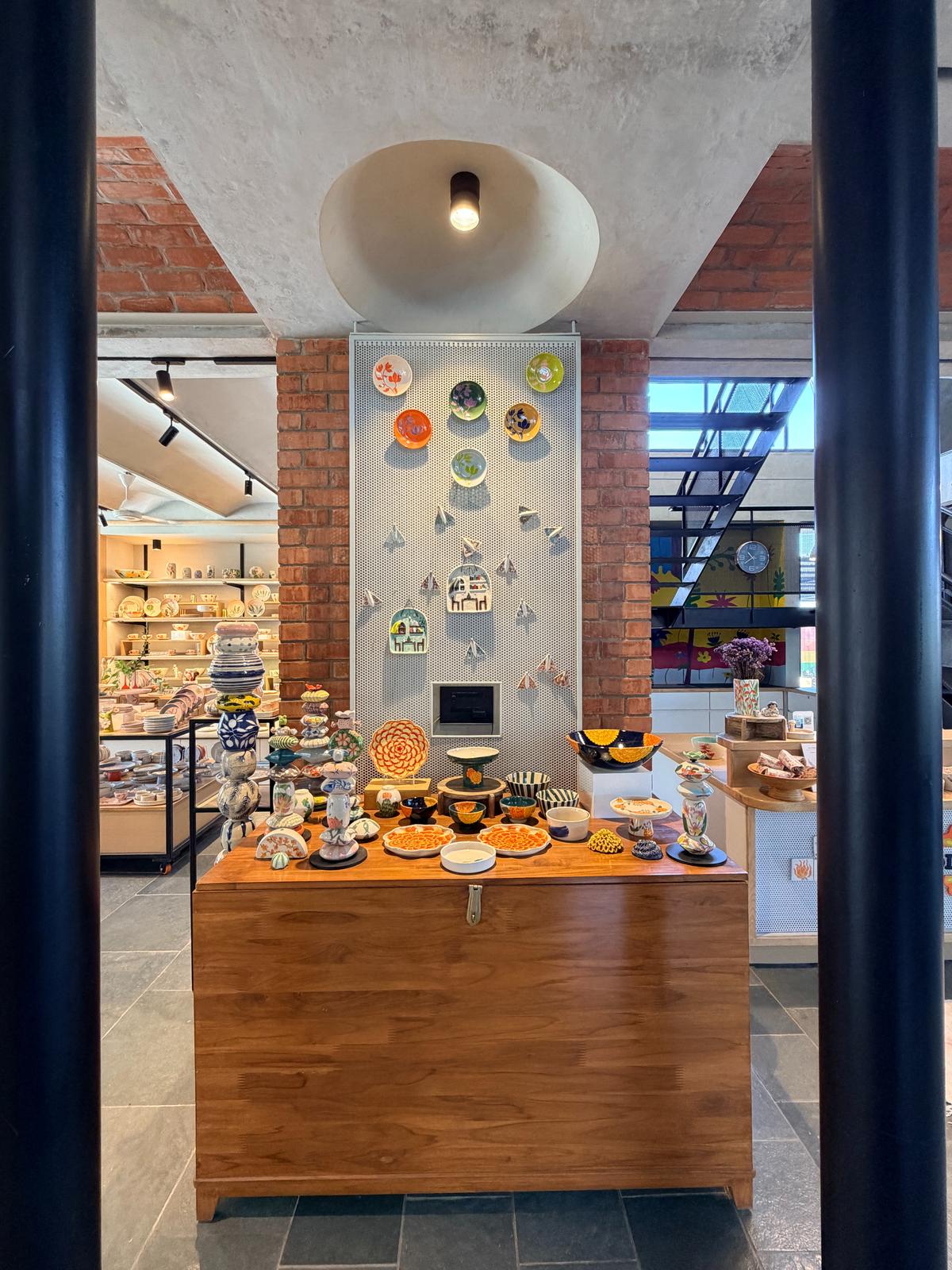
Juxtaposition of ceramic Totem and objects against the ceramic, brick and metal structure.
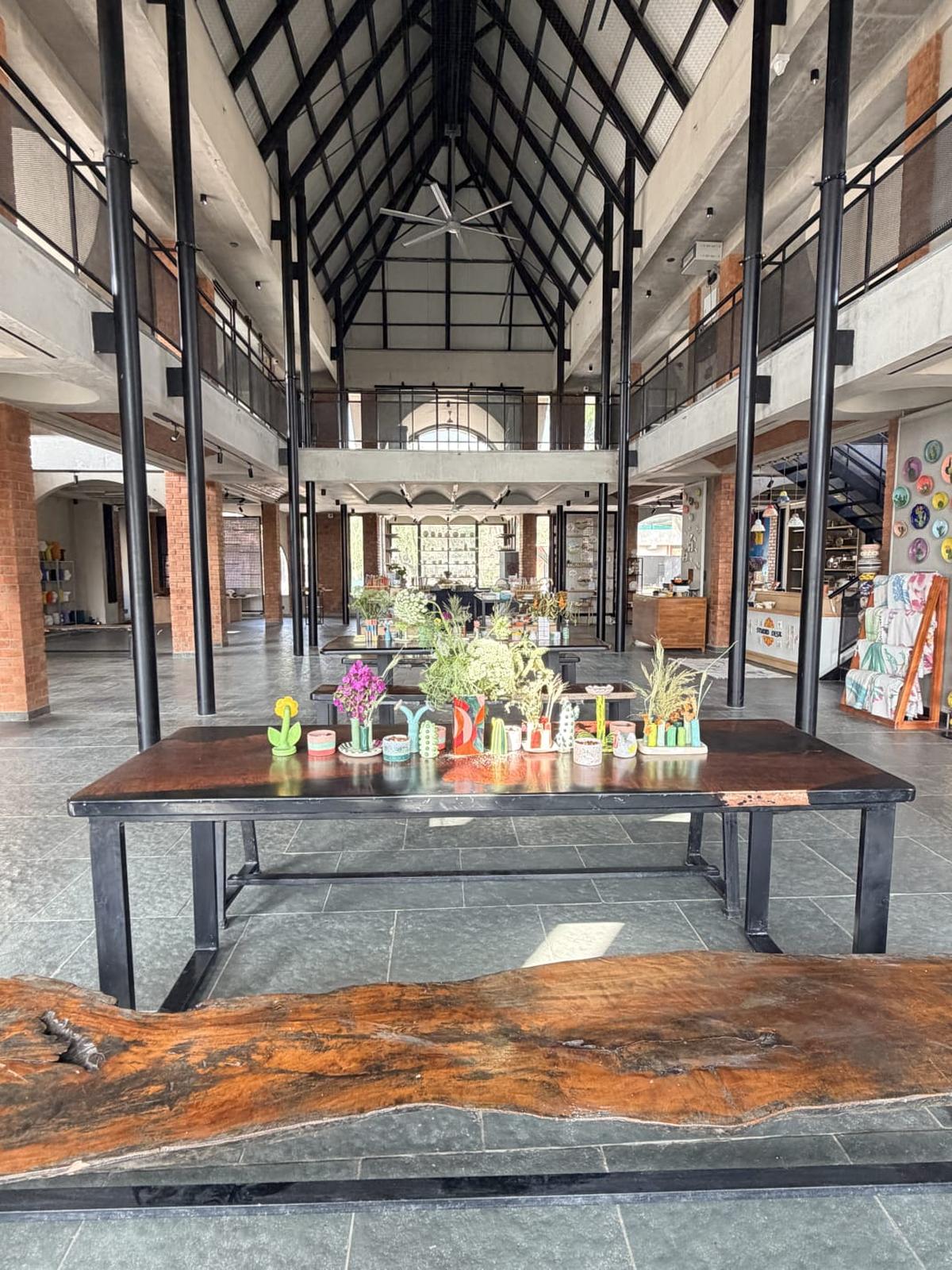
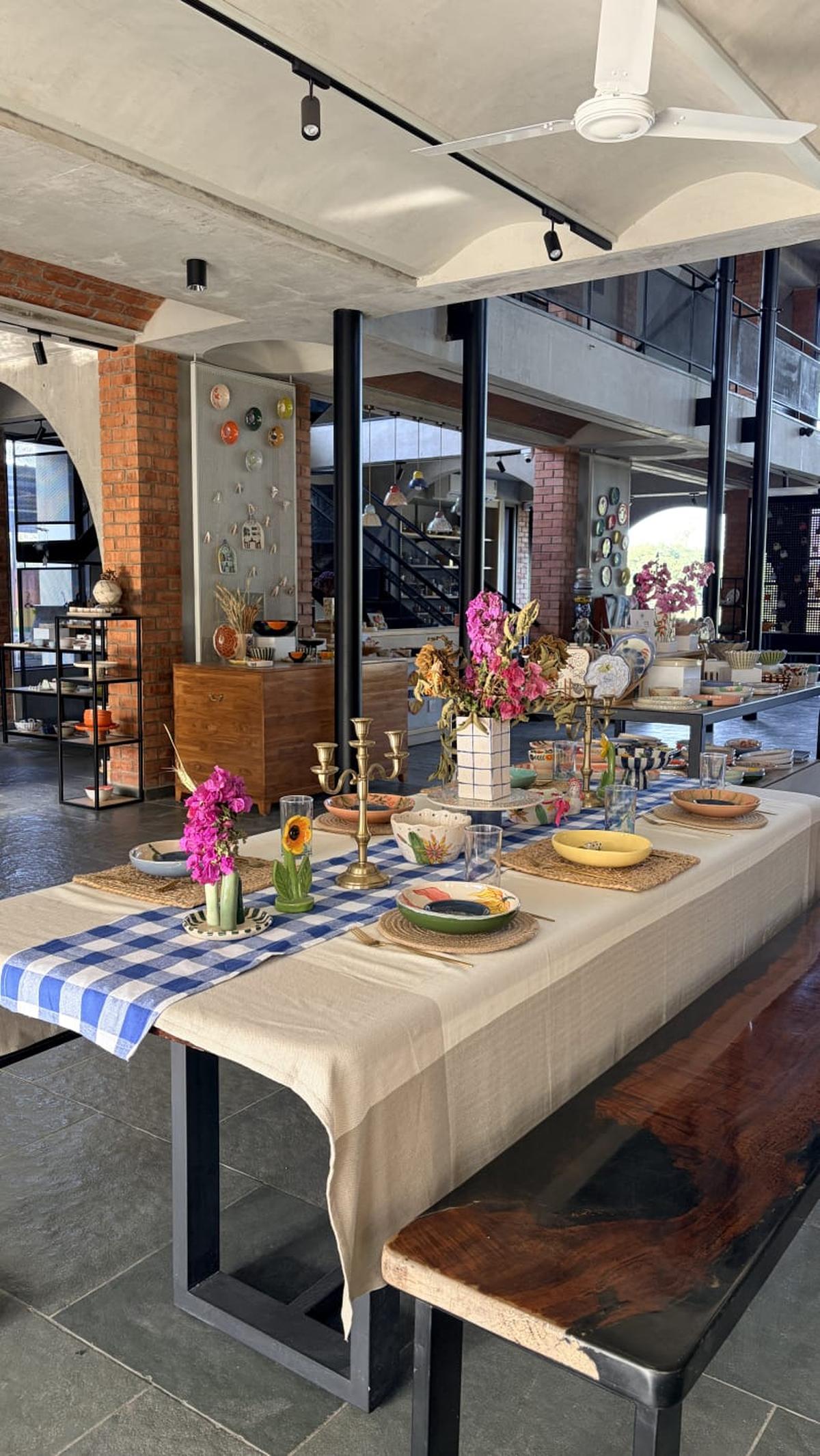
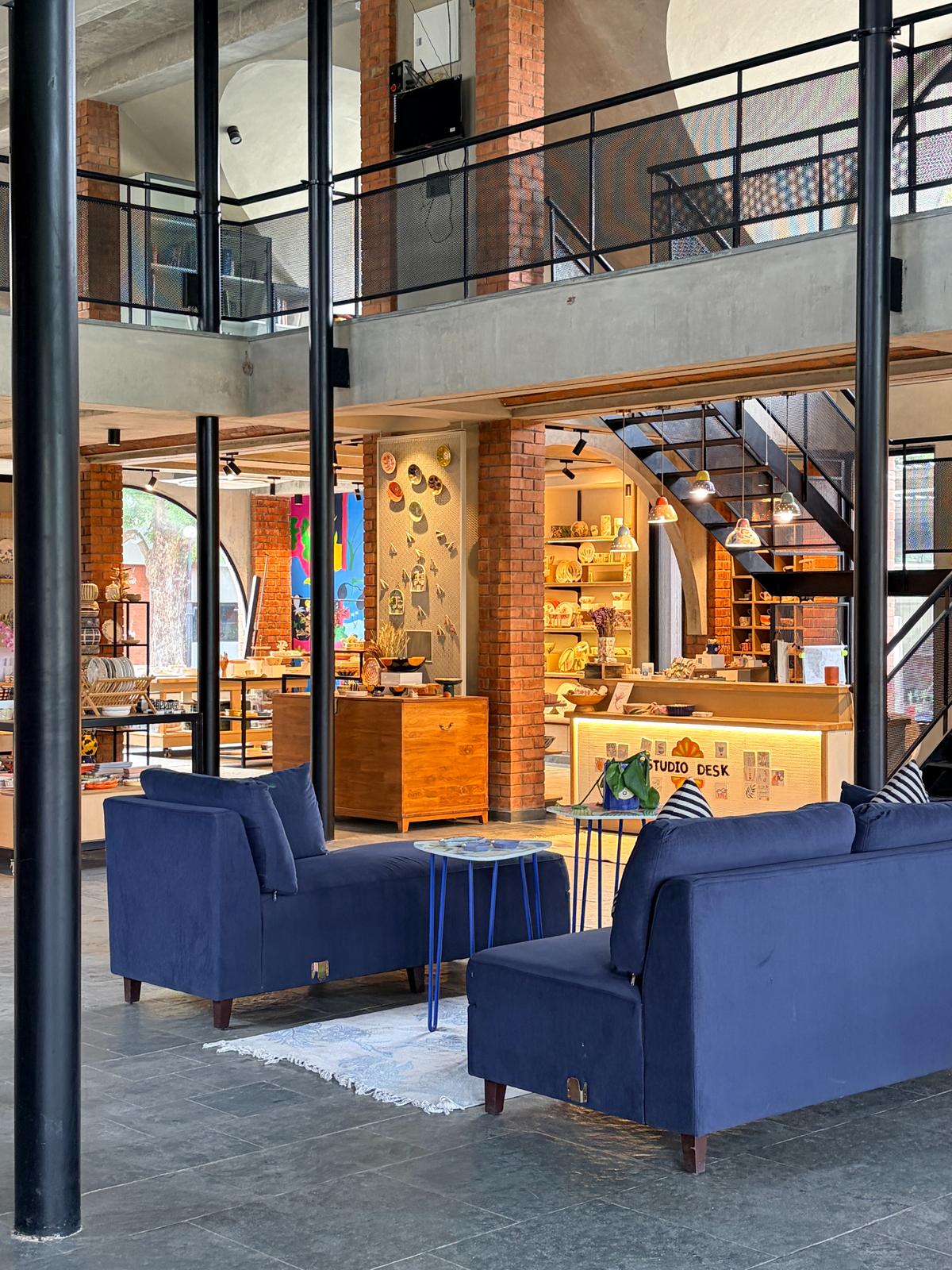
At the heart of the building, this central hall of approximately 8,000 sq.ft. rises across three levels. It has played host to a farm-to-table meal in March, resplendent with ceramic displays, floral arrangements and warm wood furniture. And a ceramic workshop at the beginning of April. Recessed alcoves on the ground floor, fitted with tracking lighting, display Patel’s ceramic work in a luscious palette.
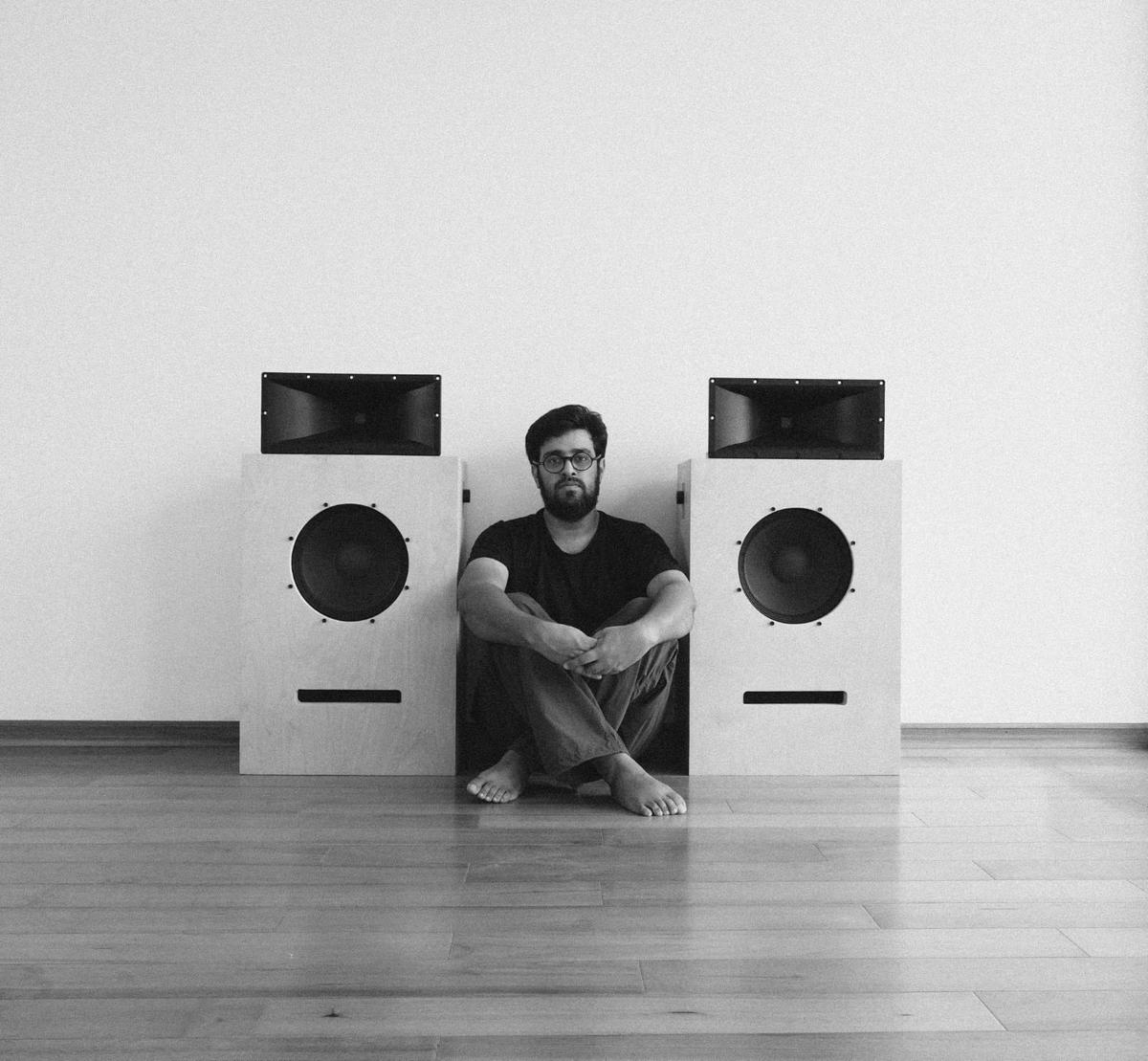
Sahil Thappa
On the left, cabinetry on castors allows the artist flexibility to redesign the interior arrangement often. Thappa’s space on the right encompasses a listening room bathed in soft sunlight with display areas for his work. “A small pop-up display at the sonic area brings together fragments of ongoing experimentation with materials, forms, and functions in intermittent stages of becoming objects that sit somewhere between prototype, study, and finished piece,” he says.
Counting vaults
The mezzanine with black metal stairs leading up to it hosts five vaults, two each for Patel and Thappa, and a small library. While Patel uses one vault as a cosy office space, one of Thappa’s vaults will soon feature a Lego display. The plan seems conventional and symmetrical, but achieves spatial complexity through variations in volume, calibrated skylights and interwoven levels. These intimate vault spaces above contrast with the voluminous gallery space below.
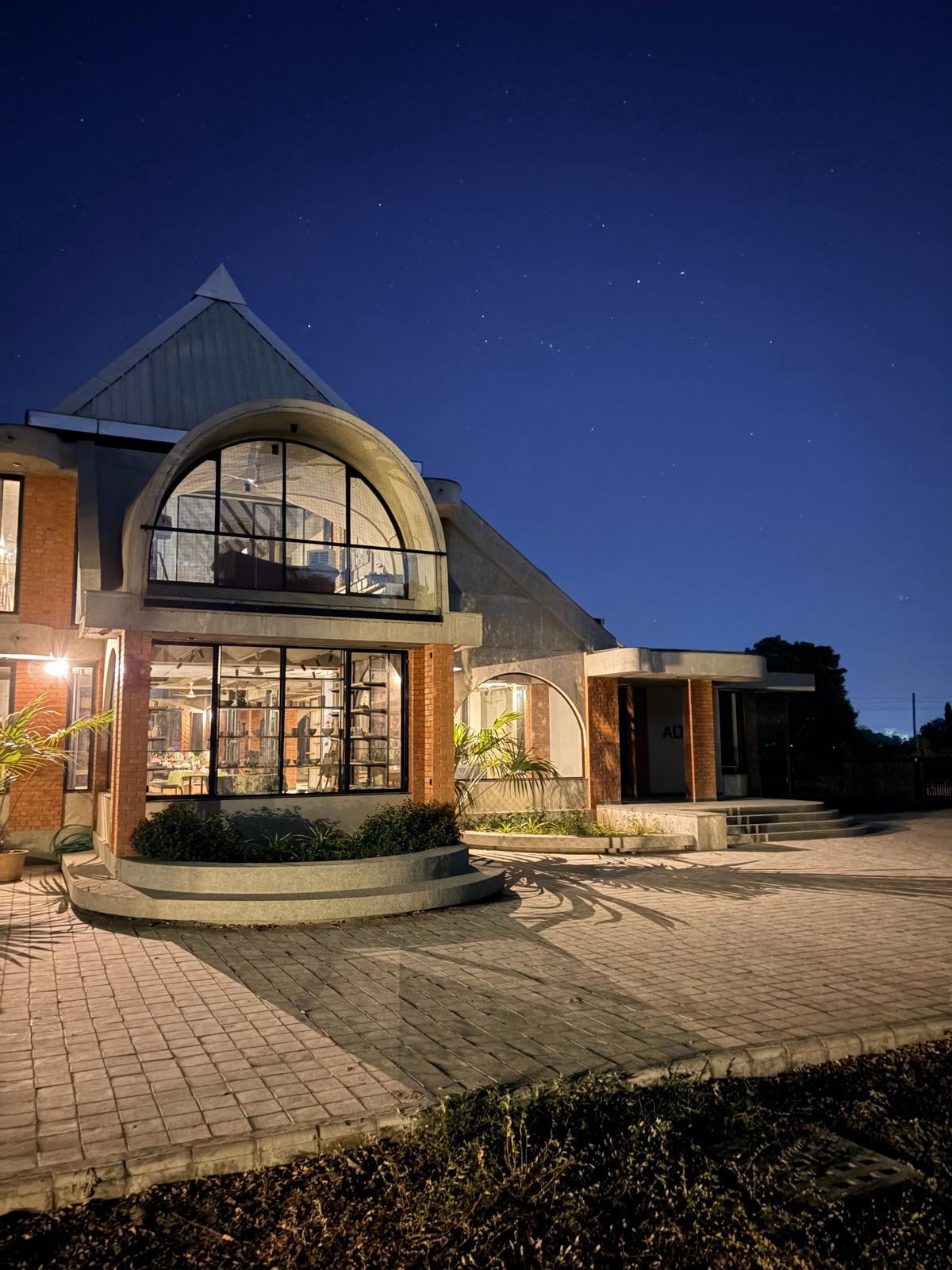
At the southern end of the building, two residential units offer comfortable accommodation for artist residencies or for anyone eager to learn organic farming.
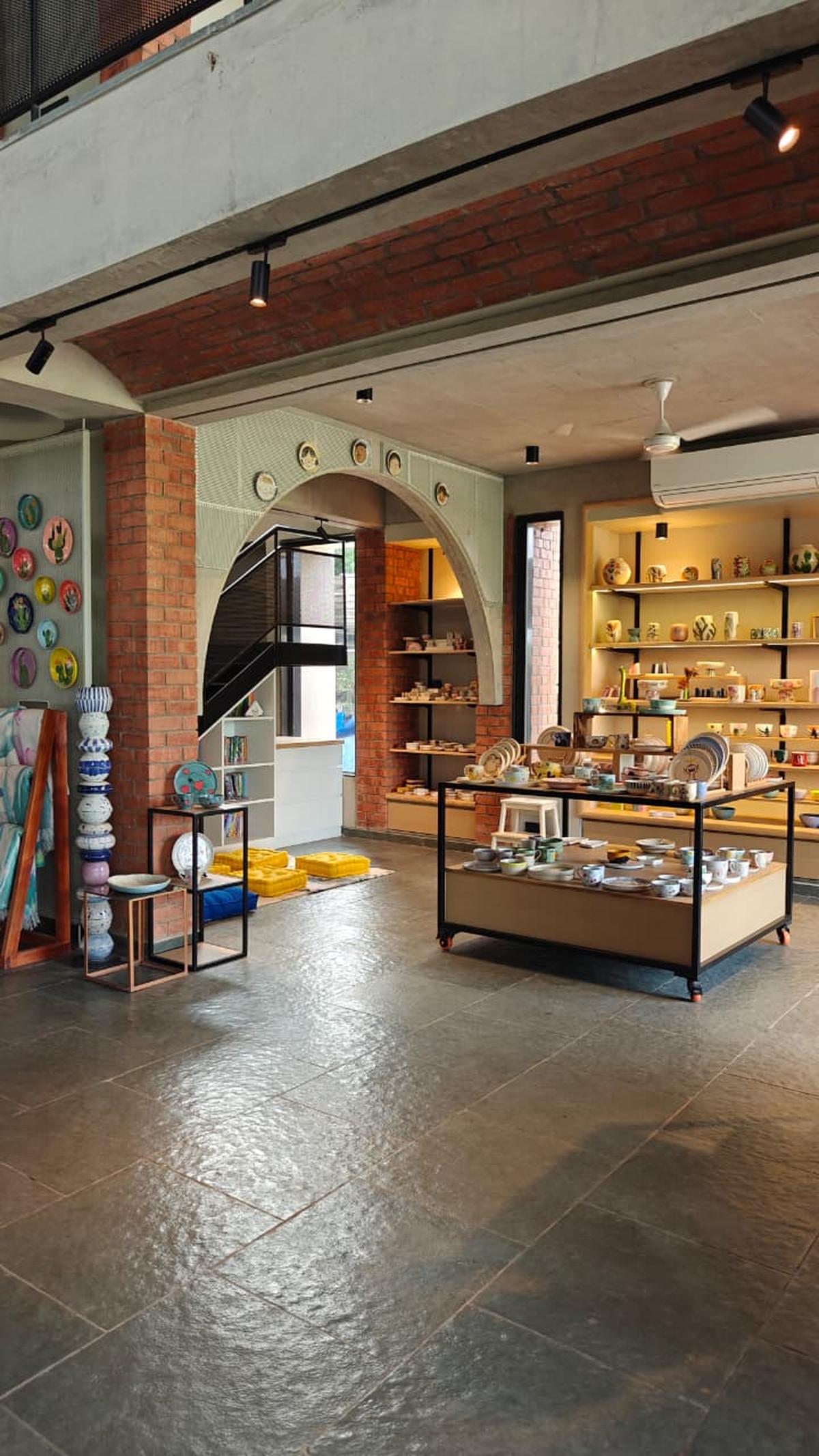
Studio Wildflower by Dhruva Patel.
Concrete cools itself
The mezzanine uses jack-arch flooring , with a reinforced concrete roof with soaring skylights above, and a steel portal frame spanning the nave.
What is a nave?
The nave is the central, long, and main longitudinal area of a Christian church or cathedral designed for the congregation, extending from the main entrance to the altar. Derived from the Latin word navis (ship), it symbolizes the church as a vessel for a spiritual journey
Using climate-responsive design and materials was paramount, Muntaha says. “We have small windows at the lower level kept open during the relatively cooler mornings. As the afternoon sun gets harsh, hot air rises and is vented out through a narrow slit along the pitched roof, enabling passive cooling within the gallery. The river-polished Kota flooring keeps the environment cool, and at the top, we have thick PUF [polyurethane foam] panels that reduce the heat on the roof.”
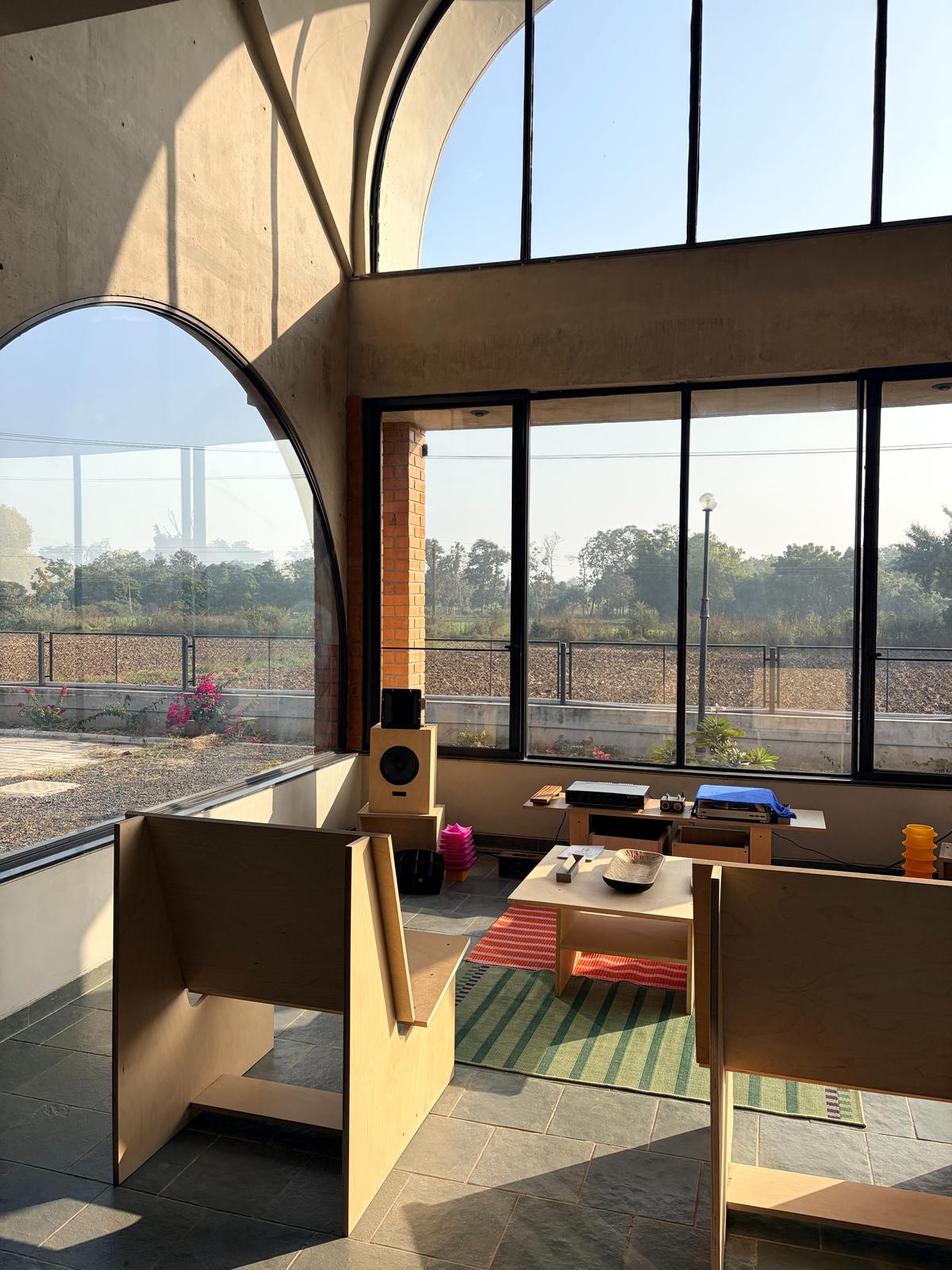
Listening room at Sonic Architect.
Patel says they hope to host many workshops here. “We will have a farm-to-table meal with produce from our farm, cooked and served on my ceramic ware, with tunes playing on Sahil’s speaker systems,” she concludes.
The writer is based in Chennai.
Published – May 09, 2026 06:21 am IST