

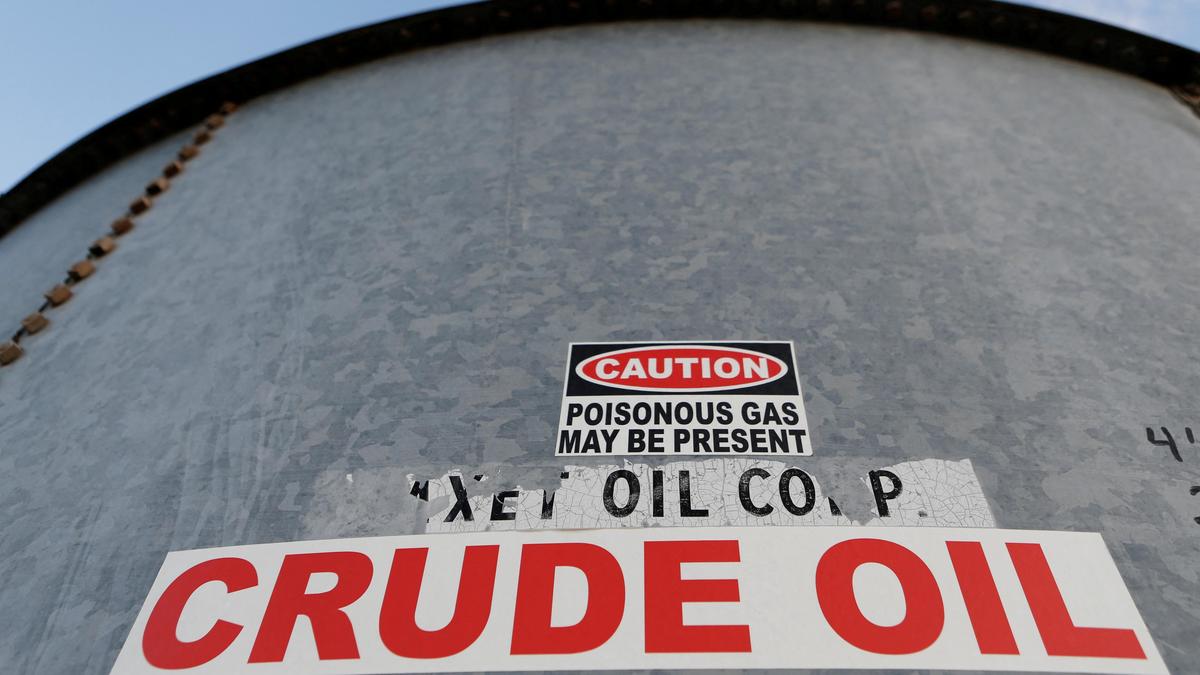
Image used for representational purposes. File
| Photo Credit: Reuters
Crude oil prices rose by ₹94 to ₹8,898 per barrel in the futures trade on Friday (March 13, 2026) amid the widening conflict in West Asia and energy supply disruptions.
On the Multi Commodity Exchange (MCX), crude oil for March delivery appreciated by ₹94, or 1.07%, to ₹8,898 per barrel in a business turnover of 16,107 lots.
LPG and oil crisis LIVE: Domestic LPG production increases 30%, says Oil Ministry
The April contract also climbed by ₹108, or 1.24%, to ₹8,843 per barrel in 10,880 lots.
Analysts said oil prices rose as geopolitical tensions surrounding Iran and disruptions in shipping through the Strait of Hormuz have raised concerns over global supply.
In the international market, Brent Crude Oil futures for May delivery rose 0.66% to $101.12 per barrel, while West Texas Intermediate (WTI) crude for the April contract went up 0.15% to $95.87 per barrel in New York.
Jigar Trivedi, senior research analyst at IndusInd Securities, said WTI crude futures traded around $95 per barrel after a sharp two-day rally, as Iran’s new supreme leader, Mojtaba Khamenei, pledged to keep the Strait of Hormuz effectively shut.

Mr. Khamenei also warned that Iran may open additional fronts in the conflict if the U.S. and Israel continue their attacks, while President Donald Trump said preventing Tehran from obtaining nuclear weapons is more important to him than the cost of oil.
Mr. Trivedi noted that the impact can go beyond energy and start showing up in inflation expectations, currencies, and overall risk sentiment across financial markets.
According to analysts, tanker traffic has been severely disrupted since the conflict began earlier this month, effectively removing 20% of global oil trade and forcing Gulf Cooperation Council producers to cut production by 10 million barrels per day as storage capacity filled up.
Meanwhile, the International Energy Agency said the disruption was the largest in oil market history, prompting its members to agree on a 400 million barrel release from strategic stockpiles.
Published – March 13, 2026 05:18 pm IST


