

In the last three years, the Nobel Prize in Economics has been awarded to scholars who have shown that institutions, including social institutions, matter for economic development. This thesis is not novel, but its recognition is particularly relevant to India, where differentiation and discrimination based on caste and gender continue to persist in the economic domain. This is true of Tamil Nadu as well, though to a lesser extent. The State has demonstrated how social inclusion and economic development can be a mutually reinforcing process.
Tamil Nadu has done well on both the economic and social development fronts. With 6% of the country’s population, Tamil Nadu contributed 9.21% to the national Gross Domestic Product (GDP) in 2023-24. According to Reserve Bank of India (RBI) data on Indian States, in 2024-25, the State had the second-highest per capita Net State Domestic Product (NSDP) in constant prices (2011-12 prices) among major States.Tamil Nadu’s real economic growth rate of 11.19% for 2024-25 marks the highest for any State in the country, besides being the highest for the State in the past 10 years. This economic dynamism, unlike that of other dynamic States like Gujarat or Maharashtra, is equally backed by consistent improvements in human development.
The State has the second-lowest headcount measure of poverty as well as the second-lowest multidimensional poverty index. The State also ranks third in the Sustainable Development Goals (SDG) Index. Tamil Nadu has the second-highest gross enrolment ratio in higher secondary education and the highest in tertiary education. It was ranked the best in the Social Progress Index (SPI) developed by the Institute for Competitiveness and Social Progress Imperative. This unique development trajectory has been sustained through simultaneous and spatially distributed investments in hard infrastructure like power and transport, as well as in health and education. Tracing the key economic achievements of the State since the pandemic, this essay goes on to highlight the challenges that the State has to confront to sustain its path of inclusive economic growth.
Balanced economic transformation
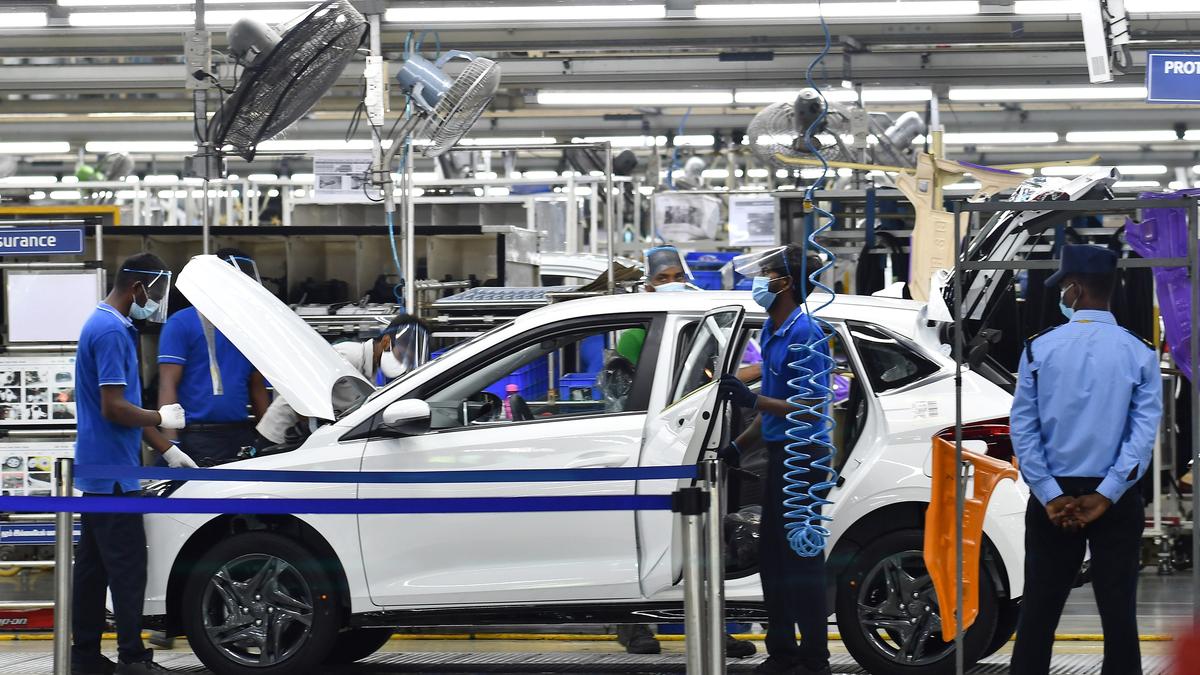
The State’s economic transition is rooted in a balanced expansion of both its manufacturing and service sectors. Of note, however, is its manufacturing sector. During a period when manufacturing has not found its feet at the all-India level despite several measures, the State has emerged as a model of sustained manufacturing dynamism. It has been a major producer and exporter of automobiles and auto components, garments, textiles, and leather goods since the 2000s, and continues to be so. While its competitiveness in these sectors has a longer history, its success in electronics production and exports is recent. It accounted for more than 41% of India’s electronics exports in 2024-25, and is poised to take advantage of the ‘China-plus-one’ strategy of global electronics majors. Home to seven of Apple’s 14 assembly and component firms in India, the State has announced a separate policy for electronic component production, seeking to embed the investments in the State’s ecosystem, and thereby strengthen local linkages.
The other recent development is the State’s emergence as a hub for non-leather footwear production, with contract manufacturers producing global brands like Nike, Crocs, Adidas, and Puma. The expansion of non-leather footwear production has also contributed significantly to the State’s emphasis on spatially distributed growth. Unlike other fast-growing States, where economic activity is concentrated around a single metropolitan hub, Tamil Nadu’s economic development is more evenly distributed spatially. Clusters specialising in specific sectors are found to be spread across the State such as Coimbatore, Tiruppur, Tiruchirappalli, Sivakasi, and Virudhunagar, helping bridge the urban-rural divide. The expansion of non-leather footwear production has further facilitated this by opening up organised manufacturing employment in less-developed districts like Perambalur and Krishnagiri.
The State has also, at last, met with some success in its attempts to industrialise southern Tamil Nadu. VinFast, a Vietnamese electric car major, has begun to assemble vehicles in Thoothukudi, while a Korean firm is about to launch non-leather footwear production in the same region.
Startup ecosystem
The recent impetus to improve the startup ecosystem has led to a multi-fold increase in the number of startups in the State since 2021. From about 2,000-odd registered startups in 2021, the number has shot up to more than 12,000 in 2025. Through the setting up of StartupTN, a Section 8 company as part of the Tamil Nadu Startup and Innovation Mission (TANSIM) in 2021, along with supportive policy reforms, the State has managed to transform the ecosystem. According to a study commissioned by the State Planning Commission, Government of Tamil Nadu, most entrepreneurs report having studied in publicly funded educational institutions for their tertiary education, highlighting the crucial link between the State’s investments in education and entrepreneurship. In fact, the study reports that, on average, the quality of the startup ecosystem tends to be better in government institutions than in the private sector.
Again, unlike the dominant model of Indian entrepreneurship, where kinship ties tend to be a key source of business partnerships, the study points out that 58% of startup partnerships were formed through non-kinship ties, with 28% of the partnerships formed between friends, followed by ties formed in educational institutions, workplaces, and other professional networks. The State has also initiated the Tamil Nadu Technology Hub (iTNT) in 2023 to promote startups in deeptech sectors as well as forge collaborations between academia and industry in such sectors.
Agriculture and services
Given the State’s success in structural transformation, the share of the agriculture sector in the State’s Gross Value Added has fallen to about 10% in 2024-25. However, there have been changes in the composition of the sector with the livestock sub-sector accounting for a substantial share at present. The State ranks second in egg production and sixth in meat production in India. Within the crop sector, there has been a rapid expansion of horticultural crops in terms of value, though food crops continue to account for the bulk of the area under cultivation. Though Tamil Nadu ranks high in productivity in several of the crops it specialises in, the productivity levels have either stagnated or registered low growth for most crops, except maize.
The share of the services sector in employment and the State’s GSDP is much more aligned than in other States. While IT and IT-enabled services, logistics, health services, and higher education continue to constitute the high-end segments of this sector, there have been changes in recent years. The State has emerged as a major destination for Global Capability Centres (GCCs), a high-value-generating component of the knowledge economy. The number of GCCs in the State has more than doubled since 2021, and importantly, a few are being set up in the Coimbatore, Tiruchirappalli, and Madurai regions. Another effort to spatially spread services-based employment is through the setting up of neo-TIDEL parks in tier-2 locations like Villupuram and Thanjavur. These are small-scale IT parks set up to tap into the skill sets of youth in these locations.
Sustained structural transformation
Through this growth process, the State has ensured a much more successful transition of its workforce out of low-productivity traditional sectors like agriculture than any other State. In fact, this transition is particularly noteworthy in recent years. Following the pandemic, most States, including dynamic ones like Gujarat, Maharashtra, and Karnataka, witnessed a reversal of the process of structural transformation. The share of the workforce dependent on agriculture increased and continues to do so, a phenomenon that seriously undermines India’s claims to be on its way to being a global economic powerhouse. Tamil Nadu is the only major State that has sustained the process of structural transformation, with the share of workers in the primary sector falling from 27.9% in 2021-22 to 25.1% in 2023-24, according to estimates from the Periodic Labour Force Surveys (PLFS). This effective transformation is also evident from the indicators of employment quality. Tamil Nadu ranks second only to Kerala in this regard, having the second-largest share of salaried workers in the 20-59 age group. The share has in fact increased from 32.8% in 2021-22 to 37.2% in 2023-24, with the State having 12% more women workers in regular employment compared to the all-India average. In fact, results from the latest Annual Survey of Industries indicate that 40.3% of all directly employed women in the Indian organised manufacturing sector in 2023-24 are employed in Tamil Nadu.
Nevertheless, going forward, the State needs to address the following challenges to ensure that it stays on its path to becoming a socially inclusive dynamic economy.
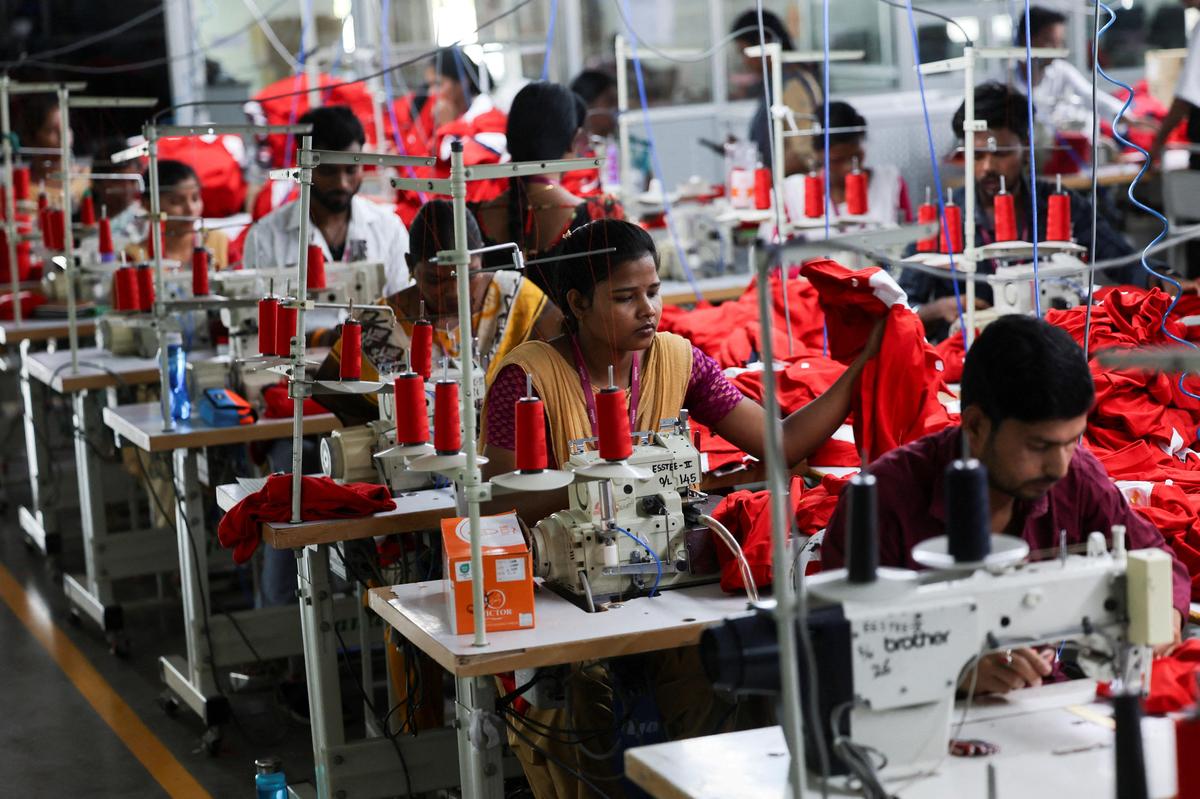
The strength of the State’s industrial ecosystem is based on two pillars. The first is the presence of decentralised MSME clusters with sectoral specialisation, and the second is the availability of a pool of skills.
| Photo Credit:
REUTERS
MSMEs losing ground?
The strength of the State’s industrial ecosystem is based on two pillars. The first is the presence of decentralised MSME clusters with sectoral specialisation, and the second is the availability of a pool of skills. According to the Annual Survey of Unincorporated Sector Enterprises (ASUSE) of 2023-24, nearly 23% of unincorporated enterprises in the State relied on hired labour for functioning, indicating economic dynamism. This was the second-highest share among the States being compared, with the all-India average at less than 14%.
While the MSME clusters have weathered many crises, including demonetisation, the arbitrary imposition of GST, and the pandemic, a few recent developments pose fresh challenges. The imposition of extraordinary tariffs by the United States on imports from India has hit this sector hard. Associations representing MSMEs specialising in textiles, garments, and leather goods exports have expressed alarm over this trend, particularly amid the larger global shift against trade openness. While this may see a reversal, there are deeper structural issues that call for policy attention.
This has to do with the changing technological basis of manufacturing. The servitisation of manufacturing and the rapid diffusion of digital technologies in manufacturing make the adoption of these technologies a necessity for MSMEs to sustain themselves in a globally competitive environment. Industry 4.0 technologies have become essential for optimising production, minimising errors, and ensuring quality. Bigger firms have begun to adopt such practices, but market uncertainties and thin margins accruing to most segments of the small-scale sector deter firms from undertaking investments in new technologies. This poses a conundrum. In the long run, this non-adoption implies growing divergences between the capabilities and productivity of the larger firms and those in the small-scale sector. This would weaken their ability to compete in global markets. In the short run, uncertainty in returns on such investments forces the firms to stick to known practices. State policies to address the barriers to adoption of Industry 4.0 technologies by the MSMEs are critical if Tamil Nadu is to sustain its broad-based industrial base and dynamism. Otherwise, the ‘industrialisation from below’ that has characterised the State’s manufacturing sector thus far is under threat.
Additionally, the clubbing of trading and manufacturing enterprises under the MSME umbrella and the offering of similar incentives do not augur well for manufacturing firms, as these firms have a different cost-margin-profit realisation structure. Further, as Anand et al. (2025) point out, electricity tariffs for MSMEs are highly regressive in India, forcing them to pay more and, hence, undermining their competitiveness.
Youth employment
India is undergoing a demographic transition, with a rising share of the working-age population (Mehrotra & Parida, 2019). In order to reap the demographic dividend, the growth process must create adequate, decent jobs, especially for the youth. In this context, we analyse key labour market indicators for youth aged 15-29 for the periods 2017-18 and 2023-24 for Tamil Nadu and India, using the 2017-18 and 2023-24 PLFS data (Table 1).
Table 1: Key labour market indicators for youth aged between 15 and 29 years.
Source: Authors’ calculations from PLFS 2017-18 and 2023-24.
The table shows that unemployment among both young men and women remains a major challenge. Though the State’s youth unemployment rate declined sharply from 25.6% in 2017-18 to 15.4% in 2023-24, it is still substantial, indicating continued challenges in absorbing young people into productive employment.
The table further indicates pronounced gender disparities in labour market outcomes among young men and women. Young women consistently exhibit much lower labour force participation rates and higher unemployment rates than young men. Nevertheless, the LFPR for young women in the State has declined slightly. This is potentially due to increased participation in higher education. About 76.2% of young women in the State were not in the labour force (NILF) in 2023-24; among them, 37.8% were attending educational institutions and 36.3% were engaged in domestic responsibilities.
A major challenge is the persistent, sizable number of youths who are neither in employment nor in education or training (NEET). Table 2 reports NEET rates among youth aged 15-29 in Tamil Nadu and India for 2017-18 and 2023-24, disaggregated by sex.
Table 2: Youth neither in Employment nor in Education or Training
Source: Authors’ calculations from PLFS 2017-18 and 2023-24.
In Tamil Nadu, 17.62% of young men fall under the NEET category, compared to 48.67% of young women, while the corresponding national figures are 13.2% and 56.24%. Between 2017-18 and 2023-24, NEET rates declined across all groups, but the overall pattern remains largely unchanged. For young men, NEET rates fell to 9.35% in Tamil Nadu and 7.94% nationwide, indicating an improvement in their engagement in employment or education. However, reductions among young women are far more modest. In 2023-24, NEET rates among young women remained higher at 43.59% in Tamil Nadu and 42.84% nationally. The higher unemployment rate or non-participation is also an indication of the ability of youth to wait for better employment opportunities as a result of the better social security net in the State. The employment challenge, therefore, lies not merely in job creation but in creating employment that can fully leverage educational investments by the State and households and translate them into quality outcomes. There is an urgent need for the expansion of policies that support education-to-work transitions and improve access to decent employment.
Sustaining human capital amid technological changes
The third challenge lies in the ability of its educated youth to compete for high-skilled jobs. Tamil Nadu ranks second in the School Education Quality Index (SEQI) published by NITI Aayog and also excels in higher education. Apart from having 47% of youth transition from higher secondary to tertiary education, the State has several institutions in the top 100 ranks published by the NIRF. However, there are several issues in the domain of education.
Again, the rapidly changing nature of the production of both goods and services on account of the revolutions under way in digital technologies like Artificial Intelligence (AI) is forcing skill obsolescence in unprecedented ways. The educational system, with its emphasis on technical education, has served the State well so far, but the extent to which ‘21st-century skills’ like critical thinking, problem solving, and effective communication are effectively imparted in the classrooms is suspect. An analysis of question papers of both engineering and arts and science courses by the State Planning Commission shows that there are hardly any questions that evoke critical thinking or problem-solving skills among students. The emphasis, to our mind, has to be, therefore, on the ‘how’ of teaching rather than the ‘what’ of it. This calls for a large-scale revamp of the pedagogical and evaluation practices, which, in turn, rest critically on sustained improvements in faculty competencies. Further, robust academic-industry partnerships are rare.
Ensuring social inclusion
Even as the State has the largest share of youth, including women and lower caste youth, in tertiary education, employment opportunities for such educated youth are not keeping pace. Further, the quality of education in terms of employment readiness, the ranking of institutions, and the kinds of courses studied tend to be biased against those from marginalised sections. Given that the space for affirmative action in employment is shrinking, there is a compelling need to incentivise the private sector to recruit from such sections to ensure that educational mobility translates into economic mobility as well. Wage subsidies for students enrolled in the Pudhumai Penn or Tamizh Pudhalvan schemes, in conjunction with training under the Naan Mudhalvan scheme, can be envisaged to address this mismatch.
On a similar note, given that agriculture continues to contribute to the sustenance of a significant share of rural households, there is a need to ensure that productivity and prices continue to remain a policy priority.
Suggestions for intervention
Tamil Nadu is unique in terms of its strengths in both manufacturing and information and technology-related services. The State is, therefore, well-positioned to take advantage of the growing demand for the adoption of digital technologies in manufacturing. However, barring a few individual cases, there is yet to be a concerted public effort to embed these interactions between the manufacturing and digital technology sectors within the industrial ecosystem to fully exploit their advantages. The iTNT hub is a good initiative in this direction, but better incentives should be designed, especially for the MSME sector, to encourage the adoption of such technologies.
To improve the academic standards and also forge effective academic-industry partnerships, working with the diasporic academic community, among other things, may be crucial for the State. The State’s long history of investments in education can definitely be leveraged for this purpose. While hackathons are useful, both industry and academic institutions need to be incentivised better to work together. A separate intervention also needs to be designed to build teacher competencies.
Finally, though the State ranks high in ensuring regular employment for women, the high share of educated women out of the labour force due to domestic responsibilities needs to be addressed. Public support for early child care, elderly care, and after-school care for children becomes imperative in this regard. Different models of care may be piloted, taking into account the strong presence of Anganwadi centres and SHGs in the State.
This article is part of The Hindu e-book. Tamil Nadu’s progress: economic growth through social equality



