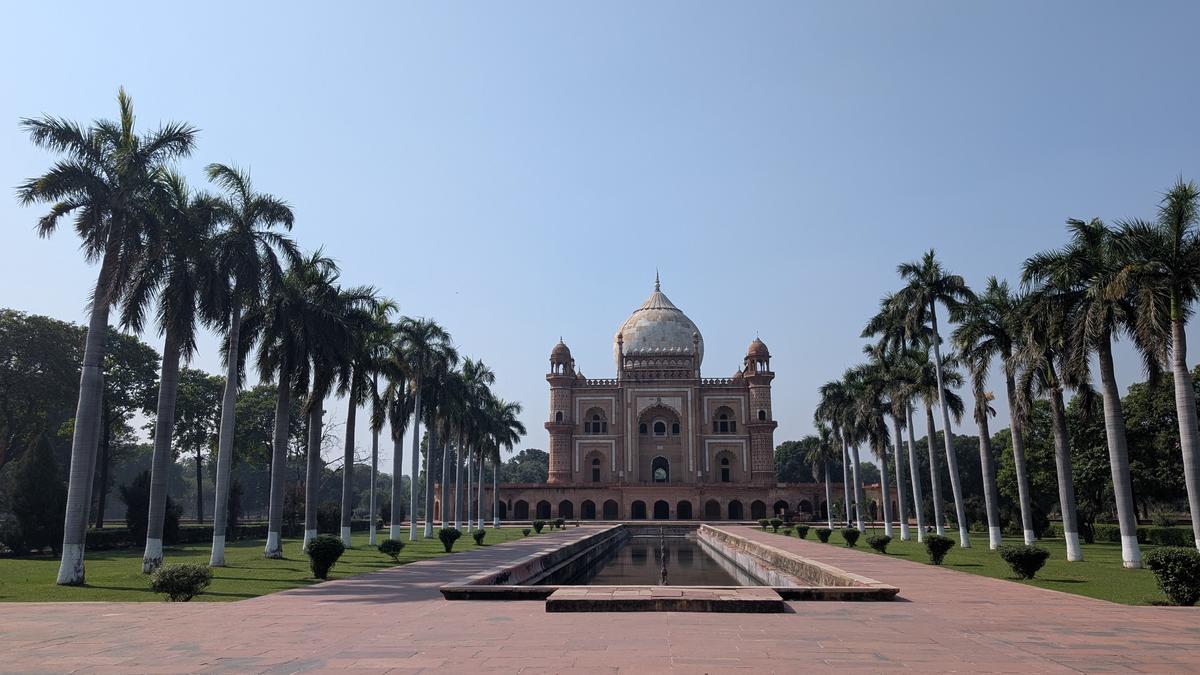
In Delhi, monuments are often spoken of as though they were statues — solid, inert, and even complete. Safdarjung Tomb resists that idea. Long before one looks up at the sandstone-and-marble mausoleum, one feels the space around it: the axial paths pulling the eye forward, the water channels that promise movement but rarely deliver it, and the broad openness of the charbagh that still holds, despite everything, a certain calm.
Built in 1754 for Mirza Muqim Abul Mansur Khan-Safdarjung, the Mughal governor of Awadh, the complex is usually described as the last of Delhi’s great Mughal garden tombs. It is also one of the city’s fully realised experiments in climate design before imperial confidence, and ecological balance, began to fray.
Archival image
| Photo Credit:
V&A
The garden was never meant to be ornamental alone. Like all Mughal charbaghs, it was an engineered landscape, designed to cool, irrigate, choreograph air and movement, and offer relief from the North Indian summer. Water once coursed through channels and fountains; trees were planted to calibrate shade and humidity; pathways slowed the body, easing both heat and haste. Paradise, in the Mughal imagination, was practical.
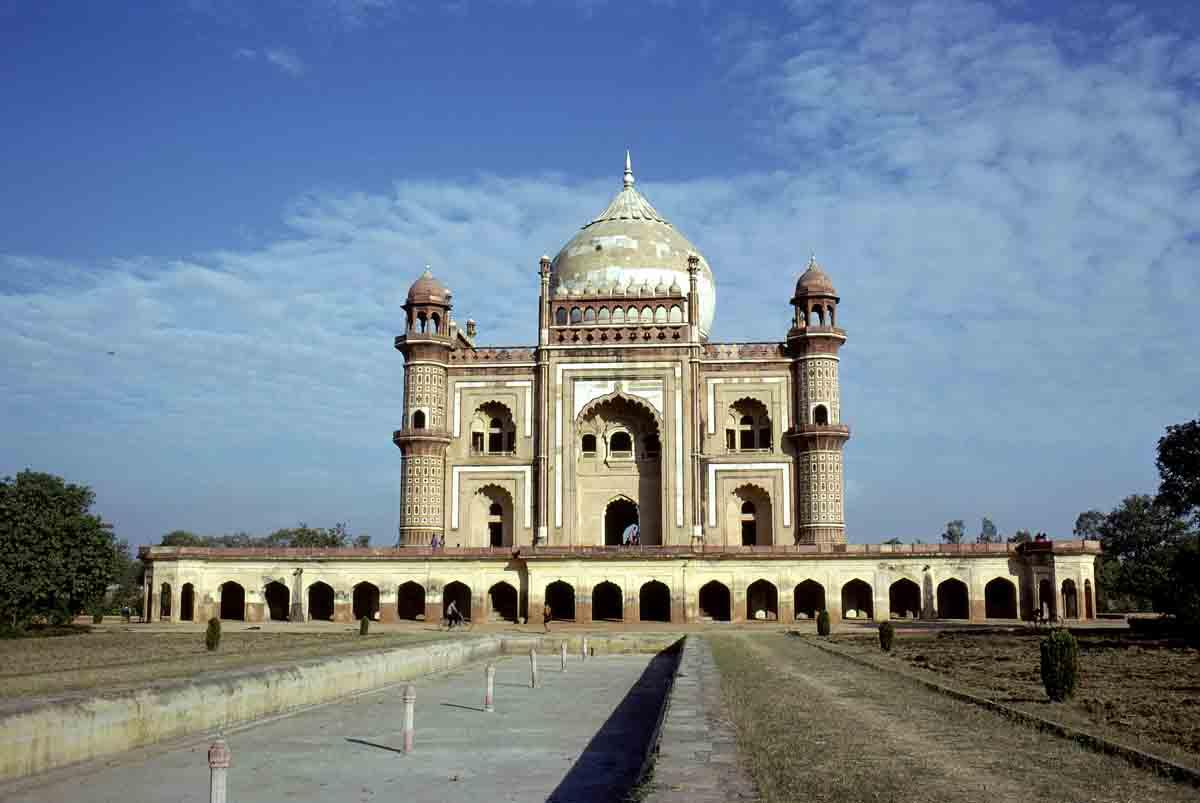
Archival image from 1979
Over time, Safdarjung Tomb has been conserved repeatedly, largely with an architectural lens. The Archaeological Survey of India (ASI), which protects the site as a national monument, has carried out periodic repairs to the mausoleum, boundary walls, walkways, and garden features. These interventions stabilised stone and surface alike. Yet the garden’s deeper systems slipped out of alignment. Groundwater levels across Delhi fell. Historic wells dried. Water features became symbolic rather than operative. Planting patterns shifted, often guided by maintenance convenience rather than environmental logic. The charbagh endured, but it stopped working.
It is precisely this condition, rather than visible decay, that has drawn the attention of World Monuments Fund (WMF). As part of its 2026 commitments — more than $7 million supporting 21 projects worldwide — WMF has placed Safdarjung Tomb within a broader conversation about historic landscapes under environmental stress. Led by WMF India in partnership with the ASI, the initiative forms part of WMF’s Cultivating Resilience programme, which focusses on gardens and green heritage spaces facing accelerating climate pressures.
“Historic landscapes are often where climate stress first becomes legible,” says Meredith Wiggins, senior director, Climate Adaptation, World Monuments Fund. “They were designed to manage water, heat, and ecology with extraordinary sophistication. When those systems falter, they reveal both environmental risk and an opportunity to learn.”
Conservation, not nostalgia
Crucially, the work at Safdarjung is not open-ended restoration but a one-year, research-led initiative that began in July 2025, designed to build a shared, evidence-based understanding of how the garden was conceived, how it functions today, and how it might be conserved responsibly in the future.
The first phase, running from July to September 2025, focussed on assembling that knowledge base. Project teams undertook archival research, on-site surveys, and visual documentation to trace how the garden was originally planted and irrigated, how water once moved through its channels, and how rising heat, altered rainfall, and environmental stress are affecting it now. The outcome was not a restoration plan, but something more fundamental: a clear picture of the garden’s historic structure, environmental pressures, and key vulnerabilities.
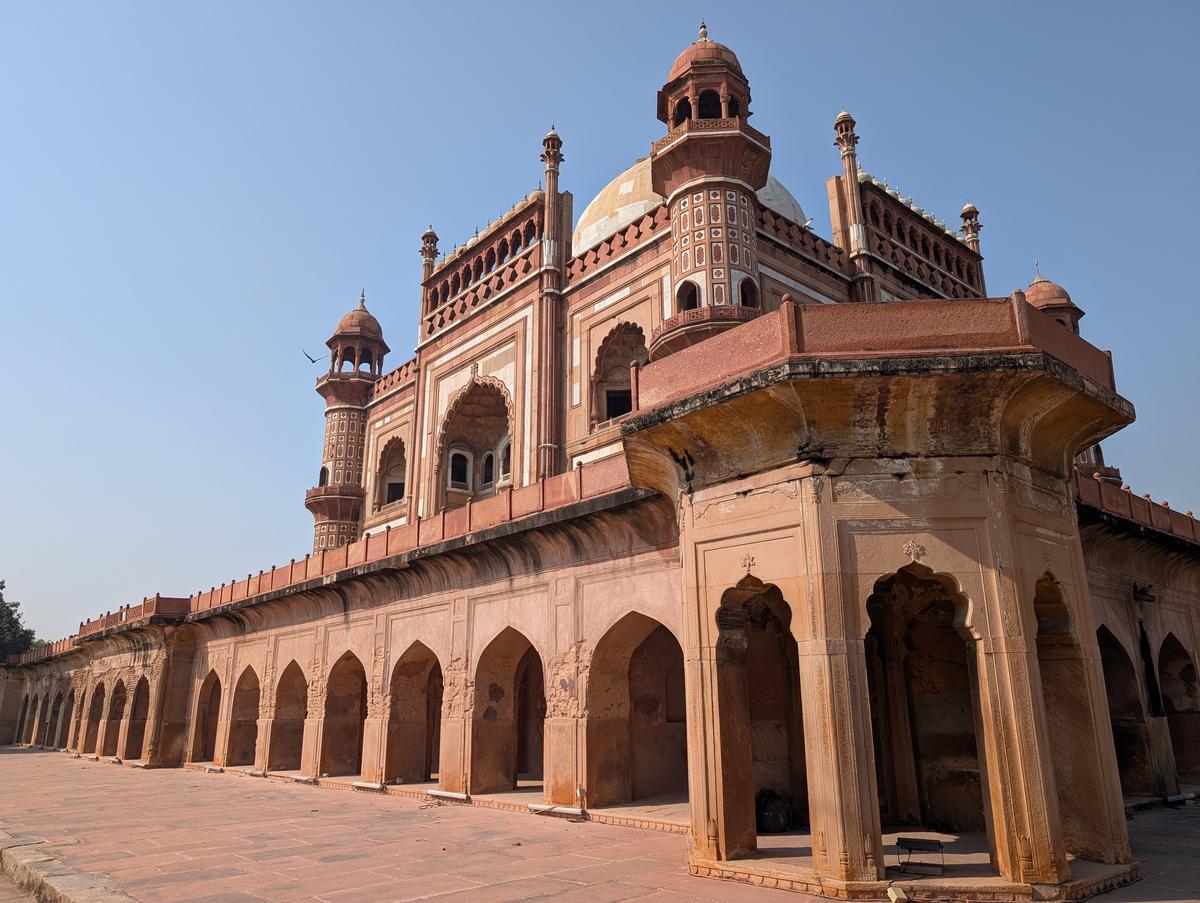
Phase two, which began in October 2025, turns that research outward, onto the ground itself. Pathways, water elements, boundary walls, and planted areas are being assessed for stability, risk, and long-term care needs. This phase translates historical insight into a practical condition assessment — what can endure, what is failing quietly, and what demands intervention.
By the end of the year, the project will produce a framework that integrates historical knowledge, climate science, and on-site realities. It is intended not as a blueprint for immediate reconstruction, but as a guide for future conservation — one that allows the garden to remain publicly accessible while becoming environmentally resilient.
“The aim isn’t to recreate the garden exactly as it was,” says Bénédicte de Montlaur, president and CEO, World Monuments Fund. “It’s to understand how it was intended to function, and to apply those principles in a way that works today.”
That balance — between historical authenticity and ecological realism — is where the project becomes most delicate, adds Bénédicte. Mughal gardens were conceived in a world of perceived abundance, particularly of water. To pretend that abundance still exists would be irresponsible. Instead, the project asks a subtler question: what did abundance mean? Cooling. Balance. Sensory richness. Ecological order.
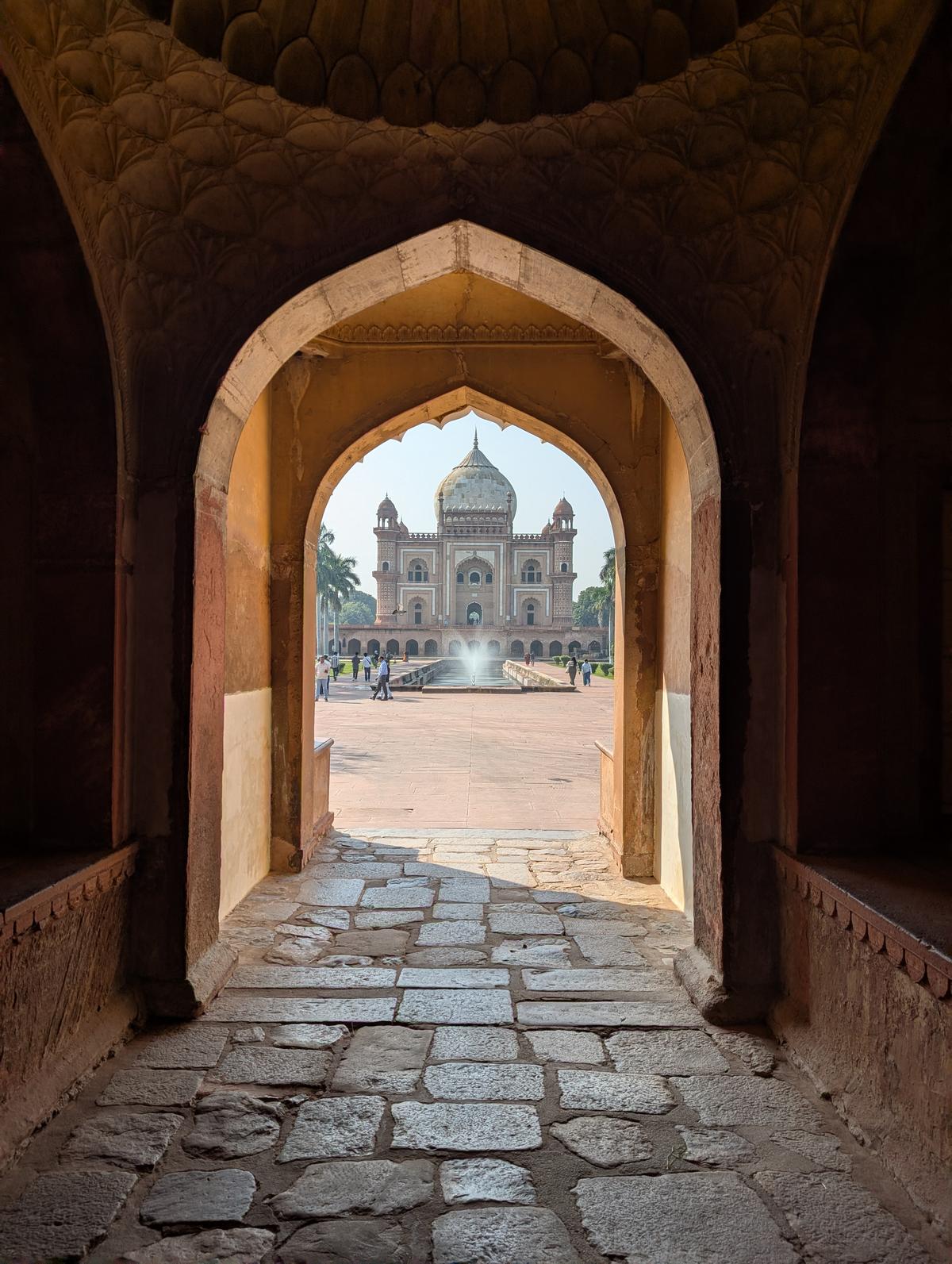
For Madhushree Bose, project manager, World Monuments Fund India, the most damaging change at Safdarjung Tomb is also the least visible. “The depletion of groundwater has slowly disabled the garden’s logic,” she says. “The wells are dry. Once that happened, the entire water system collapsed, even though visitors don’t immediately notice.”
Rather than forcing water back into a stressed landscape, the project explores rain-fed systems, recharge, and seasonal performance. Water, here, is no longer decorative but functional — an ecological engine calibrated to scarcity.
“As climates shift,” Meredith adds, “resilience comes from designing landscapes that can absorb variability — heat, drought, monsoon — without breaking.”
What makes Safdarjung Tomb especially resonant is that it remains deeply used. It is not sealed off as a relic. Children play here. Office workers cut across it. Couples linger. In a warming city, that everyday function matters.
“Successful conservation today isn’t just about preserving fabric,” says Malini Thadani, executive director, World Monuments Fund India. “It’s about environmental performance, public access, and long-term stewardship. Historic places have to contribute to urban resilience, not sit outside it.”
If the project succeeds, its implications extend beyond one tomb. It suggests a future where heritage landscapes are not frozen in time, but translated — where conservation becomes a tool for adaptation, and history offers not nostalgia, but instruction.