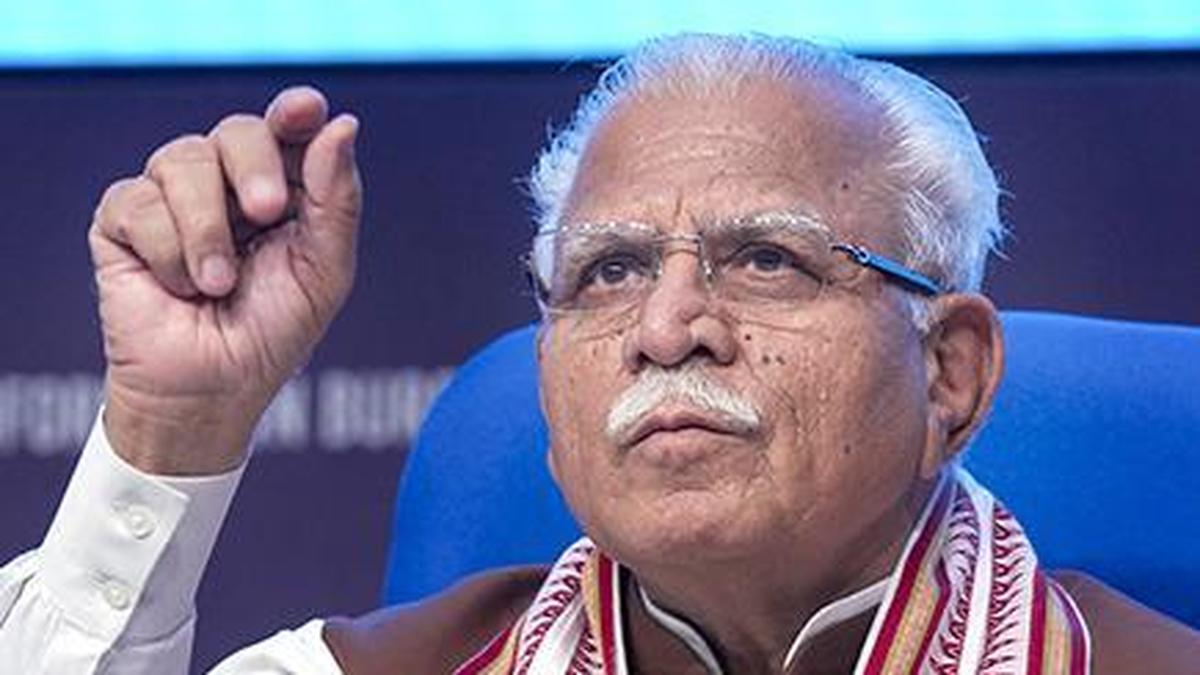
“There are States that provide free electricity or subsidised electricity. If they provide for the subsidies, there is no pressure on the discoms; however, the absence of providing for subsidies translates to losses [to discoms],” Power Minister Manohar Lal Khattar said. File
| Photo Credit: The Hindu
The Ministry of Power on Wednesday (January 21, 2025) floated the Draft National Electricity Policy (2026), which, among other things, seeks to institute norms to strengthen the financial viability of the sector, better data-sharing for effective forecasting and planning, and address potential cybersecurity-related concerns of the sector.
The Ministry underlined that the policy seeks to “Provide reliable twenty-four-into-seven quality power through a financially viable and environmentally sustainable power sector, furthering energy security at an affordable price.” It would be soliciting comments on the proposed regulation for the next thirty days.

Strengthening commercial viability
Among the more important of the proposed regulations, the draft policy emphasises that state commissions ensure that the instituted tariffs “fully reflect costs without creating regulatory assets” starting next financial year. The latter refers to the unrecovered income of a discom emanating from the difference between cost and revenue from generation, which it seeks to collect from the government as consumer tariffs and/or subsidy payments.
Further, to address losses, the proposed regulation seeks to reduce cross-subsidies “progressively” and ensure that tariffs do not fall below 50% of the average cost of supply. Additionally, it seeks that free power supply “should be avoided” and subsidies should be paid in advance as per existing regulations.
Separately, speaking about a related notion at the inaugural edition of the All India Discoms Association (AIDA)’s EDICON 2026 conclave on Wednesday (January 21), Union Minister for Power Manohar Lal said, “There are States that provide free electricity or subsidised electricity. If they provide for the subsidies, there is no pressure on the discoms, however, the absence [of providing for subsidies] translates to losses [to discoms]”.

Essential to note, the proposed regulation pegs India’s power sector to require about ₹50 lakh crore by 2032 and ₹200 lakh crore by 2047 for expanding generation capacity, transmission and distribution.
Cyber-security and data-sharing
The proposed regulations hold that a robust framework for data collection, sharing and analysis would help “strengthen governance, market efficiency, and system planning”. It proposes that sectoral entities “shall share data, excluding personally identifiable information, including operational and market data, subject to appropriate safeguard and in accordance with central govt guidelines”.
Finally, the proposed regulation also institutes norms to address “heightened cybersecurity risks” emanating from increased reliance on information technology (IT) and operational technology (OT) systems.
Electricity (Amendment) Bill, 2026 likely to be placed in Budget Session: Manohar Lal
At EDICON 2026, Mr. Lal also informed that the Electricity (Amendment) Bill, 2026, is likely to be tabled in the upcoming budget session of parliament. “We are hoping that a consensus can be established for smooth passage of the bill,” he stated.
Published – January 21, 2026 04:58 pm IST