

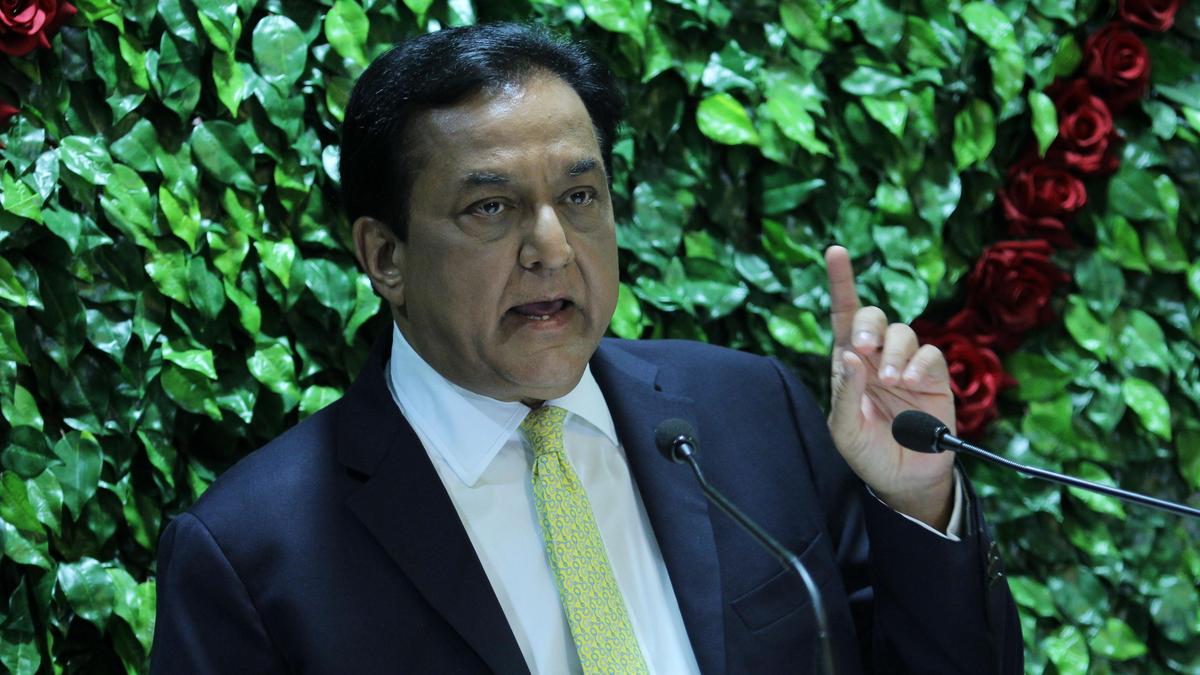
Rana Kapoor, former managing director & CEO, YES BANK. File
The Enforcement Directorate (ED) on Monday questioned former Yes Bank CEO Rana Kapoor as part of its investigation into alleged money laundering involving Anil Ambani group companies, officials said.
Mr. Kapoor’s statement was recorded under the Prevention of Money Laundering Act. As alleged by the ED, Mr. Kapoor and Mr. Ambani entered into a “quid-pro-quo” arrangement that resulted in significant monetary losses to Yes Bank.
“While Rana Kapoor was at the helm of Yes Bank, the bank had a significant exposure of about ₹6,000 crore to Reliance Anil Ambani Group (ADAG Group) as on March 31, 2017. The exposure more than doubled to ₹13,000 crore as on March 31, 2018. During this time, the bank invested over ₹5,000 crore in Reliance Home Finance Limited (RHFL) and Reliance Commercial Finance Limited (RCFL) which were ADAG Group Companies,” the ED alleged.
According to the probe agency, a large portion of these investments turned into Non-Performing Investments (NPI). The bank subsequently suffered a loss of about ₹3,300 crore from these dealings. These were not standard business transactions but a ‘quid-pro-quo’, alleged the agency. In exchange for Yes Bank’s investments, ADAG companies granted loans to firms controlled by Rana Kapoor’s family members.
“Rana Kapoor and Anil Ambani held private business meetings, often without other Yes Bank officials present, to agree on these illegal arrangements. Rana Kapoor then instructed Yes Bank officials to process the non-genuine proposals,” the ED alleged.
“Before Yes Bank invested this money in Reliance Anil Ambani group companies, Yes Bank had received huge funds from the erstwhile Reliance Nippon Mutual Fund. As per SEBI regulations, Reliance Nippon Mutual Fund could not invest/divert funds directly in Anil Ambani group finance companies due to conflict-of-interest rules,” the ED said, adding that the money in mutual fund schemes was, therefore, routed indirectly.
Published – December 15, 2025 01:35 pm IST


