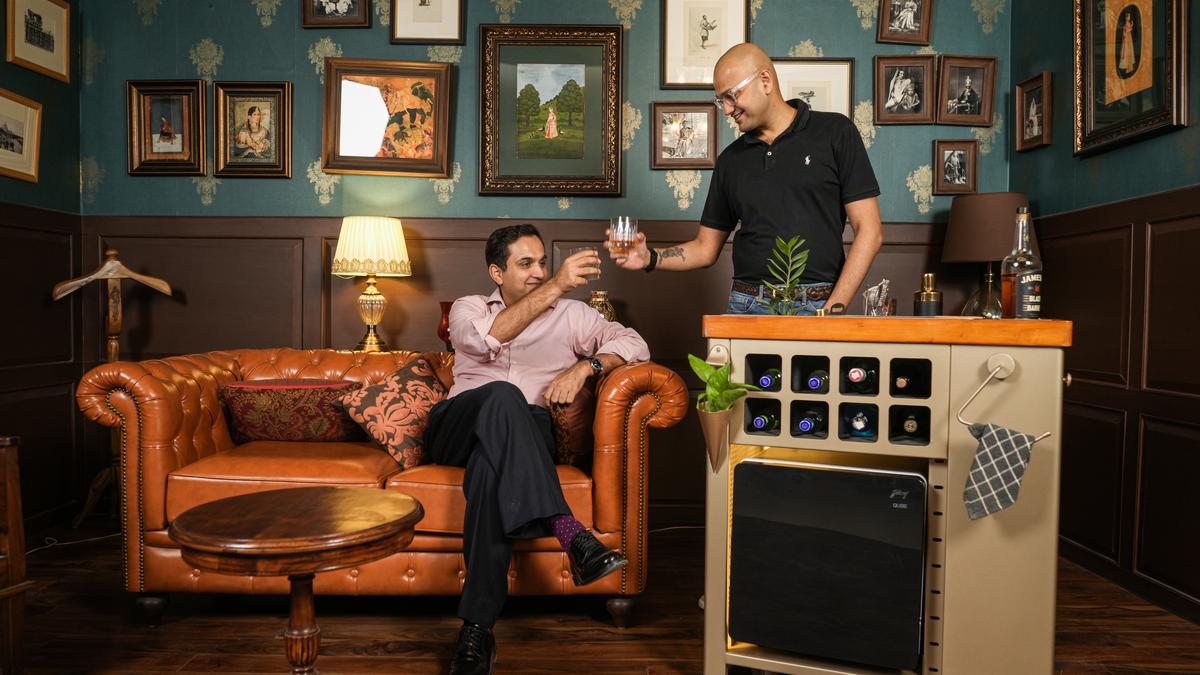
The New Year party has moved indoors. After the pandemic, this trend continues and has resulted in the rise of the home bar space as an interior design statement. From elaborate drinks trolleys to island bars, sophisticated LED lighting to mixed media bar stools, there is an aesthetic to suit every mood.
The Bar Furniture Market — Global Industry Analysis, Size, Share, Growth, Trends, and Forecast 2021-2031 industry report says, the focus on enhancing the ambience of home bars has increased with technological advances in lighting, and a shift in marketing by the e-commerce industry to home consumers rather than just commercial establishments.
A compact bar space for a Mumbai apartment designed by Sahiba Madan, Insitu
| Photo Credit:
Kunal Bhatia
With the rise in the number of bars in India, and five of them breaking into the Asia’s 50 Best Bars list, an elegant cocktail culture for upwardly mobile and well-travelled young Indians has found a place at home, and the home bar is an extension of this hospitality.
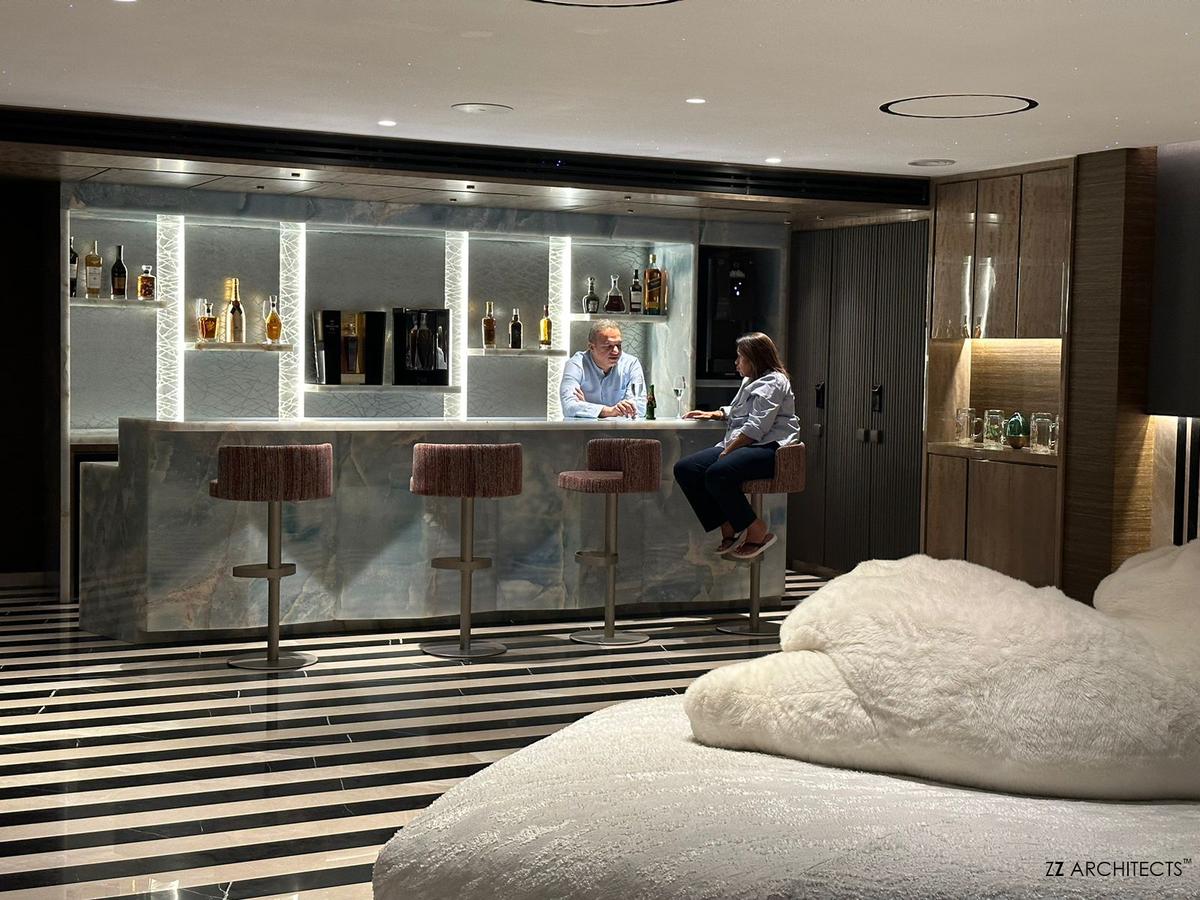
A home bar space designed by Mumbai- based ZZ Architects
| Photo Credit:
Special Arrangement
Krupa Zubin, principal partner and architect, ZZ Architects, Mumbai, explains why the bars can be more than just a space for cocktails. “A majority of homes we design, have home bars to suit every need. For one couple, we made a hybrid bar that caters to an oenophile and a coffee enthusiast, so both enjoy the space equally. In some large multi-storeyed homes, we have designed bars for both outdoor and indoor spaces, adjacent to the home theatre, or near a pool deck — it is the client’s prerogative.”
The bar has come to be a centrepiece of the entertainment area, and has to speak the same design language as the rest of the home. In terms of design, Mumbai-based architect Sahiba Madan, founder, Insitu and Kalakaarihaath, says, form and function play an important role. “There is definitely a demand for a home bar, whether it’s concealed in plain sight in multi-generational or joint family settings, compact in a smaller flat, or is an extension of the living space,” she says.
Sahiba’s design incorporates wood, brass, and marble in a more neutral palette, keeping up with the aesthetic of the project. “Whether simple trolleys, integrated bars that have refrigerators, or independent bars with serving counters, there’s a place for all of them, depending on what the family is looking for.” Traditionally, wood was the material of choice, with a mirror or simple glass doors to display contents.
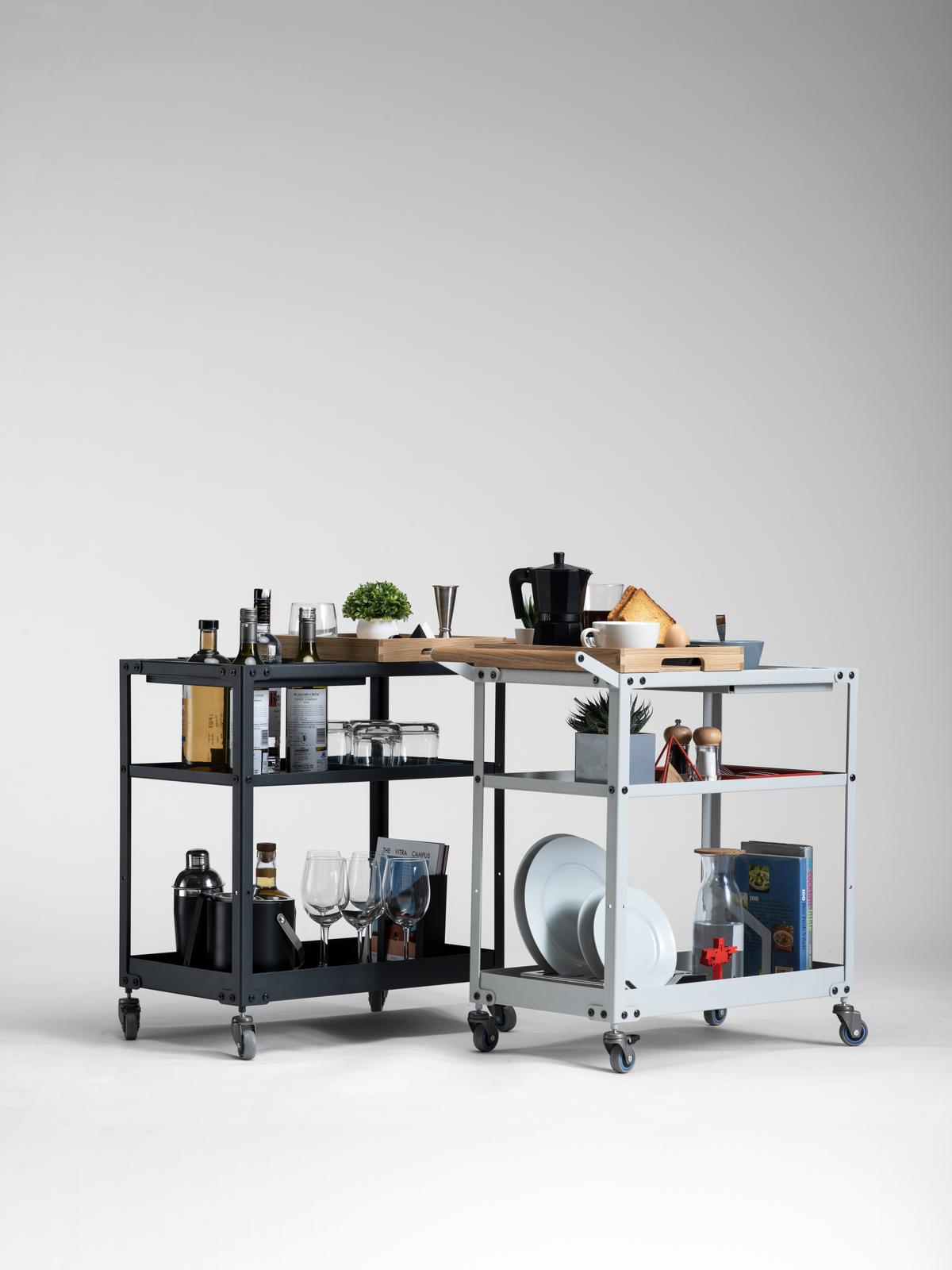
Bar trolleys by New Delhi-based Spin
| Photo Credit:
Special Arrangement
While home bars, in the 1990s and early 2000s, were part of a larger dining display unit with a wooden door that pulled out on a hinge, that look has now become outdated. With interior stylists playing with metal, wood and glass to suit the design language of the home, the bar is now a modern reflection of the host, with soft lighting, and wooden elements.
Anirudh Singhal, founder of New Delhi-based, SpeedX, will vouch for this shift, as he pivoted his business post 2020, to cater to the home entertainment segment. “Our home bar, ModelX was a COVID baby, and in 2023, we launched a brand-new identity for our home bars — Haus Of Bars. From selling two to three units a day pre-2020, we now consistently sell at least 10 units per day”.
The Model M mini bar (₹30,199) has a laser cut drip tray, space for eight bottles, an ice bucket, a cabinet for glasses or books and all weather protective coating while Model C (₹45,599 upwards) is an AM-PM coffee and cocktail bar. Their bestseller is the fast-moving Model X and Double Model X varying between ₹72,799 and ₹1,18,899, “this hits the sweet spot, not really entry level but not too expensive either for all the features we incorporate,” adds Anirudh. Hosts using a bar cart, hosts can comfortably fit up to a dozen bottles, three or more mixer cartons and a tray for garnishes in these models. The larger ones could accommodate double that capacity with a built-in sink, and space for an ice bucket.
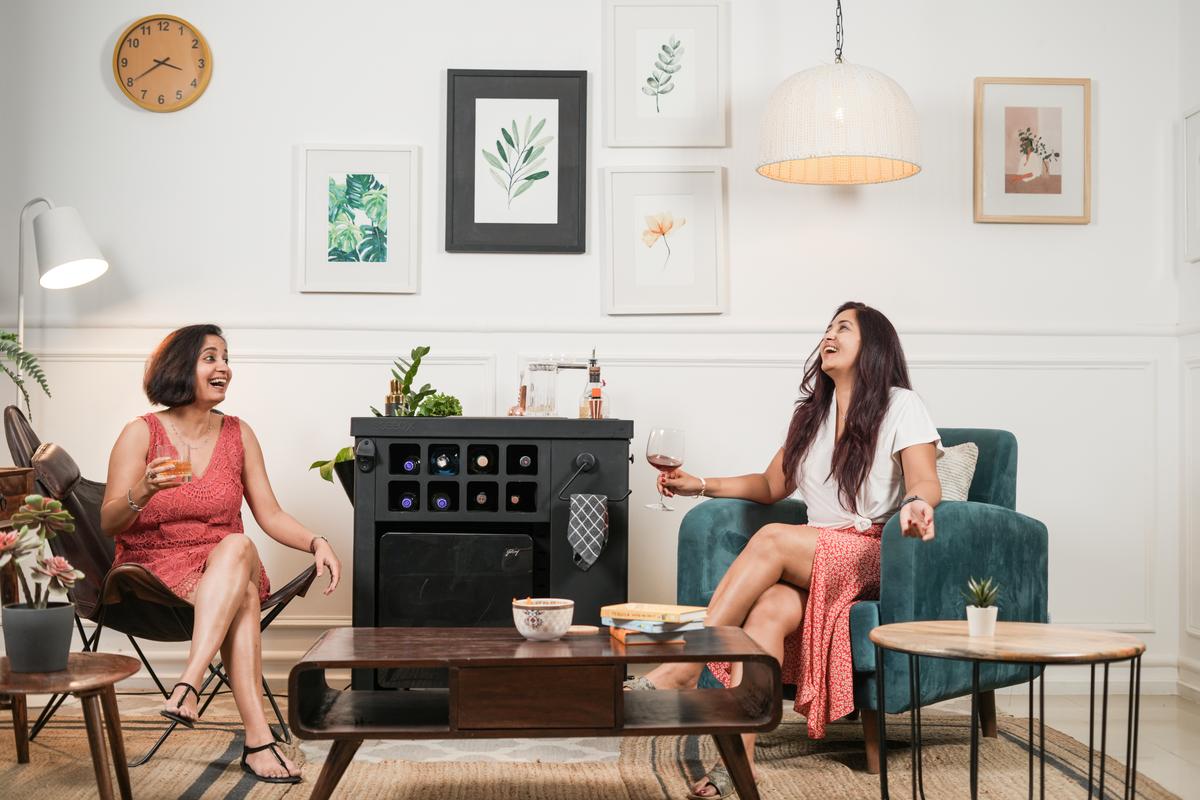
New Delhi-based, SpeedX’s cocktail bar
| Photo Credit:
Special Arrangement
“Our bars have refrigerators, which solve a pain point for customers who don’t want to run back and forth for ice or chilled drinks,” says Anirudh, adding that Hyderabad has emerged as the single-largest market for this category, followed closely by Mumbai, Goa and Delhi. “In terms of tones, the South prefers matte black or marble finishes, while customers in the North want the matte red and gold combination.”
Haus of Bars designs its units of food safe steel, tempered glass and a protective coating in different finishes, but what has really caught their customers’ eye is customisation. “We have a laser cut drip tray on top of the counter for the inevitable spills, but we have offered customisation for either a name or hashtag in that space, and that has been a big hit. This appeals to people who gift these units for weddings, or want their signature statement visible while they entertain,” adds Anirudh.
Not all cities can accommodate expansive home bars, so eye-catching, stand-alone cabinets in eclectic styles sell too. Chennai-based design space Cape Kamoryn, co-founded by Alamelu Kesavan, sources bar units in leather, reclaimed wood, metal, inlay work and with quirky automotive elements, from across India and Southeast Asia.
She highlights, “We have a lot of customers for moto-themed units, made from reclaimed bike parts or designed from race car bodies. These typically are conversation pieces, and you have to have the space and personality to pull it off. Versatility is an important design feature as well, as some compact bars are tables that open up, some are closed cabinets that lend character to a room.” A red or blue, British telephone booth bar, is a fast-moving piece with plenty of storage. “This sells quickly, in both red tones and other hues,” she adds. These units are not stocked permanently at the store on East Cost Road, with prices available on request, and styles and colours changing every few months.
Smaller home bar units, are built to be compact, holding half a dozen bottles, a few glasses, a small ice bucket, and a cocktail shaker. Larger bar units typically include a refrigerator for wine, another chilling unit for mixers, with space to hold bottles, myriad glassware, garnishes and a bar set that comprises peg measures, muddlers, cocktail shakers and other bar accessories.
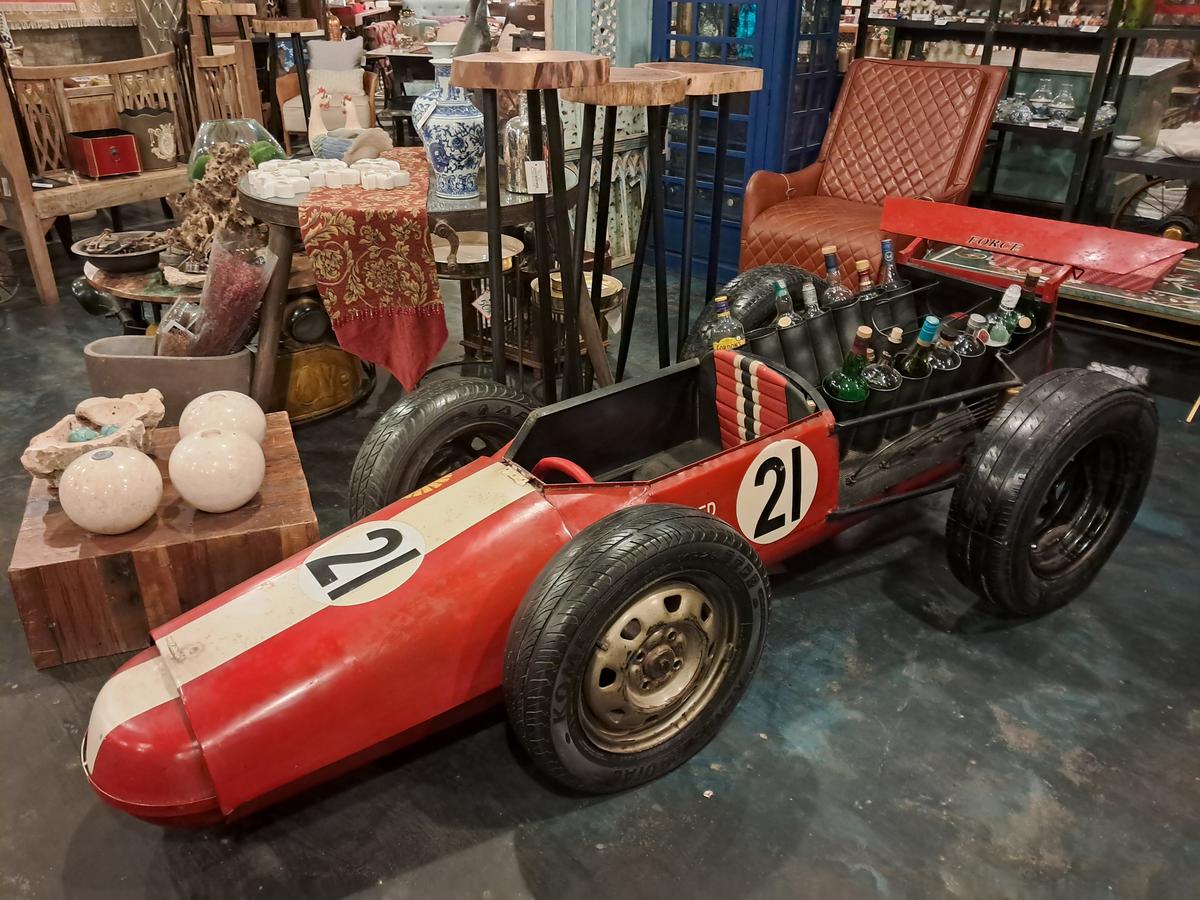
A moto- themed bar unit at Cape Kamoryn, Chennai
| Photo Credit:
SPECIAL ARRANGEMENT
For New Delhi-based Spin, bar trolleys and individual units or an entire bar ecosystem (priced between ₹7,000 and ₹95,890), offer, “an elevated everyday experience, which is a sum total of different aspects — bar furniture, accessories and varied barware,” says Jyoti Nautiyal, co-founder at the company.
For Krupa, material and personalisation are important considerations while designing a bar. She states, “We like stone or wood, that offer a tactile element and really interact with each other. Soft lighting and comfortable seating go a long way as well. These days, we are not encumbered by bar stools. A client set up a bar space in his basement and has a large island seat with other smaller seats for a more luxurious experience.”
Jyoti concludes, “We see customers put in an effort to curate collections of barware to flaunt their individuality. Another trend is the emergence of vertical bars to offer great space optimisation, and LED lights to highlight your glassware. Just like we saw home kitchen renovation witness an up tick in UK post 2020, we see the home bar take its place. Ultimately, the usage of the home bar space is determined by the imagination of the host.”