

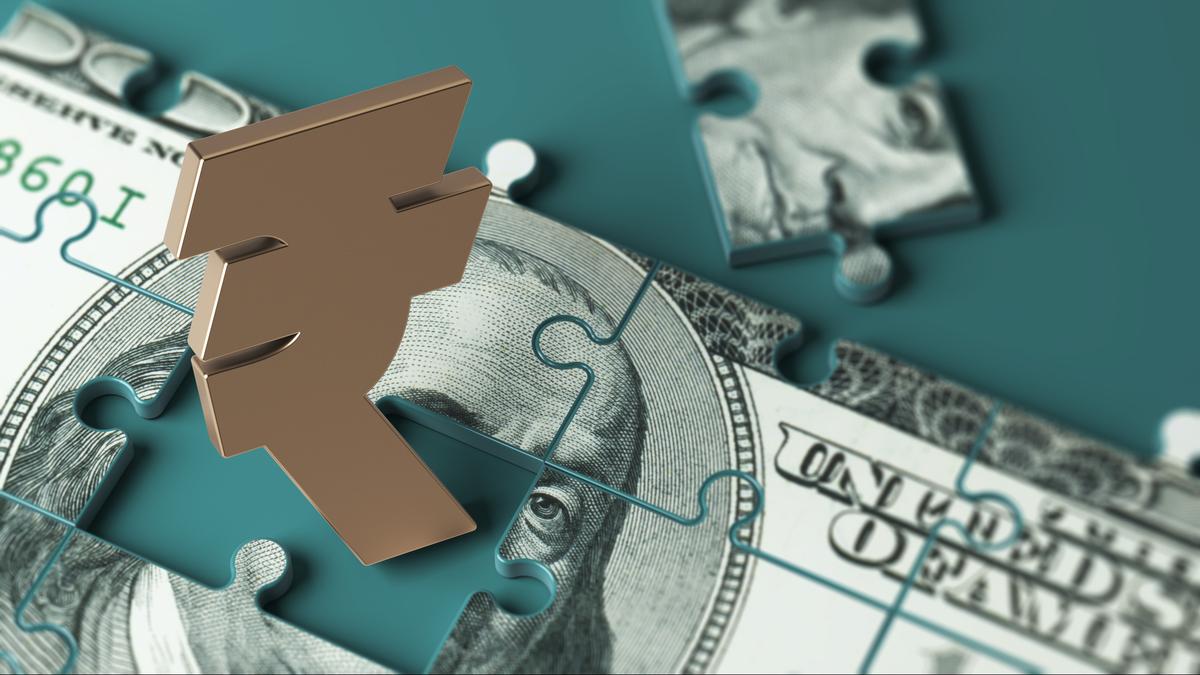
This image is used for representational purpose only.
| Photo Credit: Getty Images/iStockphoto
The rupee depreciated 0.4% to close at an all time low of ₹90 a dollar as the economy awaits clarity on trade deals, and communication from regulator and government.
The rupee opened about 0.1 paisa short of the psychological mark and reached a high of ₹90.3 only to moderate and hit the day’s close.

The depreciation is an outcome of the delay in the U.S.-India trade deal and the Indian regulators’ strategy in handling the same, say experts.
“A sliding rupee is not a weak rupee even as it breaches the psychological barrier of ₹90,” said the government-owned bank SBI, suggesting that the government thinks all is well.
Experts blame the delay in clarity regarding the trade deal with the U.S. “The trade deal has not happened and we have been waiting for it for the past 6-7 months. The markets have not factored-in the trade deal,” said Anil Kumar Bhansali, who heads treasury at Finrex Treasury Advisory, a Mumbai-based foreign exchange advisory firm, adding that the other reason for this uncertainty is the “lack of communication” from monetary and fiscal authority in explaining the depreciation.
The depreciating rupee also needs to be seen in the backdrop of the foreign investors selling Indian stocks and going in search of U.S., Europe, Korean and Japanese equity markets. This creates flight of dollars and thus an increase in supply of rupee reducing the rupee value. A depreciating rupee means foreigners pay more when they buy Indian goods.
For Indian consumers though the price impact of a costlier dollar is small as share of imports is quite small in the consumer price index basket, said Madan Sabnavis, chief economist at Bank of Baroda. Moreover, he added that under normal conditions a depreciation of up to 4% was not a cause for worry and that there is no need to panic even if the depreciation up to November 2025 is 4% to 4.5%. The rupee had already hit a fresh low of ₹88.73 a dollar a couple of months back and the RBI sold U.S. dollars from its reserve in small amounts to arrest this depreciation. The central bank under Governor Sanjay Malhotra has been less interventionist than his predecessor, felt Mr. Sabnavis.
Anindya Banerjee who is the currency research analyst at Kotak Securities echoed this saying that: “Between FY23 and FY25, RBI on an average, monthly bought and sold $42-43 billion. From April onwards till September, we have the data for 6 months, we have done average of around $10.5 billion.”
Both Mr.Sabnavis and Mr.Banerjee agreed that a cheaper currency would support exporters in the backdrop of the U.S. tariff.
Rupee traders however are not very fond of this approach of currency management. Mr. Bhansali said that depreciation does not improve exports but only increase its value.
The outlook for the rupee is that on a technical level, rupee will test ₹92 to ₹92.5 levels and if it does not breach this, it could appreciate to ₹88 a dollar, Mr. Bhansali said.
Mr. Banerjee shared this sentiment adding that a looming weakness in the U.S. economy could mean that the dollar could depreciate and that may be an opportunity for the rupee to appreciate in 2026. “That is the theme for the next year 2026,” he said.
Published – December 03, 2025 04:50 pm IST


