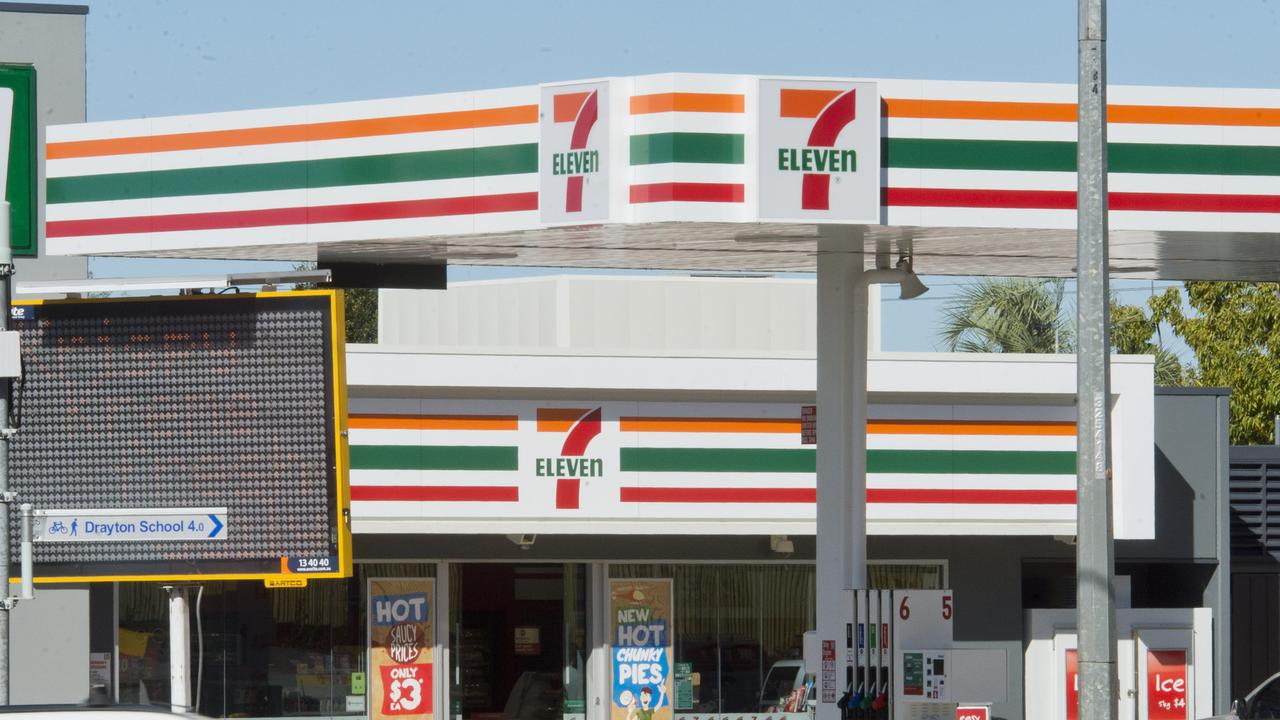
7-Eleven has become the latest business making it harder for Australians to obtain cash amid a concerted effort to reduce the number of ATMs it has available in-store.
A spokesperson for the convenience chain, which has 762 stores across Australia, confirmed 7-Eleven is “reducing our ATM footprint”.
Customers have already noticed that it is harder to find an ATM in the stores but the brand said they were doing so in response to the changing way Australians are paying for services — namely, via card.
“As our offer evolves, some ranges and services are removed to provide room for new and high demand offers,” 7-Eleven said.
“We are reducing our ATM footprint to respond to changing customer needs, although some stores will continue to provide ATM facilities.”
Cash is becoming a rarity and 7-Eleven’s latest decision is pushing Australia further into a cashless society.
It comes amid reports of banks discouraging customers from withdrawing cash and shutting down ATM branches, while supermarket giants have had to reduce withdrawal limits as Australians try to turn elsewhere to fulfil their cash needs.
News.com.au has previously reported that an ANZ ex-staffer claimed that during the time he worked at an ANZ branch in a metropolitan area, staff were directed not to serve customers and instead instructed them to do their banking at the onsite ATM.
He claimed the strategy behind this was to make branches look like they were serving less customers.
This then made it easier to close down branches, the whistleblower claimed, while cash has also become more out of reach as a result.
Another ex-ANZ employee, who worked on ANZ Plus, told news.com.au he “can confirm there is a real and specific drive to get the bank out of cash and close branches to reduce costs”.
An ANZ spokesperson denied the allegations. “This account does not reflect how our branches or our people are encouraged to operate,” the spokesperson said.
With the move away from cash in the major banks, supermarket giants have been left to bear the brunt of Australia’s hard currency needs.
But supermarkets aren’t happy with the new arrangement.
Earlier this year, in September, Woolworths reduced its cash withdrawal limit from $500 to $200 and in October it introduced the need to make a purchase in order to withdraw cash.
A Woolworths spokesperson said the decision was “due to the lack of cash being used in transactions, with the majority of customers opting for card-only transactions”.
Several customers were dismayed by the move from Woolworths, where they have been withdrawing cash due to either bank branch closures, ATM removals or to avoid fees charged by non-bank ATMs.
Last week, a prominent Senator involved in investigating the decline of banking services backed the contentious move by Woolworths to decrease its cash withdrawal limits.
Senator Gerard Rennick, who sits on the government committee conducting an inquiry into bank closures in regional Australia, threw his support behind Woolworths, telling news.com.au “they’re not a bank”.
Senator Rennick said that instead of people having to resort to withdrawing cash from the supermarket, “banks have got a social obligation to stay open and provide banking transactions and services.”
He accused Australian banks of “funnelling the responsibility” of providing cash to other businesses such as post offices and supermarkets.
Know more? Contact michelle.bowes@news.com.au
1733130350-0/Untitled-design-(76)1733130350-0-640x480.webp "HEC makes AI course mandatory for all degree programmes from 2026 | The Express Tribune")